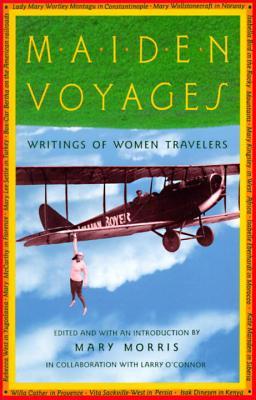
There have always been women travelers, but they haven't been as prominent in the media's eyes and their works have perhaps garnered less attention than they should have. This book compiles the letters, short excerpts of novels of several women travelers over the past couple centuries.
Starting in the late 1600's, collections of writings from women traveler's have been compiled in this book and they span until the late 1900's. Some tell of adventures they took with their husbands. Others are solitary travelers and were only able to travel after they were relieved from taking care of their family. Some traveled just for fun while others went with a specific purpose in mind, like hunting butterflies.
Each of the writer's had their own style. Some gave great detail, while others were more focused on the reasoning behind the travels and the emotions evoked while traveling. Because of this, there were some stories that I enjoyed and some that I found myself just briefly flipping through as I didn't care for the description or subject matter. I did enjoy the story of the two girls traveling down the river. It was unique and an adventure that not many can say they have done. Because there are so many stories, it is easy to just pick up this book randomly and only read one or two at a time, there's no need to read the book in one sitting.
This was an interesting collection of writings. If you like travel or women's studies, it would probably be right up your alley.
Maiden Voyages
Copyright 1993
438 pages
Showing posts with label women's studies. Show all posts
June 21, 2015
November 06, 2014
Mistresses of Mayhem: The Book of Women Criminals by Francine Hornberger
I'm fairly convinced that this book wasn't edited. Or at least if it
was, it was a rush job. While it was interesting subject matter, the
way it was written and the numerous mistakes and spelling errors made it
hard reading.
Mistresses of Mayhem is a resource book that describes some of the most famous women criminals in history and the present. In fact, some of the women featured in this book are still alive while others have been dead for hundreds of years. There are murderers, prostitutes, and even pirates. Background on each of the women is given, and the events of their crimes are provided.
There are some bad ladies in here. And a good one that had charges against her dropped. And some who there are doubts about their guilt and undecided charges against them. Because their backgrounds are provided, there is some speculation into why they did the crimes that they did. Although their history doesn't always account for the terrible things that they did. I hadn't heard of the majority of the women in here, and some of their stories definitely came as a shock. It's enough to make you want to wish it was fiction.
This would have been a great reference book, except it didn't really read as a standard non-fiction reference book. There was tons of personal opinion in it I'm always a little skeptical if in a book that's supposed to be non-fiction, the term "white trash" is used several times along with other non-professional names and descriptors. It also had numerous spelling errors, places where you can tell a "find and replace" feature was used incorrectly, and probably the worst of all, some facts actually weren't recorded correctly (IE: two sisters names are reversed leaving the wrong one dead in the book). An editing read-through would have caught a lot of these errors, so I'm not sure what happened. The formatting is a page or two for each woman and it is sorted in alphabetical order.
It certainly doesn't seem as if this book was actually ready to be published. A little cleanup and it would be a good tome on women readers. In its current condition, I just can't recommend it.
Mistresses of Mayhem
Copyright 2002
248 pages
Mistresses of Mayhem is a resource book that describes some of the most famous women criminals in history and the present. In fact, some of the women featured in this book are still alive while others have been dead for hundreds of years. There are murderers, prostitutes, and even pirates. Background on each of the women is given, and the events of their crimes are provided.
There are some bad ladies in here. And a good one that had charges against her dropped. And some who there are doubts about their guilt and undecided charges against them. Because their backgrounds are provided, there is some speculation into why they did the crimes that they did. Although their history doesn't always account for the terrible things that they did. I hadn't heard of the majority of the women in here, and some of their stories definitely came as a shock. It's enough to make you want to wish it was fiction.
This would have been a great reference book, except it didn't really read as a standard non-fiction reference book. There was tons of personal opinion in it I'm always a little skeptical if in a book that's supposed to be non-fiction, the term "white trash" is used several times along with other non-professional names and descriptors. It also had numerous spelling errors, places where you can tell a "find and replace" feature was used incorrectly, and probably the worst of all, some facts actually weren't recorded correctly (IE: two sisters names are reversed leaving the wrong one dead in the book). An editing read-through would have caught a lot of these errors, so I'm not sure what happened. The formatting is a page or two for each woman and it is sorted in alphabetical order.
It certainly doesn't seem as if this book was actually ready to be published. A little cleanup and it would be a good tome on women readers. In its current condition, I just can't recommend it.
Mistresses of Mayhem
Copyright 2002
248 pages
September 28, 2014
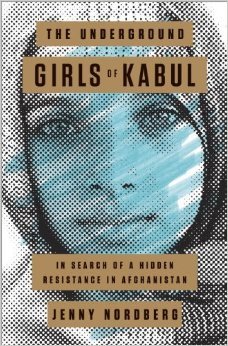
The Underground Girls of Kabul by Jenny Nordberg
Imagine living in a society where girls are not valued. In fact, they are property and subject to the whims of the males in their lives. Where they go from father to husband and never have a say in what happens. This isn't a fairytale. It's a reality in Afghanistan, even after the removal of the Taliban.
When Nordberg goes to Afghanistan she expects to find out about the lives of women. What she doesn't expect to find is an underground movement of women who are posing as men. And it's something everybody knows but doesn't speak on. More commonly found in pre-pubescent girls, it has become custom to turn a girl into a boy either for running errands, helping in a shop, or to give luck that a boy will be born next. The girls are normally returned to being their birth gender before puberty starts and they are married. But there are a few exceptions.
It's hard to imagine changing yourself into a different person to be integrated in society and have freedom of movement but that is exactly what happens in Afghan culture. Whether it is for necessity to survive and get an income or because there is shame from having all girls, the reasons are varied but all widely accepted. Nordberg does a great job of showing the different personalities of the girls that have been boys for awhile and their history. It was interesting to read about how they handled the transition back (if they transitioned) and how it set them up for the rest of their lives. The different reactions of people to her was telling as well, because as a foreigner she had a lot of freedom compared to most, but was still treated differently based on her gender.
The reporting in this book was handled very well. Nordberg researched, talked to many people, and got the different sides of everything. Pretty standard, but sadly not something that happens with a lot of journalists anymore. I think the attention she paid to the leads and as in-depth as she went in her reporting was remarkable. Especially considering she was in a closed-society that doesn't encourage outsiders to make contact with women. Sure, it probably helped she was a woman herself, but it's still a difficult culture to navigate and get answers. Which makes this view pretty important. Her take of the situation, that not just women should be being helped, but the men who encourage education in women should be helped as well, is an important thought and one frequently overlooked. And the stories are engaging and well written, done in a professional way but still having a lot of detail. I could have kept reading if there was more.
I think this is a great book that shows a hidden side of Afghan culture that could be key to improving lives for women over there. I definitely recommend this book for anyone interested in women's studies or Afghan culture.
**This book was received in a Goodreads Giveaway**
The Underground Girls of Kabul
Copyright 2014
333 pages
When Nordberg goes to Afghanistan she expects to find out about the lives of women. What she doesn't expect to find is an underground movement of women who are posing as men. And it's something everybody knows but doesn't speak on. More commonly found in pre-pubescent girls, it has become custom to turn a girl into a boy either for running errands, helping in a shop, or to give luck that a boy will be born next. The girls are normally returned to being their birth gender before puberty starts and they are married. But there are a few exceptions.
It's hard to imagine changing yourself into a different person to be integrated in society and have freedom of movement but that is exactly what happens in Afghan culture. Whether it is for necessity to survive and get an income or because there is shame from having all girls, the reasons are varied but all widely accepted. Nordberg does a great job of showing the different personalities of the girls that have been boys for awhile and their history. It was interesting to read about how they handled the transition back (if they transitioned) and how it set them up for the rest of their lives. The different reactions of people to her was telling as well, because as a foreigner she had a lot of freedom compared to most, but was still treated differently based on her gender.
The reporting in this book was handled very well. Nordberg researched, talked to many people, and got the different sides of everything. Pretty standard, but sadly not something that happens with a lot of journalists anymore. I think the attention she paid to the leads and as in-depth as she went in her reporting was remarkable. Especially considering she was in a closed-society that doesn't encourage outsiders to make contact with women. Sure, it probably helped she was a woman herself, but it's still a difficult culture to navigate and get answers. Which makes this view pretty important. Her take of the situation, that not just women should be being helped, but the men who encourage education in women should be helped as well, is an important thought and one frequently overlooked. And the stories are engaging and well written, done in a professional way but still having a lot of detail. I could have kept reading if there was more.
I think this is a great book that shows a hidden side of Afghan culture that could be key to improving lives for women over there. I definitely recommend this book for anyone interested in women's studies or Afghan culture.
**This book was received in a Goodreads Giveaway**
The Underground Girls of Kabul
Copyright 2014
333 pages
March 24, 2014
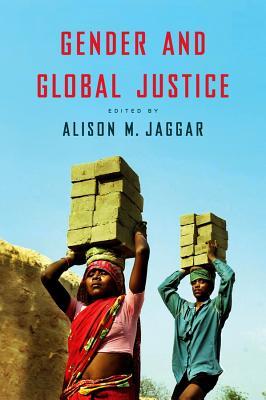
Gender and Global Justice by Alison M. Jaggar
**This review is part of the Amazon Vine Program**
I'm not going to lie. This book was a higher level than I should have been reading on the subject. I dabble with books here and there on women's studies. And this one, describing the global impact, sounded interesting to me. However, upon reading it, it is clearly a book that should be used in a higher level college class, and not something for a novice starting out in the studies.
Gender and Global Justice contains short essays on a few topics relating to gender inequality and global justice. Global justice is an actual concept defined as "Global justice is an issue in political philosophy arising from the concern that the world at large is unjust." Specifically this book looks at global injustice and how disparity between the genders continues to fuel injustice in the realms of care-giving, taxation, and work issues. The chapters are broken into Transnational Cycles of Gendered Vulnerability, Transnational Women's Collectivities and Global Justice, The Moral Harm of Migrant Carework, Transnational Rights and Wrongs: Moral Geographies of Gender and Migration, Global Gender Injustice and Mental Disorders, Discourses of Sexual Violence in a Global Context, Reforming Our Taxation Arrangements to Promote Global Gender Justice, and Gender Injustice and the Resource Curse.
As said before, the overall tone of this book was textbook. It was circular and the use of jargon so widespread that several times I'd think I was reading the same concept over and over in the paragraphs of the chapter as it didn't seem to go in a logical procession, but merely mixed up the words to spit the same idea out to me again. Buzzwords abounded and combined with the jargon, anyone who isn't an expert in the field might have trouble following. That being said, I'm sure if your studies to center around this topic this is probably a great book to read for short essays on these views.
I did enjoy some chapters more than others. Particularly, Discourses of Sexual Violence in a Global Context, was full of good information and thoughts on the concept of consent and the definition of sexual violence and rape. It was written quite a bit more clearly than some of the other topics which made it more approachable to the average reader. It was surprising to see how the concept of consent can actually harm women in addition to helping them in cases of sexual violence. Global Gender Injustice and Mental Disorders, while short, also was a more absorbing read, and again, not so full of jargon that the average person can understand. The disparity between the sexes on depression and anxiety was surprising, as was the occurrence of post-partum depression in economically poor countries.
There's definitely good information in this book, but it is going to be unapproachable for most readers. I can't say I would recommend it for anyone unless they have done extensive study on global justice, economics, or women's studies.
Gender and Global Justice
Copyright 2014
223 pages
Review by M. Reynard 2014
I'm not going to lie. This book was a higher level than I should have been reading on the subject. I dabble with books here and there on women's studies. And this one, describing the global impact, sounded interesting to me. However, upon reading it, it is clearly a book that should be used in a higher level college class, and not something for a novice starting out in the studies.
Gender and Global Justice contains short essays on a few topics relating to gender inequality and global justice. Global justice is an actual concept defined as "Global justice is an issue in political philosophy arising from the concern that the world at large is unjust." Specifically this book looks at global injustice and how disparity between the genders continues to fuel injustice in the realms of care-giving, taxation, and work issues. The chapters are broken into Transnational Cycles of Gendered Vulnerability, Transnational Women's Collectivities and Global Justice, The Moral Harm of Migrant Carework, Transnational Rights and Wrongs: Moral Geographies of Gender and Migration, Global Gender Injustice and Mental Disorders, Discourses of Sexual Violence in a Global Context, Reforming Our Taxation Arrangements to Promote Global Gender Justice, and Gender Injustice and the Resource Curse.
As said before, the overall tone of this book was textbook. It was circular and the use of jargon so widespread that several times I'd think I was reading the same concept over and over in the paragraphs of the chapter as it didn't seem to go in a logical procession, but merely mixed up the words to spit the same idea out to me again. Buzzwords abounded and combined with the jargon, anyone who isn't an expert in the field might have trouble following. That being said, I'm sure if your studies to center around this topic this is probably a great book to read for short essays on these views.
I did enjoy some chapters more than others. Particularly, Discourses of Sexual Violence in a Global Context, was full of good information and thoughts on the concept of consent and the definition of sexual violence and rape. It was written quite a bit more clearly than some of the other topics which made it more approachable to the average reader. It was surprising to see how the concept of consent can actually harm women in addition to helping them in cases of sexual violence. Global Gender Injustice and Mental Disorders, while short, also was a more absorbing read, and again, not so full of jargon that the average person can understand. The disparity between the sexes on depression and anxiety was surprising, as was the occurrence of post-partum depression in economically poor countries.
There's definitely good information in this book, but it is going to be unapproachable for most readers. I can't say I would recommend it for anyone unless they have done extensive study on global justice, economics, or women's studies.
Gender and Global Justice
Copyright 2014
223 pages
Review by M. Reynard 2014
December 17, 2013
Voices from Iran by Mahnaz Kousha
Anymore it seems there are a lot of books about Iran, and especially
about the women of Iran. Because for a lot of us, it's an intriguing
topic. The women's lives there we can't even fathom sometimes as it's
completely different from what we're used to in a culture. That being
said, some of the books out there are better than the others.
Kousha interviews fifteen Iranian women from different walks of life (although the majority are educated) and how being a woman in Iran has played out for them. She explores their relationships with their mothers, fathers, husbands and their role in the workplace. She also asks whether or not they'd rather be born again as women or men and why.
To me a lot of the women she interviewed seemed to be from the same walks of life. A good many of them were able to work, some had pursued higher education, and all were at least given the autonomy to talk to an interviewer. And it's this last thing that I think shows that this book may not be reflective of the society as a whole (the author does say this is not a representational book of women in Iran). It's interesting to hear their stories and how they felt about their stations in life. Generally, most of them weren't happy with some aspects of their life but actually quite content in others.
The format of this book actually made it duller than it really was. Kousha spent a lot of time telling us what she was going to do in the book and after awhile I just wanted to get on to the interviews. But even those were broken up between speculations by Kousha about the women and their relationships. There also seemed to be a lot of repetition. We'd see a quote from one of the women and then just a few paragraphs later that same quote would be part of a larger chunk from the interview. The book was split into sections such as "Mothers and Daughters" and "Fathers and Daughters" and the conversations followed those lines.
This was an interesting book but there are plenty out there that are a little more engaging and show more of the women's stories.
Voices From Iran
Copyright 2002
244 pages
Kousha interviews fifteen Iranian women from different walks of life (although the majority are educated) and how being a woman in Iran has played out for them. She explores their relationships with their mothers, fathers, husbands and their role in the workplace. She also asks whether or not they'd rather be born again as women or men and why.
To me a lot of the women she interviewed seemed to be from the same walks of life. A good many of them were able to work, some had pursued higher education, and all were at least given the autonomy to talk to an interviewer. And it's this last thing that I think shows that this book may not be reflective of the society as a whole (the author does say this is not a representational book of women in Iran). It's interesting to hear their stories and how they felt about their stations in life. Generally, most of them weren't happy with some aspects of their life but actually quite content in others.
The format of this book actually made it duller than it really was. Kousha spent a lot of time telling us what she was going to do in the book and after awhile I just wanted to get on to the interviews. But even those were broken up between speculations by Kousha about the women and their relationships. There also seemed to be a lot of repetition. We'd see a quote from one of the women and then just a few paragraphs later that same quote would be part of a larger chunk from the interview. The book was split into sections such as "Mothers and Daughters" and "Fathers and Daughters" and the conversations followed those lines.
This was an interesting book but there are plenty out there that are a little more engaging and show more of the women's stories.
Voices From Iran
Copyright 2002
244 pages
September 05, 2013
Empress Dowager Cixi: The Concubine Who Launched Modern China by Jung Chang
**This review is part of the Amazon Vine Program**
I'm ashamed to say I'd never heard of Cixi before picking up this book. China's early history (at least before Mao) is not something I've delved into quite a bit. But having read the author's "Wild Swans" I decided to give this book a try. And I'm very glad I did.
Plucked out among many other girls as one of the royal concubines to the then emperor, Cixi was a normal Chinese girl. Well, normal insomuch as royal concubines are. Not even the Empress, she had to use force of will to climb up the ladder and become one of the most powerful figures in China's history. Ruling for the better part of a half century, a woman, in a land that oppressed the female gender, she had to be intelligent and cunning. According to this book, she was progressive and brought in a lot of modern improvements to China despite being wracked by rebellions, hostile foreign policies, and other hazards. And since she couldn't rule in outright name because she was female, she had to maneuver politics and emperors around to best direct her needs.
Cixi is a strong person, and that comes through in this book. Few women (or even men) can claim to do half of what she did in a lifetime. And she had to overcome a myriad of obstacles just because of her gender to rule. This book paints a pretty optimistic picture of her, but refers to the notion that she is not always portrayed this way. Having experienced this book about Cixi before anything else, I of course am disposed to lean towards the fact that she did the best she could in leading China, and when she made mistakes, she admitted them. So I admire her. And the author does mention several other people in this book as well, but to be honest, there's so many of them it's hard to keep track. It's obvious that Cixi is the main focus in this book, and that's just fine.
I learned a lot about China's history from this book. And about Cixi. It's amazing how many things can happen over the course of a few decades. There's even a good bit written about the Boxer Rebellion since it happened during Cixi's rule. But it wasn't dry as some historical books can be. It kept me riveted the whole time and even though it lagged a bit in parts in the latter half, I still found it hard to put the book down. It's the kind where you can probably go back, read it again, and discover new facts you may not have noticed the first time around. Really, the parts that made it lag were some of the politics, but the book can't be faulted for that as it's a book about a country's leader and politics go hand in hand with that. And from what I can tell it is well researched. Wild Swans was also well done and both books have had a lot of care put into them.
An excellent book and one I'd recommend to anyone interested in history or China. It's a powerful biography on a very interesting woman.
Empress Dowager Cixi
Copyright 2013
373 pages
I'm ashamed to say I'd never heard of Cixi before picking up this book. China's early history (at least before Mao) is not something I've delved into quite a bit. But having read the author's "Wild Swans" I decided to give this book a try. And I'm very glad I did.
Plucked out among many other girls as one of the royal concubines to the then emperor, Cixi was a normal Chinese girl. Well, normal insomuch as royal concubines are. Not even the Empress, she had to use force of will to climb up the ladder and become one of the most powerful figures in China's history. Ruling for the better part of a half century, a woman, in a land that oppressed the female gender, she had to be intelligent and cunning. According to this book, she was progressive and brought in a lot of modern improvements to China despite being wracked by rebellions, hostile foreign policies, and other hazards. And since she couldn't rule in outright name because she was female, she had to maneuver politics and emperors around to best direct her needs.
Cixi is a strong person, and that comes through in this book. Few women (or even men) can claim to do half of what she did in a lifetime. And she had to overcome a myriad of obstacles just because of her gender to rule. This book paints a pretty optimistic picture of her, but refers to the notion that she is not always portrayed this way. Having experienced this book about Cixi before anything else, I of course am disposed to lean towards the fact that she did the best she could in leading China, and when she made mistakes, she admitted them. So I admire her. And the author does mention several other people in this book as well, but to be honest, there's so many of them it's hard to keep track. It's obvious that Cixi is the main focus in this book, and that's just fine.
I learned a lot about China's history from this book. And about Cixi. It's amazing how many things can happen over the course of a few decades. There's even a good bit written about the Boxer Rebellion since it happened during Cixi's rule. But it wasn't dry as some historical books can be. It kept me riveted the whole time and even though it lagged a bit in parts in the latter half, I still found it hard to put the book down. It's the kind where you can probably go back, read it again, and discover new facts you may not have noticed the first time around. Really, the parts that made it lag were some of the politics, but the book can't be faulted for that as it's a book about a country's leader and politics go hand in hand with that. And from what I can tell it is well researched. Wild Swans was also well done and both books have had a lot of care put into them.
An excellent book and one I'd recommend to anyone interested in history or China. It's a powerful biography on a very interesting woman.
Empress Dowager Cixi
Copyright 2013
373 pages
August 12, 2013
Daughters Who Walk This Path by Yejide Kilanko
**This book was received through the Amazon Vine program**
What a sad, yet hopeful book. Daughters Who Walk This Path opens up not only a culture, but a topic that focuses on abuse in the home and how sometimes the ones that hurt us most are those known to us.
Morayo is a young girl growing up in Nigeria. The older sister, she feels a sense of responsibility to her younger sister, most especially because her younger sister is an albino and considered unlucky in their culture. But when she's looking out for her sister, no-one is looking out for her and a cousin who has come to stay forces her to do unspeakable things. And the aftermath of that will follow her for many years as she struggles to believe in herself again.
Morayo is a fantastic character. She grows, she has troubles, but overall, she is very real. The pain that she goes through is heartbreaking, and I will admit that I shed a few tears while reading about her plight. And the reactions to her troubles are heartbreaking as well. Reading about her loneliness and the denial that her family seemed to go through was tough, but yet oh so true when you look at real life abuse statistics anywhere in the world. I did think her sister could have been a better character. She almost doesn't seem needed, and very rarely adds to the plot. Morayo's aunts add more insight and development to the book than she does. And given that she has her own troubles with being an albino, I think she really could have been used better in the story.
Abuse is a hard subject to talk about. Especially since often times it is someone the person is close to instead of a complete stranger. And the awkwardness it makes between family members just further hurts the victim. I think that Kilanko did a great job with showing how the events in her childhood shaped Morayo's adult life and made her make the choices that she did. And while all this was going on she even managed to share a little bit about how schooling and university works in Nigeria, which I thought interesting. The only part I didn't really care for was the chapter in which she tried to dive into the political realm. It just felt out of place and didn't flow as nice with the rest of the book.
I think this is a very interesting book and while it's sad, it also is a little uplifting because it proves that the human spirit can get through some terrible things. This is one that's well worth reading.
Daughters Who Walk This Path
Copyright 2013
329 pages
What a sad, yet hopeful book. Daughters Who Walk This Path opens up not only a culture, but a topic that focuses on abuse in the home and how sometimes the ones that hurt us most are those known to us.
Morayo is a young girl growing up in Nigeria. The older sister, she feels a sense of responsibility to her younger sister, most especially because her younger sister is an albino and considered unlucky in their culture. But when she's looking out for her sister, no-one is looking out for her and a cousin who has come to stay forces her to do unspeakable things. And the aftermath of that will follow her for many years as she struggles to believe in herself again.
Morayo is a fantastic character. She grows, she has troubles, but overall, she is very real. The pain that she goes through is heartbreaking, and I will admit that I shed a few tears while reading about her plight. And the reactions to her troubles are heartbreaking as well. Reading about her loneliness and the denial that her family seemed to go through was tough, but yet oh so true when you look at real life abuse statistics anywhere in the world. I did think her sister could have been a better character. She almost doesn't seem needed, and very rarely adds to the plot. Morayo's aunts add more insight and development to the book than she does. And given that she has her own troubles with being an albino, I think she really could have been used better in the story.
Abuse is a hard subject to talk about. Especially since often times it is someone the person is close to instead of a complete stranger. And the awkwardness it makes between family members just further hurts the victim. I think that Kilanko did a great job with showing how the events in her childhood shaped Morayo's adult life and made her make the choices that she did. And while all this was going on she even managed to share a little bit about how schooling and university works in Nigeria, which I thought interesting. The only part I didn't really care for was the chapter in which she tried to dive into the political realm. It just felt out of place and didn't flow as nice with the rest of the book.
I think this is a very interesting book and while it's sad, it also is a little uplifting because it proves that the human spirit can get through some terrible things. This is one that's well worth reading.
Daughters Who Walk This Path
Copyright 2013
329 pages
July 30, 2013
An American Bride in Kabul by Phyllis Chesler
**This review is part of the Amazon Vine program**
Chesler had a very harrowing, unique experience. This memoir/history/social topics book really explores what she went through in Kabul and her reactions to some of the customs practiced in the Eastern world.
In the sixties, Chesler was young, in college, and in love with a man from Afghanistan. After marrying, he decides they will go back to Kabul, where his family is. She of course thinks this is an adventure and dreams about all the exploring and traveling they will do. She is quite surprised then when she is placed under "house arrest" and expected to follow the customs of the Afghani women. With her health failing and freedom taken, her only hope is to get home, but it is exceptionally difficult in a culture where only men can give permission. That was the first half of the book anyway. The second half described what she did when she was back in America and her thoughts on feminism and women in the Eastern world.
I don't understand a lot of Chesler's motives. Not with herself, she is completely frank about why she thinks she did things and why she does certain actions. But I don't understand her connection to her ex-husband. The way he treated her (regardless of it being a cultural thing) makes me wonder why she continued to have contact with him. Perhaps a form of Stockholm syndrome? I just can't imagine tying yourself to those memories. But I guess everyone is different. She tries to show him as a courageous person. But her words in this book make him out to be quite small minded and incapable of empathy. Almost a socio-path of sorts, or at the very least someone with narcissistic tendencies.
She says that she almost died in the two months that she was in Afghanistan and I can believe it. Illness can take a person quickly and it was horrifying to know that her husband's family appeared to be so callous and unconcerned as to her condition. I would have liked more description of Afghanistan itself though. While she does have some memoirs in this book, her descriptions of her actual experiences take up less room of the book than her musings on feminism, politics, women's subjects, and other topics do. It almost felt like I was more reading a history/women's studies book rather than a memoir. I wanted more of her personal experiences. It was informative, just not what I expected.
I'd probably give this book three and a half stars. I appreciated the inside look at life for a woman in Afghanistan during the 60's, but would have liked for that inside look to be a little more in depth and not so hurried. Chesler has led an interesting life, and you can definitely tell where her work in feminism was inspired from.
An American Bride in Kabul
Copyright 2013
219 pages
Chesler had a very harrowing, unique experience. This memoir/history/social topics book really explores what she went through in Kabul and her reactions to some of the customs practiced in the Eastern world.
In the sixties, Chesler was young, in college, and in love with a man from Afghanistan. After marrying, he decides they will go back to Kabul, where his family is. She of course thinks this is an adventure and dreams about all the exploring and traveling they will do. She is quite surprised then when she is placed under "house arrest" and expected to follow the customs of the Afghani women. With her health failing and freedom taken, her only hope is to get home, but it is exceptionally difficult in a culture where only men can give permission. That was the first half of the book anyway. The second half described what she did when she was back in America and her thoughts on feminism and women in the Eastern world.
I don't understand a lot of Chesler's motives. Not with herself, she is completely frank about why she thinks she did things and why she does certain actions. But I don't understand her connection to her ex-husband. The way he treated her (regardless of it being a cultural thing) makes me wonder why she continued to have contact with him. Perhaps a form of Stockholm syndrome? I just can't imagine tying yourself to those memories. But I guess everyone is different. She tries to show him as a courageous person. But her words in this book make him out to be quite small minded and incapable of empathy. Almost a socio-path of sorts, or at the very least someone with narcissistic tendencies.
She says that she almost died in the two months that she was in Afghanistan and I can believe it. Illness can take a person quickly and it was horrifying to know that her husband's family appeared to be so callous and unconcerned as to her condition. I would have liked more description of Afghanistan itself though. While she does have some memoirs in this book, her descriptions of her actual experiences take up less room of the book than her musings on feminism, politics, women's subjects, and other topics do. It almost felt like I was more reading a history/women's studies book rather than a memoir. I wanted more of her personal experiences. It was informative, just not what I expected.
I'd probably give this book three and a half stars. I appreciated the inside look at life for a woman in Afghanistan during the 60's, but would have liked for that inside look to be a little more in depth and not so hurried. Chesler has led an interesting life, and you can definitely tell where her work in feminism was inspired from.
An American Bride in Kabul
Copyright 2013
219 pages
Subscribe to:
Posts (Atom)