Anymore it seems there are a lot of books about Iran, and especially
about the women of Iran. Because for a lot of us, it's an intriguing
topic. The women's lives there we can't even fathom sometimes as it's
completely different from what we're used to in a culture. That being
said, some of the books out there are better than the others.
Kousha
interviews fifteen Iranian women from different walks of life (although
the majority are educated) and how being a woman in Iran has played out
for them. She explores their relationships with their mothers,
fathers, husbands and their role in the workplace. She also asks
whether or not they'd rather be born again as women or men and why.
To
me a lot of the women she interviewed seemed to be from the same walks
of life. A good many of them were able to work, some had pursued higher
education, and all were at least given the autonomy to talk to an
interviewer. And it's this last thing that I think shows that this book
may not be reflective of the society as a whole (the author does say
this is not a representational book of women in Iran). It's interesting
to hear their stories and how they felt about their stations in life.
Generally, most of them weren't happy with some aspects of their life
but actually quite content in others.
The format of this book
actually made it duller than it really was. Kousha spent a lot of time
telling us what she was going to do in the book and after awhile I just
wanted to get on to the interviews. But even those were broken up
between speculations by Kousha about the women and their relationships.
There also seemed to be a lot of repetition. We'd see a quote from one
of the women and then just a few paragraphs later that same quote would
be part of a larger chunk from the interview. The book was split into
sections such as "Mothers and Daughters" and "Fathers and Daughters" and
the conversations followed those lines.
This was an interesting
book but there are plenty out there that are a little more engaging and
show more of the women's stories.
Voices From Iran
Copyright 2002
244 pages
Showing posts with label Iran. Show all posts
December 17, 2013
October 18, 2013
Not Without My Daughter by Betty Mahmoody
It's hard to believe that this was non-fiction. It
was so horrific that you didn't want it to be real. But it is, and it
is a very alarming view of what can happen when culture's crash and the
relative power that women have in other countries.
Betty Mahmoody had an unsuccessful first marriage that gave her two sons. She wasn't looking for more when she met an Iranian doctor nicknamed Moody (if that isn't foreshadowing I don't know what is). Despite herself she fell in love and they eventually married, and had a daughter named Mahtob. All wasn't perfect in their marriage and when a proposed trip to his home country came about, Betty had to agree. What began as a two week trip turned into a nightmare that lasted almost two years. Once in Iran, Moody trapped Betty and Mahtob there and began trying to make them follow Islamic laws regarding women and beating them when they didn't do what he wanted. Desperate for escape, Betty found herself in a country that required the permission of her husband before she could do anything.
Was everyone believable in this book? I certainly think so. When people complain that this book presents a biased view of Iran and Iranian men it's important to look at the fact that Betty did not encounter a large amount of people while she was in Iran. And it would make sense that Moody would only allow her to interact with people who thought the same was as him. The majority of people she met outside of his influence were ones that were willing to help her. So I think that that shows she didn't believe all people in Iran were like Moody and his family. Betty herself reaccounts some harrowing details which must have been very painful to share. I find her brave and admire that she didn't take the easy way out and leave her daughter behind. She did everything she could, and suffered much, to guarantee she and her daughter's return to America. Moody is obviously not presented in a positive light in this book, although Betty does share all the positive things that made her fall in love with him in the first place. He sounds like a typical abuser; wonderful until he has full control and then tyrannical.
If you're sensitive to harsh topics and violence, this is not a book for you. Betty tells all and she suffers a number of beatings and a lot of oppression by both her husband and some of his family. As said before, some will say this is not a fair book to Iran and its culture, but we aren't talking about what the entire country did to Betty, just a subset and most of those from one family. With the cultural differences and the patriarchal society, it's true enough to say that this happened the way it did because of where Betty was. She could have been abused in America, but not as easily kept prisoner. I thought the pace of the book was done quite well and while most of it was done in a standard timeline, bits and pieces and flashbacks went back to show signs of Moody becoming unstable even while still in the States and why Betty made the choice she did to go to Iran with him.
I can't quite call this book inspiring because it is horrific. But it shows a brave woman and the fight she had to keep her daughter. Should this book warn away marriages to men from Islamic countries? I don't think so, but the reader should bear in mind that other cultures have different rules, although really, it's the individual that can become an abuser regardless of what country they hail from.
Not Without My Daughter
Copyright 1987
420 pages
Betty Mahmoody had an unsuccessful first marriage that gave her two sons. She wasn't looking for more when she met an Iranian doctor nicknamed Moody (if that isn't foreshadowing I don't know what is). Despite herself she fell in love and they eventually married, and had a daughter named Mahtob. All wasn't perfect in their marriage and when a proposed trip to his home country came about, Betty had to agree. What began as a two week trip turned into a nightmare that lasted almost two years. Once in Iran, Moody trapped Betty and Mahtob there and began trying to make them follow Islamic laws regarding women and beating them when they didn't do what he wanted. Desperate for escape, Betty found herself in a country that required the permission of her husband before she could do anything.
Was everyone believable in this book? I certainly think so. When people complain that this book presents a biased view of Iran and Iranian men it's important to look at the fact that Betty did not encounter a large amount of people while she was in Iran. And it would make sense that Moody would only allow her to interact with people who thought the same was as him. The majority of people she met outside of his influence were ones that were willing to help her. So I think that that shows she didn't believe all people in Iran were like Moody and his family. Betty herself reaccounts some harrowing details which must have been very painful to share. I find her brave and admire that she didn't take the easy way out and leave her daughter behind. She did everything she could, and suffered much, to guarantee she and her daughter's return to America. Moody is obviously not presented in a positive light in this book, although Betty does share all the positive things that made her fall in love with him in the first place. He sounds like a typical abuser; wonderful until he has full control and then tyrannical.
If you're sensitive to harsh topics and violence, this is not a book for you. Betty tells all and she suffers a number of beatings and a lot of oppression by both her husband and some of his family. As said before, some will say this is not a fair book to Iran and its culture, but we aren't talking about what the entire country did to Betty, just a subset and most of those from one family. With the cultural differences and the patriarchal society, it's true enough to say that this happened the way it did because of where Betty was. She could have been abused in America, but not as easily kept prisoner. I thought the pace of the book was done quite well and while most of it was done in a standard timeline, bits and pieces and flashbacks went back to show signs of Moody becoming unstable even while still in the States and why Betty made the choice she did to go to Iran with him.
I can't quite call this book inspiring because it is horrific. But it shows a brave woman and the fight she had to keep her daughter. Should this book warn away marriages to men from Islamic countries? I don't think so, but the reader should bear in mind that other cultures have different rules, although really, it's the individual that can become an abuser regardless of what country they hail from.
Not Without My Daughter
Copyright 1987
420 pages
June 07, 2013
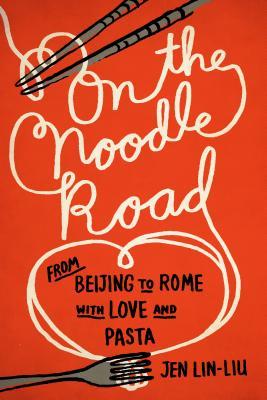
On the Noodle Road by Jen Lin-Liu
I love noodles. I could eat them every day whether it be macaroni and cheese, alfredo, filled pastas, lo-mein, well, you get the picture. There's something very comforting about them and it isn't a surprise that they are found in most cuisines around the world. But just how did they spread among all those cuisines is the question Lin-Liu attempts to answer in this book.
Lin-Liu, while living in China and working at her cooking school, decides to follow the Silk Road from China to Italy in search of where noodles originated and how they have persevered through the cultures. She'll go through all of China, Iran, Turkey, and many other countries before finally finishing in Italy. And she'll seek out noodles in each of these places although in some, they are harder to find. Additionally, this is a memoir of sorts that expresses Lin-Liu's troubles with her new marriage and search for herself in the relationship.
Lin-Liu and her husband aren't the only people featured in this book though. She encounters so many people in her travels that they are all included here as well. And she offers a commentary on their lives as they are bound by their customs and rules of the countries. She expresses her vehemence quite often at some of the traditions that bind women to their homes and their kitchens, even as she enjoys the tasty food that comes out of them. Her relationship with her husband is less interesting though, and while I can appreciate that she tried to make this a memoir in addition to food writing, I just don't think it was the right mix to make it interesting. I cared more about the food and who made it than I did about her personal life, right or wrong as that may be.
There was a lot of food in this book (recipes too). And the majority of the book was luckily about food, because as said before, I wasn't as interested in the memoir part of this book. I do think that China was probably my favorite region that Lin-Liu described. All of the noodle dishes sounded wonderful and I think I'll definitely make good use of that recipe section (all the recipes are at the end of the chapter for each respective country). Iran, the people she spoke with were interesting, but the food didn't hold as much appeal for me. The same goes for Turkey. And Italy wasn't described near as much as I thought it would be, considering they are known for their noodles. And while the writing was a little choppy, with less than smooth transitions between the countries, it was still approachable writing and easy to read. Lin-Liu writes like she probably talks, and it is easy to get absorbed, although long-winded at times.
I enjoyed the book but I don't see myself going back to it again and again (unless it's to use the recipes). It offered a unique perspective on noodle dishes and nice descriptions of foods for any foodie, but was a bit too meandering to be a repetitive read.
On The Noodle Road
Copyright 2013
384 pages
March 20, 2013
A Teaspoon of Earth and Sea by Dina Nayeri
I haven't read too many books that take place in Iran. Countries near there, yes, but not Iran. So this was an interesting look at the country for me, especially with all the changes it has had over the past couple of decades. And this is fiction, but it is told in a way that makes you believe it could happen in real life.
Saba and her sister Mahtab are twins. Born to wealthy Iranian parents they are split up in the middle of their childhood. Saba remembers it as her mother and Mahtab leaving for America without her and her father. But everyone else tells her that her mother is gone and Mahtab is dead. She's not sure what to believe because her memories so clearly tell her otherwise. With this pain of being left behind, and with the strict rules in Iran, Saba has to make choices about her own future, and what life she can lead in Iran. Her connections with her friends offer her some respite, but call her other troubles, especially when one of her friends becomes interested in a revolutionary women's group in the area.
You have to pity Saba. Even if she is the spoiled rich girl, she goes through things that no-one should have to go through. And she isn't given the freedom of making many choices that are in her best interest. She has to sacrifice to get to those choices. Which is something that many of us are fortunate not to have experience with. Since we only know of Mahtab through Saba's tales, I think she is idolized a bit. She's the expression of everything Saba desires and I actually didn't like her because of it. Saba's friends, while good for her in some ways, also bring her down in others, and I wasn't a big fan of them either. I just wanted to root for someone in this novel, and even though I could to an extent for Saba, there wasn't any character satisfying to really put your hopes behind.
While this book did drag in parts, I found it engaging. When you got past the stories of Mahtab, Saba's world was so descriptive that you really felt immersed in the culture. Even day to day village life had some meaning behind it. Combine that with the restrictions on women, the underground groups of revolution and Christianity, and it made for a complex novel. But there were some brutal things. Saba herself is brutalized at one point (with no real reason given, which makes it even worse) and her friend is also brutalized (with a reason given but one that will make you scream in frustration). It's hard stuff to read. And the whole book is sad and almost bleak.
I think that this book was well written and well worth reading. But I do wish I could have had a character to believe in, because as interesting as Saba was (and in some ways she could inspire), she was also broken and sad and unapproachable.
A Teaspoon of Earth and Sea
Copyright 2013
420 pages
Subscribe to:
Posts (Atom)