Showing posts with label food. Show all posts

January 25, 2015

Fictitious Dishes by Dinah Fried

I wavered between being intrigued with this book and not liking it at all.  Having received it as a birthday present, the giver had thought they were giving me a cookbook based on literary dishes.  Well, this is not a cookbook but rather a photography book.  A coffee table book filled with pictures inspired by different dishes from popular novels.

Different novels such as Heidi, American Psycho, Madame Bovary and others are represented in this book.  For each novel, there is an excerpt from the book that mentions the meal in question, small footnotes that explain different things from history or the book and different facts on food at times, and then a full page picture of the meal in question that is the author's rendering of what it might have looked like. 

That being said, while I thought there were some very pretty pictures in this, I wasn't always thrilled with the way it was put together.  For instance, in Catcher in the Rye, it mentions a swiss cheese sandwich.  What's in the picture?  A sandwich with american cheese on it, or at least it looked like shiny yellow american cheese..  I can understand some ingredients being hard to get, but that one seems to be a kind of big oversight.  And then Valley of the Dolls, that was just pills.  Maybe the author was trying to be clever, but I don't consider that a meal at all and would have rather had actual food stuffs.  Especially since the book excerpt didn't really describe it as being a meal either.  Whereas I can understand the picture of dirt for One Hundred Years of Solitude as that was actually described as a meal.

I did like the actual writing in the book.  The facts were interesting, most of the excerpts relevant and it just made it more complete, especially since this wasn't a cookbook.  The variety of books chosen were nice too.  There was both classic and modern represented, along with children's novels and adult fiction.

An ok book.  I think it felt rushed and that the details could have been a little better.  But the photography was pretty.

Fictitious Dishes
Copyright 2014
126 pages

December 08, 2014

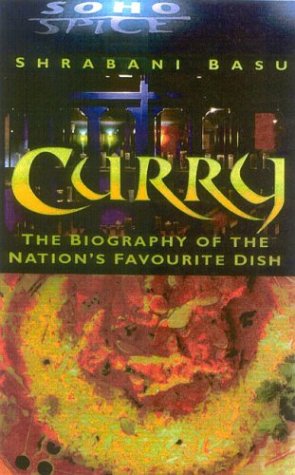
Curry: The Story of the Nation's Favorite Dish by Shrabani Basu

When you read this cover, Curry: The Story of the Nation's Favorite Dish, you expect it to be more about the actual dish curry and its origins.  Not quite, this is actually a book about how the dish impacted Britain, and to a larger extent Europe's food, grocery and restaurant businesses. 

Basu goes and explores how curry came to be a popular dish in Britain and the different people who brought it to its success.  She tells the history of the people who came up with the packaged dinners, the cold case dinners, the different restaurants, and the different regions of food that are cooked.  The book is more about the people than the food and it shows how they got to Britain and built their respective empires.

Since this book is about the people it tells from when they came to Britain (or their parents who started the business), where they came from, and how they built their business from humble beginnings into something larger.  It never really explores the people that eat the curries though, just the people that sell it.   And I'm still not sure I understand why it is such a popular cuisine in Britain even after reading this book.  I think a little more of the story on the other side of the plate would have been very helpful.

I also found this book a bit pretentious.  It only showed the empire builders, not the average family owned restaurant (unless it was Michelin starred in most cases).  It also had a disdain for formulaic curries and really "curried" favor with those that did something innovative.  I wanted to learn about the cuisine as a whole and it was hard to do that from this book because it just focused on the upper class eateries and the new dishes that were appearing with premium ingredients.  I wanted to know just what a formulaic curry was as it's not a description in my vocabulary and to see instances of it.

If you're looking for a restaurant guide to the finest Indian restaurant's in Britain this will be good but I think that there's a limited scope on the audience for this book.  Not enough about the food in my opinion.  When I read a book about food I want to almost taste it from the descriptions.  I couldn't do that here.

Curry:  The Story of the Nation's Favorite Dish
Copyright 2003
257 pages

June 02, 2014

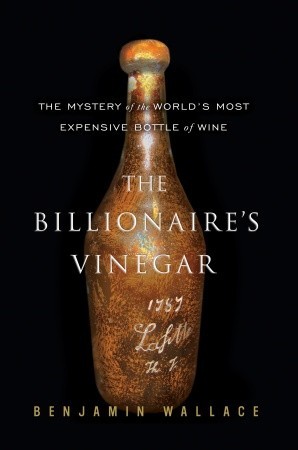
The Billionaire's Vinegar by Benjamin Wallace

It is amazing, if you have money, just what you can purchase.  In this case, a really old bottle of wine that was supposedly owned by Thomas Jefferson.  I can't say it is something I'd ever want to possess, but to each their own.

The Billionaire's Vinegar chronicles the auctions, private sales, findings, tastings, and pretty much everything having to do with wine from the eighties onward.  Specifically, it delves into the mystery of the Thomas Jefferson bottles.  Rare wine supposedly owned by Thomas Jefferson and auctioned off at great sums.  Later, there would be controversy surrounding the authenticity of the bottles though and both the players (ultra-rich people who have bought these bottles), scientists (analyzing the age of the bottles), tasters, and others would get involved.

There were a lot of people in this book, and with the exception of a few that came up every chapter, it was hard to keep track of them.  All the tasters, journalists, auctioneers, vintners, etc; there are a lot of people involved in the wine industry, and this book just tracked a small circle of them.  I didn't really care for any of them though.  Probably because I couldn't identify with any of them.  Well, that and with the exception of the really sweet wines, it all tastes like vinegar to me (and it's why I like the title).  I did find the history on Thomas Jefferson very informative though.  I learned things about him that I never knew, especially in regards to his spending habits.

This book started off very interesting with the information about wine and the history lesson.  But then it tapered off in the middle and became quite dry.  I disliked the politics and the intrigue and the drama that the bottles caused, especially since nothing was ever resolved so the book didn't feel finished.  I'm sure wine aficionados would have more of an appreciation for some of the people described in the book and would understand a lot more about the different vintages and bottlers.  Or at least they'd understand more of the terminology that was used.

Not a great book but it did have some good facts and was engaging in the first half.  History or wine lovers will probably enjoy it the most.

The Billionaire's Vinegar
Copyright 2008
319 pages


March 01, 2014

Edible by Daniella Martin

Entomophagy, have you heard of it?  It's eating bugs and as much as you can be grossed out by the subject, it's also something that warrants a closer look.  Because this is a protein source that makes much more sense than some of our current sources.

Martin studied anthropology and took a special interest in bugs; the eating of them that is.  In writing this book she explores how the eating of bugs evolved through time (our ancestors diets would probably have surprised us), how people around the world are still eating bugs, and the different cuisines that incorporate them.  She travels around the world, attending special restaurants or conventions that also specialize in eating bugs.  At the end, there are sections on how to raise bugs at home, a list of edible insects, and recipes.

I found the book fascinating.  The way Martin shows how bugs are used in cooking definitely makes it sound like a normal part of life and that we're the abnormal ones for not eating them.  She presents good arguments for why eating insects would help on a global scale for feeding the world.  And she makes everything sound appetizing.  I'm not joking when I say I'd gladly try eating some of the dishes she describes because they do sound quite good.  And her writing style in general is pretty funny.  She throws in plenty of jokes, writes in a conversational style, and you don't feel like you're reading a scientific type of book because it is so approachable.

Some people will be grossed out though.  We're raised not to think of bugs as food and the whole concept can make your skin crawl if you let it.  But if you loosen up and let go of your preconceived notions, it is quite interesting.  This book also has the potential to offend the vegetarians and vegans.  Martin doesn't think it's a bad diet, but she also does say was she thinks about it in terms of a diet that would suit the world and how it impacts people's activities. 

A very interesting book and one that made me think about eating bugs.  Not often that a piece of reading material can do that for you.  Very enjoyable!

Edible
Copyright 2014
252 pages

**This review is part of the Amazon Vine Program**

January 01, 2014

A Thousand Days in Venice by Marlena De Blasi

This is a love story more than a travel story.  And not all of those thousand days are spent in Venice.  I actually read the sequel to this book "A Thousand Days in Tuscany" before I read this book.  I really don't think it matters what order you read them in though.

De Blasi was in Venice for a job.  With a few friends she was scoping out some wine bars, working on an article.  When she goes to leave though she's told by the owner that she has a phone call.  It turns out to be a man who has admired her from afar.  Many phone calls later she agrees to meet him, and this stranger becomes a new journey in life for her.

Peter, I mean Fernando, looks like Peter Sellers.  No really, De Blasi reminds us of this nearly ever chapter.  He seems sullen and moody to me and I'm not sure what the attraction is, but she seems to like him well enough.  De Blasi herself really likes the physical things in life.  Food, fabric, and other such novelties.  Which I can't blame her for.  I'm obsessed with the same things myself.  And I think she's brave for leaving most everything behind to live somewhere else, although I do think it was a little foolhardy.  I would have liked to hear more about the other people they interacted with, but it didn't get beyond little snippets on anyone else.

So there actually wasn't much of Venice described.  There was some, and a lot of description about food, but overall this was a love story and the story of how she met her husband.  Not what I was expecting but at least the small amount of travel and food kept me through it. I did like the descriptions of the food, De Blasi definitely deserves her spot as a food writer as she is able to write about food in an evocative way.  You can almost taste it.   It's a small book, and the back of it actually has a bunch of recipes and a section on what to do in Venice.  There's also a reading group section. 

Not a book for those looking to learn about Venice I think, but if you want a little love story with some food, this is probably going to be up your alley.

A Thousand Days In Venice
Copyright 2002
272 pages

December 20, 2013

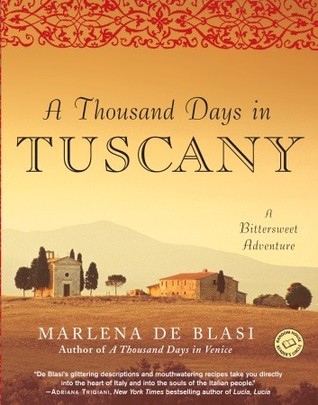
A Thousand Days in Tuscany by Marlena De Blasi

This is a book about food.  Really.  Ok, well maybe it's a book about Italian culture too.  But there's a lot of food in it.

Three years after marrying her husband in Venice, Marlena is apprehensive when they sell everything and move to Tuscany.  Here they have no job, are renting a house, but they quickly become adapted to village life and make a few friends.  One of these is a man who used to live in their house long ago and is a great source of help on projects from making a bread oven to harvesting grapes.  And of course, the entire time that they're living there, there is a lot of food and cooking going on.

Marlena describes her husband in favorable terms most of the time.  But does share that he has a quicksilver aspect of his personality which gets him gloomy.  In fact, most of the Italian men Marlena encounters (and one Russian) seem to have this trait.  She herself, while the narrator, doesn't go beyond describing herself in terms of clothes and the food she's eating.  She is very focused on clothes.  In fact, the person who gets the most description is probably Barlozzo, the man who used to live in their house.  He is kind of a funny character but seems to have a good heart.

I'm not sure where the thousand days part of this book came into play.  It seems to span only a year.  I'm guessing it was just a naming convention passed on from one of her other books.  I loved all the descriptions of the food (and the recipes included are mouth watering as well).  It was really that part of the book that shined.  She had good material to work with though with all the local produce and markets.  The actual renovation of the house and grounds I wasn't as interested in.  But her stories of the people in the village were good and you really cared about what happened to the people and how their lives were going.

A nice book about travel/living in Italy in the Tuscany region.  I'm sure most who enjoy other such books will take to this one with no problem.  It seems to fit that whole genre of woman moves to Tuscany and finds love and food.

A Thousand Days in Tuscany
Copyright 2004
325 pages

November 27, 2013

I Loved, I Lost, I Made Spaghetti by Giulia Melucci

The name of this book is what makes you want to read it.  Anything with spaghetti in the title is a must read.  However, this memoir I only felt luke-warm about, and that won't cook a noodle in any hurry.

Giulia is unlucky in love.  Not even dating until her early twenties, she falls for a series of men who just aren't quite what she needs.  And she's obviously not what they need either as they don't offer to make things permanent.  And this is in spite of her good cooking, active personality, and want of a decent relationship.  As she travels the years she dates several people, and each have their own quirks and good, but they also have some flaws too.

Giulia isn't afraid to point out everything she does wrong when it comes to dating.  She says she falls too fast, tries too hard, and goes after people who are interested in her, not necessarily those she is interested in.  She just wants that relationship.  The men she meets are interesting.  I can't say that I would have been attracted to any of them, too broody and not enough work ethic in some of them.  Most of them were able to cook though, so that's a plus.  Since it's Giulia's memoir, we get a somewhat biased view of them though so it's hard to tell what their true personalities may be, although it seems like she tried to be fair.

As memoirs go, this one was actually kind of depressing.  There's so many failed relationships that if you're single and having trouble in the dating realm yourself you start despairing of ever getting a good date.  Or a date for that matter.  Because you certainly don't want to go with whatever's interested regardless of your feelings.  Giulia's relationships she does have actually last for long periods of time (at least the 3 and 1/2 that she really focuses on in the book) so the breakups are more traumatic too.  One thing that really irritated me about the book (and this may just be my personal preferences) is the constant talk about music and how certain music was edgy and people liking bands before they were popular.  If the music's good, who cares about the when and why?  Not a huge deal, but whenever I encounter it in a book it rubs me the wrong way.  Aside from that though, the writing was smooth and progressed at a good pace.

This was an ok memoir.  It's very much a story of dating and a little bit about food (there are recipes).  If you really like drama this will be a good book to read and if you like food, stick around for those recipes.

I Loved, I Lost, I Made Spaghetti
Copyright 2009
273 pages

November 17, 2013

101 Things to Eat Before You Die(t) by Anneka Manning

Ok, so you know right away from the cover this is going to be a book full of delicious foods.  Because you're not supposed to have them while dieting.  And it's true.  Almost everything in here is delicious.  In fact, the cover is falling off of my copy because I've used it so much.  As of November 2013, I have made 27 of the 101 recipes in this book and there are still tons that I'd like to make. 

The book is separated into four different sections.  Nibbles, Snacks & Things in Small Packages, Soups & Mains for Hearty Eaters, Pasta, Rice & Noodles, and Vegetarian Plates.  There are no desserts in this book, but the author has another book full of those that if it's even half as good as this one, it will be full of good stuff.

Nibbles, Snacks & Things in Small Packages is of course the appetizer section of this book.  But really, a lot of them could be made into full meals.  The first recipe, Beef Nachos, took kind of a long time to make.  It had good flavor, but wasn't overly different than the dips you can get at the store.  The Quesadillas were fantastic though and very simple to make.  I liked the use of the taco seasoning in the mix.  Fried Ham and Cheese Sandwiches were somewhat plain but definitely old style comfort food.  Being that I'm living in the South now, I also tried the hushpuppies, which weren't your standard hushpuppies but very good.  And they cooked quick.  If you like Shrimp Scampi, the Garlic Shrimp will fit the bill.  One of the less favored recipes in this section was the Ham and Pineapple Pizza Wheels.  They were pretty but didn't have a lot of flavor.  A standout recipe, in comparison, was the Honey-Garlic Ribs.  They had great flavor.  Just a bit sweet with a kick.

Another interesting recipe in the appetizer section was the Corn Pancakes with Bacon and Maple Syrup.  This is a wonderful mix of flavors and I can't believe I'd  never had it until this book.  They reheated well too.  The Fried Potatoes with Garlic Mayo was a little too tangy for me, but the potatoes crisped up nice.  The Potato and Coriander Samosas had kind of a plain flavor.  And there was a lot of extra that there wasn't enough dough for.  But that was tasty on its own.  The Sausage Rolls cooked well and you can make them as spicy as you want depending on the type of sausage.  There seemed to be a good representation of Mexican food in this book, and the Tortilla Flutes were one of the first recipes I made.  I liked them, but loved them when I added cheese to the recipe.  Same with the burritos.

I didn't make as many recipes in the Soups and Mains section.    The Chicken Laska involved a lot of ingredients and wasn't as flavorful as I expected from the amount of spices in it.  It was good, but not fantastic.    The Chili Pork Ribs though were full of flavor and I'd recommend making extra sauce as you're going to want it.  Chili con Carne was easy to make and tasted like a standard, good chili.    The Classic Burger with Barbecue Sauce was very full of onions and delicious because of it.  And the sauce recipe was so easy to make you wouldn't believe it.  Quiche Lorraine was great, but not near as thick as the picture would lead you to believe. 

Pasta & Rice was my favorite section.    The Vietnamese Fried Rice had a lot of good stuff in it and was very good at hiding vegetables in a delicious dish.  Pastitsio was interesting, especially in its use of lamb and the topping made of yogurt was the best part.    It's hard not to like gnocchi and the use of bacon in the dish in this book just puts it over the edge.  Same with the spaghetti carbonara.  Quick to make, it uses cream and bacon as well and everyone loves that!  The paella was as good as most paellas, although it called for some pricy ingredients.    For those that like a plain spaghetti, the bolognese had all the meat you could want and you could definitely taste the wine. 

My favorites out of this section were the Singapore Noodles and the Spanish Noodles.  The Singapore made use of char siu (which I had to scour the Chinese markets for) and little vermicelli and was so good I couldn't stop eating it.    Same with the Spanish noodles.  They used a lot of pork, some great seasonings, and a picada sauce that tied it all together.  And it was easier to make than I thought it would be.

Lastly was the Vegetarian section.  Because they have good food too.  The Pasta Boscaiola was just as good as the other pastas, and was quick to make.  It's actually the only recipe I made in this section.  But there's a lot of cheese in most of them.  Which always makes for a good thing. 

Most of the ingredients in this book are easy to find.  Although there are a few that may be out of some budgets (saffron) or ability to find (char siu).  But since there is such a wide variety that just means you can go on to something else that is tasty.  And most of the recipes are easy enough for a beginner to make.  There are some that use a lot of ingredients, but the method and directions are clear to follow.

The book is quite beautiful too.  Almost every recipe has a full sized picture (a few have smaller ones) that takes up a whole page.  And all is in bright vivid color.  Including the cover.  In fact, the pictures made me try quite a few dishes I might not have otherwise tried because they looked so good.  There are notes on some of the recipes for added tips, and serving amounts listed as well.  There's also a standard index. 

I would definitely recommend this cookbook.  It may not be one you can use every day because of its heavy ingredients, but it's one  you will want to use every day.  Because the food is just that good.


October 13, 2013

In Meat We Trust by Maureen Ogle

**This review is part of the Amazon Vine program**

This is a really hard book to review. It's certainly well researched and well done (over 100 pages of notes and bibliography). But it also lacks interest at times. Which considering the amount of time that was probably spent on it, is sad.

Meat We Trust follows the history of meat production. From its humble beginnings on regular farms, to the development of factory farms, the different methods that were used to increase production, and the evolution of American's taste for meat and what type of meat. How accessible meat is to everyone regardless of income and the different laws and rules in place to keep it that way. And the sanitary laws that also came into play, along with an alternative food movement that wants to impose more regulations for how food is labeled.

There were a lot of people who developed the meat industry into the way it is today. Pioneers with technology and men out for a profit. You get to see how Tyson built his empire, and all the acquisitions he made. There are some descriptions of people in the alternative food realm who produced organics well before they became popular. And there is some talk of Ralph Nader and the movements against giant food corporations that he instigated. So an ambitious "cast of characters" in all.

This book starts at the beginning and shows how factory farms came about. Which means you got to hear about all the technology and the numbers of pounds of meat people were consuming. Each decade has its own numbers and innovations and it all points to ever increasing consumption. However, all those numbers and descriptions make the book slow moving and tedious to read. I found some of it interesting but at times it felt like there was detail thrown in just to use some of the research. And I wasn't sure how the author felt about everything. In some parts she's derisive about the organic movement while at other times the tone is admiring. Same with the factory farms. It was kind of confusing.

This is a well researched book, but it's just not attention grabbing. I think those interested in history and food politics will find it a good read though.

In Meat We Trust
Copyright 2013
367 pages

October 07, 2013

Living In A Foreign Language by Michael Tucker

This could have been such a beautiful book. Too bad the author turns you off in the first part of the book by alienating about 99% of the population. "There were other people--regular people--but you can't imagine how easy it is to tell the difference." And "I mean it's hard enough being a star, but when there's nobody there to worship you, it's damn near impossible." And plenty more just like that.

Michael Tucker and his wife Jill have been tv stars for awhile (LA Law I think?) and after the show ends they find themselves floating adrift. But then, at a birthday party in Italy, they discover a little villa called The Rustico that they fall in love with. They buy it and start changing it, having friends over and finding great food in the area. They also decide to go back to work and so spend their time between the States and Italy.

I've already mentioned my distaste for the author's ego. Maybe he was a really good actor, I don't know, I've never seen him in anything, but it's still not flattering to have quite that much conceit. Although at least he was impressed with his wife and you can tell that he appreciated her. I guess that's a redeeming point in his favor. She herself is only described through his eyes, but she seems like a very focused individual. And they had a ton of friends. One, Caroline, seems to be a helper/surrogate daughter and we definitely know she's Korean, as that's how Tucker described her mostly. But the rest of the people were so numerous that a really great description is never given.

Although that's completely different for the food. That's the best part of this book. I may not like Tucker but he can write about food. All his descriptions of the courses and pasta and deli that he incorporated into the book made me salivate. I wanted to hop a plane to Italy and just eat until I burst. There were stories that weren't about food, but food was definitely the focus. I was surprised by the amount of cursing in this book. It didn't start out that way, but by the end f-bombs are dropped all over the place. Which doesn't bother me but I know a lot of people don't appreciate reading it and so I thought I'd provide a warning.

I can't say that I wholly enjoyed this book. Just the descriptions of food. For those comparing it to Under the Tuscan Sun, I can see similarities, but it is definitely a different kind of book.

Living in a Foreign Language
Copyright 2007
252 pages

September 28, 2013

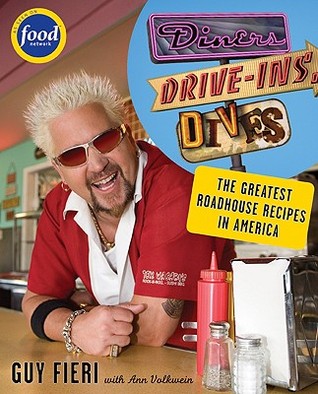
Diner's, Drive-Ins and Dives by Guy Fieri and Ann Volkwein

I love the FoodNetwork show that this cookbook is based off of. Seriously, I practically worship it and Guy Fieri and make it a point to go to all the places I can that have been featured on the show. Which means, that when this book came out, it of course had to go on my shelf. But now, I've owned it a few years, and have still rarely selected it as a go-to cookbook. But I'm still obsessed with the show.

For those not familiar with Guy Fieri or Diners, Drive-Ins and Dives, it's a show where chef Fieri drives around America looking for those places to eat that only the locals known about. These can be roadside stops to hole in the wall diners. But the thing they all have in common is delicious food you can't get enough of. Sometimes this food is as innovative as Captain Crunch French Toast (a recipe in this book) or as simple as a burger cooked right. This book, in addition to having some recipes either from the locations or loosely based off of some of the recipes, has small snippets about the different places the crew went, little blurbs written by Guy, and an introduction to the team that films the show.

The book itself is separated into regions (i.e. Northeast, South, etc.) but if you're looking for a specific type of food, there's a glossary in the back that separates them out with page numbers according to the meal type. Then, in the regions, we are introduced to the place without about a page of description on the location, maybe a picture, and then however many recipes are being offered for the location. Unfortunately none of the pictures are in color though. I would have paid more for this book for color photographs.

I've tried about twelve of the recipes in this book. The first of course (going in order of the book pages) was the American Chop Suey. I pasta and hamburger dish that was tasty, especially when you added cheese to it. It made a lot though, so prepare to eat leftovers! The Three Cheese Macaroni and Cheese was very filling and had a thick sauce with a rich taste. The Beef Brisket from MoGridder's was ok. I made the seasoning and sauce that went with it, but they were both pretty standard and nothing any better than what I get on a grocery store shelf. Pete's Rubbed and Almost Fried Turkey was very salty. And I have to warn, this should probably be done outside, even if it is just a breast, because most kitchen's exhaust systems won't be able to handle it. The InCrusted Dolphin Sandwich from Scully's Tavern had a nice crunch to it. And you could bake instead of fry if you want to. A local haunt near where I live, The Penguin, offered up some pimento cheese. It did not taste the same as at the restaurant and had too much mayo. Although admittedly there has been change in ownership since the show filmed so that could account for the variance of taste as well.

Probably some of the best recipes in this book were the pies. Both the Coconut Cream and the Black-Bottom were delicious and easy to make. And in case of the Black Bottom Pie, it was very impressive looking. Because I can't pass up a Mac & Cheese recipe, I also tried Smoque's version. It wasn't bad, and I did enjoy the breaded topping. Unfortunately Mom's Meatloaf wasn't near as good. It was plainer than a lot of other meatloaf recipes I've come across. I also had a lot of trouble with the Hodad's Bacon Cheeseburger. My bacon patties just wouldn't stay together. And the Squeeze burger is definitely better made on a flap top. A regular home cook just won't be able to replicate it easily. The Greek Money Meatballs were also nothing special but they were filling. The pollo guisado was way too spicy for me. I couldn't handle it. And I'm very glad that I didn't add water to the sauce, because it was watery enough without adding it.

So overall the recipes were a mix of good and bad. I think this book is more useful as a guide to the different places Guy visits rather than a cookbook. There are some decent recipes but really, they aren't the ones from the show and some make you scratch your head wondering where they came from as they were dishes not even mentioned at the various places. I'd rather cook Guy's original food (which you know is the exact recipe you're seeing on tv) than have fake copies of the ones off of DDD. And a lot of the recipes are more appropriate for a restaurant setting as they use a myriad of different ingredients and would be expensive for a standard sit down meal at home.

I think if you approach this book for the stories you'll be more content than thinking of it as a cookbook. But since it advertises itself as "with recipes" it's hard to align yourself to that sort of thinking. Maybe with some color photos and a few better recipes this could have been something amazing. But hey, there's a second book (and maybe even a third at the time of writing this review) that may be worth taking a look at! For now though, I'll consider this book merely average compared to the brilliance of the show.

September 15, 2013

Herbivoracious by Michael Natkin

**This review is part of the Amazon Vine Program**

**I have tried 13 of the recipes in this cookbook**

I've been back and forth on how to review this cookbook. Having had it in my possession for about a year now (I always take a long time to review cookbooks since I try out a good amount of recipes), it's been hard for me to open it up and actually use it. So many of the recipes just didn't appeal to me or jump out and make me want to use it. And I've hard mixed feelings on some of the recipes I have made. I'm not a vegetarian, but I cook vegetarian quite often and enjoy the cuisine. And I think I have more vegetarian cuisine cookbooks than I do of other types of cuisine.

I received an Advanced Reviewer's Copy of this book through the Amazon Vine program. This means that it isn't a "complete" cookbook that I've been working through. The only picture was the cover (which is beautiful) although I've been told that the finished product has wonderful pictures. So when reviewing this, I have to bear in mind that maybe some of the recipes would have been more appealing with pictures to back them up and those who buy the full copy of the book will have a more positive experience than I did. As far as the rest of the layout of the book, I found it easy to read and well organized, with appropriate sized text for the recipes. Aside from the recipe section, there's also a beginning describing ingredients and kitchen tools, which can be helpful at times. I also appreciated the descriptions of the dish and the information at the beginning of the recipes.

In Appetizers and Small Dishes, the first chapter of recipes in this book, I actually only tried one recipe. There were several I thought about, but alas, just didn't have the time to powder my own cheddar cheese for the onion rings or do some of the other time consuming tasks that were required. I did make the Tempeh-Filled Potstickers. They were good, filling, and the sauce was great, but they were exceptionally time-consuming to make. At least for someone who's not experienced with making gyoza.

I made two recipes in the Soup section. The Garlic Miso Broth, which tasted heavily of Garlic and not much of anything else. And the White Bean and Kale Soup, which had a main flavor of the added Parmesan, but was otherwise plain with a nice texture. I think if I were to make it again, I would try adding quite a few spices to the mix. I do plan on making the Butternut Squash Soup with Maple Pumpkin Seeds in the future, it's just sourcing the pumpkin seeds that is proving difficult (and I just don't have enough time to peel individual seeds after carving a pumpkin myself). But it sounds delicious.

I did not make any of the salads. That's just a section I avoid in most cookbooks as it seems like a lot of work for a salad, no matter the book. There were some interesting sounding ones, like Green Mango Salad and Jicama, Radish and Orange Salad. But it's not a section that appealed to me.

I was surprised to see that the Main Course section was rather small. Only 8 recipes in total. But the Superfrice Grilled Cheese was good. I know it's a standard recipe, but the author was able to make it a little bit special using a unique cooking method.

The Main Course Pasta and Noodles dishes section was much larger. I tried the Spaghetti with Garlic and Oil and the Linguine with Mushrooms. Both were quick enough to make, but didn't offer a lot in terms of flavor, although I used all the ingredients recommended. I even added extra red pepper flakes to the Spaghetti with Garlic and Oil. The Linguine with Mushrooms had a wonderful texture with the mushrooms and white wine, but I think maybe adding more seasoning would have helped the dish. Just a bit of basil or oregano.

I thought the Stovetop Main Courses were interesting sounding. I actually only tried the Quinoa Cakes. Which had a great flavor once the salt and pepper was added, but I had the worst time keeping them together in cake form so it ended up just being quinoa on my plate. Not a terrible thing, but a little frustrating when trying to make it. There were enough eggs in it for a binder, so I'm not sure why they weren't holding together well.

From the Oven Main Courses I immediately went to the Mac and Cheese. This version was a Triple-Smokey Mac and Cheese. I loved the idea, and loved the texture, but ultimately found it a little too spicy. I think half of the chipotle amount would make this dish just about perfect. Unless you can really stand the heat, in that case you're good to go with the recipe. It also is a mac and cheese that freezes well. A couple of the other recipes in this section look easy to make, so in comparison with some of the other sections, this is one that is more approachable.

Side dishes was the next section. The Roasted Cipollini Onions and Beets were very good. There's not a vegetable out there that can't benefit from roasting, at least as far as I'm concerned. And this was a good mix of things. Jamaican Rice and Peas was spicy, even from one pepper, but it was very easy to make in my rice cooker and I was pleased with the results. It was also very filling.

I'm not much of a dessert person, so it really surprised me that I found the dessert chapter the best chapter in the book. The Raspberry-Blueberry Buckle was the perfect way to get rid of old fruit in the fridge. The Maple Pudding with Spiced Pecans was simple to make and absolutely delicious. The pudding was the perfect texture and used relatively few ingredients. And I loved the spice on the pecans. It was my favorite recipe in the book actually.

There's a breakfast section, but my idea of a breakfast is soda, so I have not tried anything from that section. And the last chapter of the book is just for various condiments and cooking items. I tried out the book's way of making homemade bread crumbs, and it was very effective and easy. The other items in the chapter were mostly sauces and they sounded interesting.

Overall I wouldn't call this a cookbook for beginners or new vegetarians. The recipes can get complicated and a lot are time consuming. They also require that you know very many different types of cooking using a variety of different appliances. Those that like a challenge though, could appreciate this cookbook. That's not saying that there aren't simple recipes, because there are a few in here. But, like I mentioned before, there's a recipe in here where you have to powder your own cheese. So it runs the gamut.

I think ingredient-wise it might not be as approachable either. I live in a major Metropolitan area (Charlotte) and I was even a little intimidated by some of the ingredients that were needed for this book. I'm sure there's somewhere around here that sells 99% of what's in this book, but finding that can be daunting and a lot of things (morels, certain sauces, fresh lychees) are not something that most people are going to be able to get their hands on. So that's something to keep in mind when you are cooking with this book. Sure you can go off of the recipe and use replacements, but sometimes that doesn't always work out as well, and for those who like to stick to recipes, it can be frustrating. Some of the ingredients, even if they are something you can find, can be on the pricey side too, so that may be another deterrent.

As far as it being vegetarian, this book does a good job of providing variety. Some of it may not sound that appealing to people, but at least it doesn't make use of a lot of fake meats or other standard vegetarian fare and it does have a lot of unique recipes. There are recipes that use cheese, so I wouldn't consider this a vegan cookbook, but it does have some vegan recipes in it.

I think that there are people out there who this would be a great cookbook for. But for me, it was just a little too time consuming to get some great recipes, and the others weren't as appealing to me. The ones I did have were mostly average (with a few really good recipes). But overall, this is a nice book to have around if you want to do something special.

September 11, 2013

Anything That Moves by Dana Goodyear

**This review is part of the Amazon Vine Program**

I used to think I was an adventurous eater. Even a foodie. That is, until reading this book. After reading it, I think I'd prefer not to associate myself with the foodies. Goodyear takes a whole world of underground, raw, illegal, and just downright strange eating and brings it to light.

There are several sections in this book about different forms of food. Some focus on the people that get these hard to eat goods, like ant eggs. Others focus on using illegal product, like cannabis in their cooking. Still others focus on meats from endangered animals whose sale is illegal in the United States. And then there are a few sections on underground restaurants and the raw milk movement.

Goodyear hangs out with a lot of unscrupulous characters. Or at least she did when she wrote this book. People who think nothing of eating whale or procuring quite a lot of pot to make a themed meal. I actually don't care about the second, it's the first that gets me. If something is endangered leave it alone, it can become food when the population has been restored. There are a couple of unique characters though who get their reputation by serving dazzling food and never in the same way twice. Like the chef who runs an underground restaurant out of his apartment. Him, I found quite interesting. Everybody tended to be a bit snobby about their food choices though, and have a strict definition of what a foodie can be. Live and let eat I say (except in the case of endangered animals or unnecessary cruelty).

I felt like this book was comprised of many smaller articles. It just didn't flow naturally like a general book would. There were several interesting topics though, the biggest one for me being the subject of raw milk. It's one of the things I think should be legal everywhere with it being up to the person to determine if they want to take the risk (we can purchase soy sauce and drink it in mass quantities if we choose but it's illegal to purchase raw milk in most states and drink it. I know, crazy comparison, but think about it. It's true.). On the other side of the spectrum I was disgusted with the thought of eating endangered animals and the sheer volume that gets consumed just in CA. But all of it was descriptively written and I can appreciate that even if I didn't care for some of the topics.

I can't say I'll be in a rush to try the majority of things that were mentioned in this book. But it was an interesting look into American food culture and I learned a lot. I even learned some things I probably didn't want to know. This is definitely a book for anyone interested in food to read.

Anything That Moves
Copyright 2013
259 pages

August 25, 2013

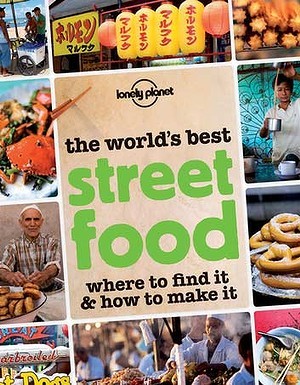
Lonely Plant: The World's Best Street Food

**This book is part of the Amazon Vine program**

Travel and food. Two wonderful things. And this book combines the two of them. Although in some ways scary and it some ways fantastic.

The book is broken up into two sections, the savory and the sweet. Each recipe has a description the left hand side including "What is it?", Origin, Tasting, and finding it. Sometimes there are tips, variations and other tidbits. The right hand side is the recipe itself, usually with a picture. And they come in alphabetical order so it's somewhat easy to find what you're looking for. And there's a lot of color in the book too in the backgrounds and text. It's very visually pleasing.

The recipes are also quite interesting. While I can't envision myself preparing chicken feet, there are plenty of approachable recipes that can be tried even if you aren't that brave. I've tried quite a few recipes in the Savory section though.

Bsarra, from Morocco, was a lovely soup that while thicker than I expected, had a terrific flavor. The Burek, from Bosnia, was also good, but it just didn't hold together well and was hard to shape. I did like the Mushroom Crostini, it was quick to make too. Pastys are either a love or hate food, but these weren't too bad and the variety of fillings are endless. Currywurst was actually really sweet, and I didn't enjoy it that much. One of the best recipes is Gozleme which, while time consuming, was tasty and filling. The Chicago-Style Hot Dogs are just that, down to the celery salt. Kelewele was easy to make, but you couldn't taste the spices, it needed to be stronger. The same with the Knish, just not a lot of flavor. One of the most interesting recipes was the Kushari. Although I didn't like the massive amount of dishes it produced, I did like the food itself. The tomato sauce had good flavor.

The Maine Lobster Roll was easy to make, surprisingly. But I felt it was kind of a waste of Lobster, to smother it in mayo like that. The Pastizzi was also relatively simple, and interesting, but a bit plain. But the pierogies. Oh, they turned out fantastic and I'll be returning to that recipe. It was fantastic. Same with the Poutine. It's fattening, but delicious. And the Pretzels. Must be something about food that starts with "p". Lastly, the Zapiekanka, was kind of like a french bread pizza, but I wasn't thrilled with the mayo.

The Sweet section wasn't near as bit as the savory. And admittedly I didn't make as many recipes in this section either. But the Baklava did taste just like store bought and were quite good. However, the Beaver Tails were ok, but didn't hold on to their cinnamon sugar that well. The Sfenj was good. But the water measurement was off by 1 1/2 cups for me. And it definitely needed a sweet topping or it was kind of savory.

Overall, most of these recipes were a success. Not all had a ton of flavor, and some were hard to cook, but the majority were well worth making. I enjoyed them quite a bit. And I did love the pierogies. The whole book is worth it just for that one recipe. And I enjoyed all the stories and history that were included for each recipe.

A great book! This is one that either a cook or world traveler will like.

August 04, 2013

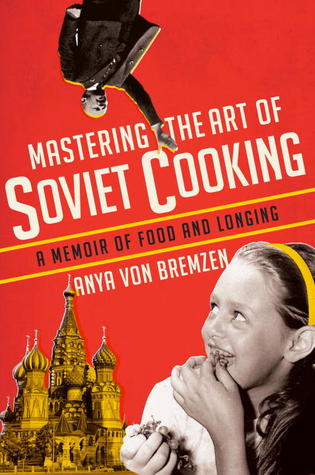
Mastering the Art of Soviet Cooking by Anya Von Bremzen

**This review is part of the Amazon Vine program**

A memoir of food and longing, that's the sub-title of this book. And I think it's a very apt one. But it's also a book of history. I think I learned more about Russia from this book than I did in the few classes I took in college.

Anya grew up in Russia. But her mother, discontent with the way things were, finally left for the United States, and took Anya with her. Now, years later, Anya reflects on her time and of her parents and grandparents lives in Russia as well. Anya and her mother decide to cook through the dishes of Russia by decade. Starting with the decadent 1910's all the way up through the new millennium. Sadly, most of these decades are marked with hunger and shortage and encouraged a creative use of ingredients. But these are the same dishes that have Anya longing for the past.

Anya had a lot of complicated relationships. Probably the most important person in her life was her mother. They appeared to be constant companions and her mother is a very strong person. It was amazing how she was able to raise a child on so little and be brave enough to go to a new country on her own. Her father was a little less stellar and seemed to have a form of depression or drug addiction. And the way she made it sound was if that was a very common thing for men in Russia. Her grandfather was also an unusual type, being in the military he had a very strong pride in his country and some advantages that probably helped in their survival (or hindered it at times).

I had originally thought this book would be mostly about food. And it had some food included. Anya and her mother did a lot of cooking and reminiscing over food they ate while living in Russia. But I'd actually classify this book more of a history. It told of the different leaders and the living conditions under each. It also went into a little of how the military worked and the difference between classes of citizens despite the communist state. And of course there were the personal stories of Anya's life. The pace was decent, although when describing the politics it could drag a little bit sometimes. The little bit of the food that was described I have to say didn't sound very appetizing to me. Lots of mayonnaise, although it sounds as if Russian mayo is different than American. She did include some recipes, one for each decade, at the back of the book.

While I would have liked just a little more food, I thought this an informative memoir. It certainly opened up a bit of Russia from the perspective of someone who lived during some volatile times.

Mastering the Art of Soviet Cooking
Copyright 2013
334 pages

August 03, 2013

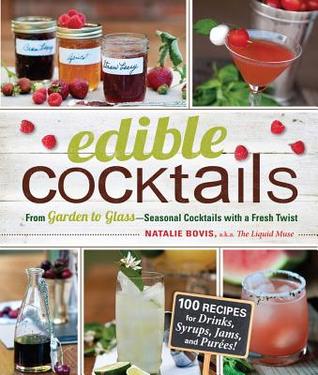
Edible Cocktails by Natalie Bovis

**This review is part of the Amazon Vine program**

Ok, I always try to make at least 10-20% of the recipes in a cookbook before reviewing, but I'd be a downright drunk if I tried to do that with this one. I just can't consume that much alcohol by myself. But I did get to try a few, and I thought this was an interesting book.

The book is split up into several different parts. There is an introduction and list of kitchen and bar tools and their uses, glasses, and the types of alcohol. Chapter 2 talks more about gardening and growing your own ingredients. Then we get into the chapters that actual deal with making the drinks, starting with a very large section on grapes and including grape based cocktails, sparkling cocktails and specialty sangrias. Out of this section I tried the Classic Champagne Cocktail and the majority of people with me who tried it enjoyed it. The bitters gave it a very unique taste.

Chapter 4 is syrups, shrubs, and other sorts of additives. There are actually recipes for jams in this section, although I prefer to use actual jam books for that sort of cooking (although there is a recipe for making your own pectin). The variety of syrups is endless though and there was a huge selection. I made the cherry-cinnamon and it was only slightly medicinal tasting but the taste was good and it had a nice thickness to it.

Chapter 5 is the odd one. This has all the infusions with ingredients like meat and eggs. I'm a sucker for Bacon so I made the Smoked Bacon-Washed Bourbon and the accompanying Bacon Cherry Creek Cocktail. By itself the bourbon had a slightly fatty flavor and the smoke was strong. When mixed into the cocktail I thought it was horrendous. My grandpa liked it though and thought it had a strong smoke flavor but was light on the cherry. If you're not into bacon there's recipes using prosciutto and chorizo too. Also in this chapter I tried out the Homemade Irish Cream. It did taste like the popular brands but was quite a bit stronger. I had to cut it with more than the usual amount of chocolate milk that I normally use.

Chapter 6 is the Mixers, Garnishes and Ice. This is where you find the salt and other such things. I didn't give anything a try, but they had a few interesting recipes like the Strawberry Pink Himalayan Salt rim. The last chapter, 7, is also one I didn't utilize but it just had a lot more drink recipes from margaritas to martinis.

I think this is definitely a book that would be more utilized by an experienced mixologist. As only a casual drinker that enjoys a wine cooler now and again, getting over the sticker shock for some of the prices and then the complicated mixings of the alcohol was a little much for me. But I appreciated all the fresh ingredients and the syrup mixes. Using some imagination, a lot of these ingredients could be put to use for non-alcoholic drinks too (there's a recipe for lemonade in the book that would be good to mix the syrups with).

The format is nice, with bright colorful pictures and the text was easy to read. While there was the introduction and beginning to let you know what some of the terms meant, it was still hard for a beginner though.

There's definitely a better audience for this book than me, but it was still well done. I can see a lot of people who enjoy their mixed drinks really loving this book and using it for all sorts of events.

July 28, 2013

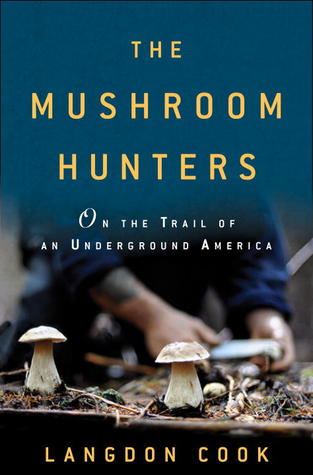
The Mushroom Hunters by Langdon Cook

**This review is part of the Amazon Vine program**

In the spring, I take to the woods, in search of that elusive morel. I dream about it all year; rolled in flour and then pan fried in butter, it has got to be one of the best foods out there. And then I read this book, got insanely jealous of how easy it appears to be to find mushrooms out in the Northwest and lamented over the fact that several days of searching only yields a handful of mushrooms for me usually. Gee thanks Mr. Cook.

In actuality though, this book is not about the mushrooms themselves so much as it is about the pickers of mushrooms. And even then it isn't so much about the recreational pickers like myself (if I can even claim to be that) but more the commercial pickers, and the buyers that make up the business. Going undercover of sorts, Cook interacts with all types of pickers and a buyer who runs a business around foraged food, supplying several high end restaurants with the ingredients. He joins them on picks and travels through the different seasons looking for different types. He also learns a bit about the business and the commercial prices for mushrooms.

Since this book is mostly about the pickers and the one buyer he hangs out with, they are the main focus and the human interaction that he has. While they were all interesting I'm still not sure how I feel about the illegal picking they sometimes do and the areas of law that they make grey in regards to picking. While none of them seem particularly dangerous (although a few walk the line) it seems a much rougher endeavor than I would have thought. In describing himself Cook shows his love of food and that he isn't afraid of hard work. But he doesn't really focus on himself as much as the other people in the book.

What I really had trouble with was the pace. I could easily set this book down and leave it for awhile as nothing really grabbed my attention. There were interesting facts scattered here and there but it wasn't continual. And some of the descriptions were hard to understand. I'm still not sure I understand the grading system of the mushrooms or why they are called buttons. A little more description in that regard would have been welcome. I also thought the book jumped around a lot and I'd just be getting into a story when he would be off doing something else with someone else. The best part of the book was the descriptions of the mushrooms, what they looked like, and what dishes they were good in. I really wish he had included some recipes!

I can't say this would be a book I'd go back to time and time again. It was worth it for one read if you're interested in the type of people who hunt mushrooms and the commercial business of selling the fungi.

The Mushroom Hunters
Copyright 2013
290 pages

July 06, 2013

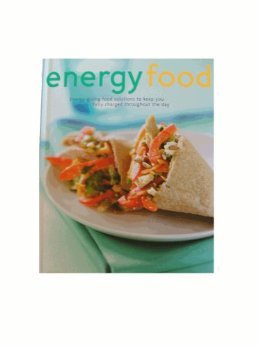
Energy Food by Beverly Le Blanc

**I have made 9 of 38 recipes in this book.**

We all need a little more energy right?  Or at least I do.  So I saw the cover of this book, the picture looked decent, and thought, "why not give it a try."  And it wasn't a bad book, although I can't say it gave me any more energy.

Energy Food contains recipes specifically designed to give you an added boost throughout your day by way of nutrition. It is separated into four parts, with an introduction at the beginning and an index at the end.

The introduction is pretty standard, it introduces the goal of the book, says a little about looking at carbs a different way, has simple but satisfying tips for improving your diet (i.e. brown rice instead of white) and also talks about breakfast since it is supposed to be the most important meal of the day.

The first chapter is Breakfast Boosters, and it is about breakfast.  Sure, there is the standard granola and such, but this chapter had a lot of different breakfast ideas in it that weren't your usual healthfood recipes.  The Apple & Spice Oatmeal had few ingredients and cooked quickly, but it definitely needed the optional honey to be palatable.  Even with the apples the oats overpowered all taste.  I also thought it was weird that the ingredients list included "ground mixed spice" but yet never said what this mixed spice was.  I defaulted to some nutmeg and cinnamon, but who knows if that is what they meant.  The Scrambled Eggs with Leeks were nice and had a light flavor.  They were quick to make but still very filling.  A smoothie recipe, Blueberry Bliss wasn't too bad, but the predominant taste was of yogurt. 

The next section is Lively Lunches (yes these are cheesy chapter names, but oh well).  A lot of the recipes in this section were for soup, but non really jumped out at me as something I wanted to eat.  I did however try the Baked Sweet Potatoes with Red Bell Pepper Hummus.  I had to cook them longer than the recommended time, but the overall flavor was good and I liked the addition of the peppers to the homemade hummus.  It gave me a chance to break the food processor out and use it for a change.  It was a very filling dish.  The Tomato Frittata was an easy to make dish and set up quite nicely with the egg ratio.  I think my favorite recipe out of this section was the Buckwheat-Tomato Bake.  It was different, and the addition of the feta cheese made it very tasty.  The Chicken Avocado Salad was par for the course but the dressing that went with it was surprisingly tasteless and I was a bit disappointed.  I think adding more herbs to the mix would improve it quite a bit. 

Dynamic Dinners is the next section.  There were a lot of good looking recipes in this chapter but none yet that I've tried.  They all didn't appeal to the people I was cooking for and I didn't relish the thought of eating leftovers five days in a row so I didn't make them.  I think the main turnoff was that the majority were vegetarian and they wanted a little meat (I tried to explain alternative protein sources, really!).  I do think at some point I'm at least going to make the mushroom risotto.  It looks quite tasty as does the roasted vegetable pizza.

The last section is Super Snacks.  These are the little pick me ups throughout your day to keep you moving.  There's a standard trail mix in here, some scones, and other things you can just grab and go with.  I made the Chewy Oatmeal Cookies, and sent some with my dad to work, and they were well received.  They of course had raisins in them (I substituted half for craisins for a little more sweetness) but they had a good texture even if they didn't look like the picture.  The Mediterranean Melts were something that you had to cook, but they ended up being fancy Bruschetta without the bold flavor. 

My overall thoughts of this book was that while the recipes were nutritious, they weren't that flavorful.  Maybe I have a bold palate and like too much spice and herbs, but somehow I don't think so.  Just the addition of some more spices or other flavors would have really amped up the dishes.  Just because it's healthy, doesn't mean it has to be bland.  Luckily though the recipes are easy to make and I can see a beginner getting along fine with most of the recipes in the book.  There are a few that are a little more complicated to cook, and there's no basics described (how to scramble an egg) but anyone who can cook a little should be able to make most of these dishes. 

The types of dishes in this book are mostly vegetarian.  There are a few animal protein sources, but they are limited to chicken and fish (no shellfish).  Nuts are also used as a protein.  Because of these limitations, it might not be a book for someone who enjoys red meat or a lot of variety. 

For energy, I didn't notice any extra in my case, but my dad, who has MS, seemed to react very well.  It could have just been the extra socialness of having someone around to talk to, but after a few days of eating this food he seemed to have more energy and a happier personality. It's also good food for going light on the calories and I dropped a few pounds after eating this type of food for over a week.  But, I also started running again so it is probably a mix of the two. Even so, it is a better alternative to fast food burgers and fries if you're trying to lose weight. 

A positive thing about this book is the amount of pictures.  There is a full page picture for each recipe and they are all beautifully done.  I liked looking at the food more than I did eating the food actually.  And it was nice to see what everything should look like when finished.  The book format itself was easy to read with the right side being the picture and the left side having the recipes in large print (very easy to read).  The ingredients list came first, followed by the name of the dish and description, and then the actual steps to the recipe.  I do wish since this was a healthy cookbook that they included the calorie count, fat content, etc.

An ok book, I can't say I'd refer back to if much.  I have a couple of Vegetarian cookbooks that have tastier food and are just as healthy (Vegan Planet) or healthy with more protein sources (Food to Live By) that I'd rather refer to.

Energy Food
Copyright 2007
96 pages

June 07, 2013

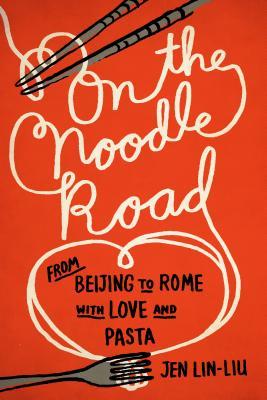
On the Noodle Road by Jen Lin-Liu

**This review is part of the Amazon Vine Program**

I love noodles. I could eat them every day whether it be macaroni and cheese, alfredo, filled pastas, lo-mein, well, you get the picture. There's something very comforting about them and it isn't a surprise that they are found in most cuisines around the world. But just how did they spread among all those cuisines is the question Lin-Liu attempts to answer in this book.

Lin-Liu, while living in China and working at her cooking school, decides to follow the Silk Road from China to Italy in search of where noodles originated and how they have persevered through the cultures. She'll go through all of China, Iran, Turkey, and many other countries before finally finishing in Italy. And she'll seek out noodles in each of these places although in some, they are harder to find. Additionally, this is a memoir of sorts that expresses Lin-Liu's troubles with her new marriage and search for herself in the relationship.

Lin-Liu and her husband aren't the only people featured in this book though. She encounters so many people in her travels that they are all included here as well. And she offers a commentary on their lives as they are bound by their customs and rules of the countries. She expresses her vehemence quite often at some of the traditions that bind women to their homes and their kitchens, even as she enjoys the tasty food that comes out of them. Her relationship with her husband is less interesting though, and while I can appreciate that she tried to make this a memoir in addition to food writing, I just don't think it was the right mix to make it interesting. I cared more about the food and who made it than I did about her personal life, right or wrong as that may be.

There was a lot of food in this book (recipes too). And the majority of the book was luckily about food, because as said before, I wasn't as interested in the memoir part of this book. I do think that China was probably my favorite region that Lin-Liu described. All of the noodle dishes sounded wonderful and I think I'll definitely make good use of that recipe section (all the recipes are at the end of the chapter for each respective country). Iran, the people she spoke with were interesting, but the food didn't hold as much appeal for me. The same goes for Turkey. And Italy wasn't described near as much as I thought it would be, considering they are known for their noodles. And while the writing was a little choppy, with less than smooth transitions between the countries, it was still approachable writing and easy to read. Lin-Liu writes like she probably talks, and it is easy to get absorbed, although long-winded at times.

I enjoyed the book but I don't see myself going back to it again and again (unless it's to use the recipes). It offered a unique perspective on noodle dishes and nice descriptions of foods for any foodie, but was a bit too meandering to be a repetitive read.

On The Noodle Road
Copyright 2013
384 pages


May 25, 2013

Chicken A La King & The Buffalo Wing by Steven Gilbar

This has to be one of the driest books on food I've read. And usually I like anything about food and "devour" any type of book about it. But this one, well, it was a struggle to get through with hardly any little nuggets of goodness in it.

This book is a list of food names and the people and places that inspire them. It's broken down into dinner, breakfast, and lunch and several sub-categories within those categories (i.e. grains, drinks, etc.). Some are brief blurbs of only a few sentences while others encompass a paragraph of information. And at the end, there are several recipes cards for some of the dishes mentioned in the book.

A lot of the stories are really dry and uninteresting. There were just only so many times I could hear that this piece of food was believed to be from such and such place, and that was it. The few that were good were those that expanded a little on the story and gave more background and story type of telling than just a brief sentence with the location. The stories that said it was believed this person did it for their beloved (insert type of person here) were much more engrossing. But sadly, they were far and few between.

The recipe cards were different. They came attached in the book and you could break them out to put them in a recipe card holder. I've not seen a book come with that type of recipe collection like that and I appreciated how it was put together. Although there were only a few I would actually consider making. The organization was also ok, although I thought it weird they started with dinner, then went to breakfast, and then to lunch. It just seemed out of order.

I can't say I'd recommend this book. It just wasn't something I got real excited about and I'm not even going to rip any of the recipe cards out before giving it away. Maybe someone who prefers dictionary types of books would enjoy it more, but it just wasn't for me and it probably wasn't for a reader who would want entertainment value from it.

Chicken A La King & The Buffalo Wing
Copyright 2008
168 pages