**This review is part of the Amazon Vine Program**
I'm ashamed to say I'd never heard of Cixi before picking up this book.
China's early history (at least before Mao) is not something I've
delved into quite a bit. But having read the author's "Wild Swans" I
decided to give this book a try. And I'm very glad I did.
Plucked
out among many other girls as one of the royal concubines to the then
emperor, Cixi was a normal Chinese girl. Well, normal insomuch as royal
concubines are. Not even the Empress, she had to use force of will to
climb up the ladder and become one of the most powerful figures in
China's history. Ruling for the better part of a half century, a woman,
in a land that oppressed the female gender, she had to be intelligent
and cunning. According to this book, she was progressive and brought in
a lot of modern improvements to China despite being wracked by
rebellions, hostile foreign policies, and other hazards. And since she
couldn't rule in outright name because she was female, she had to
maneuver politics and emperors around to best direct her needs.
Cixi
is a strong person, and that comes through in this book. Few women (or
even men) can claim to do half of what she did in a lifetime. And she
had to overcome a myriad of obstacles just because of her gender to
rule. This book paints a pretty optimistic picture of her, but refers
to the notion that she is not always portrayed this way. Having
experienced this book about Cixi before anything else, I of course am
disposed to lean towards the fact that she did the best she could in
leading China, and when she made mistakes, she admitted them. So I
admire her. And the author does mention several other people in this
book as well, but to be honest, there's so many of them it's hard to
keep track. It's obvious that Cixi is the main focus in this book, and
that's just fine.
I learned a lot about China's history from this
book. And about Cixi. It's amazing how many things can happen over
the course of a few decades. There's even a good bit written about the
Boxer Rebellion since it happened during Cixi's rule. But it wasn't dry
as some historical books can be. It kept me riveted the whole time and
even though it lagged a bit in parts in the latter half, I still found
it hard to put the book down. It's the kind where you can probably go
back, read it again, and discover new facts you may not have noticed the
first time around. Really, the parts that made it lag were some of the
politics, but the book can't be faulted for that as it's a book about a
country's leader and politics go hand in hand with that. And from what
I can tell it is well researched. Wild Swans was also well done and
both books have had a lot of care put into them.
An excellent
book and one I'd recommend to anyone interested in history or China.
It's a powerful biography on a very interesting woman.
Empress Dowager Cixi
Copyright 2013
373 pages
Showing posts with label china. Show all posts
September 05, 2013
August 21, 2013
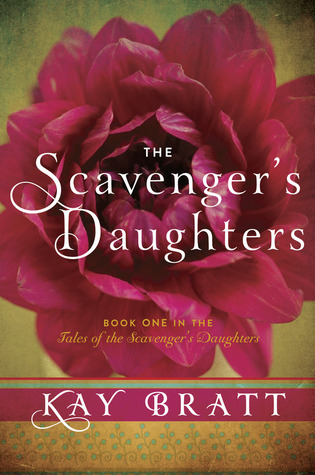
The Scavenger's Daughters by Kay Bratt
**This review is part of the Amazon Vine Program**
I know this is fiction, but a part of me wants it to be real life. If only for the girls that Benfu and his wife take in. But even being fiction, it does have a lot of truth to it, and I think that's what makes this such a great book. And even better, this is the first in a series, so there will be more of it to enjoy eventually.
Benfu survived China's Cultural Revolution, mainly in part to being rescued by his wife's family after collapsing near their home. Now, many years later, he and his wife have over twenty daughters. All of them a result of having been found while Benfu was at his job scavenging. Often, when a child has a disability or is a girl, they will be abandoned in China. And Benfu and his wife share what little they have with their foundlings. But they're not as young as they used to be, and it's becoming harder to make ends meet.
Benfu and his wife are both wonderful characters. But Benfu gets more time than Calla Lily. She just doesn't feature as much and it appears that this is Benfu's story to tell. To a lesser extent it is also Linnea's, one of his foundling daughters. She features quite a bit in the book and she is as headstrong as Benfu believes her to be. But they both just want good for their family. Linnea has a boyfriend named Jet, and he was quite wonderful. So good in fact that I kept waiting for the author to make something horrible happen to spoil him, because it's hard to have a character that good without causing strife somehow. And of course the other daughters all have their own personalities, but they play smaller roles in this book too.
The whole subject is a sensitive one. It is true that many children are abandoned in China, even in the present time. And more often than not, they are girls. To have a character set in China, that cares about these girls and takes them in is automatically endearing. And shows that there are good people in the world right where there are bad ones too. The story was engrossing, you wanted to find out what would happen with Benfu and his daughters. But as the book went along new things kept getting added and didn't quite mesh with the original storyline. For big topics to be introduced midway through the story and the character referencing it then, but not in the beginning, it was a bit distracting. A few mentions or hints in the beginning of the book would have helped tie certain plot lines together. But really, this was a well written book for the most part.
If you're interested in China, or a story about a group of people doing the best they can, then this is going to be a good book for you. It shows the resilience of the human spirit and the compassion that people feel for one another. I'm looking forward to the next book in the series.
The Scavenger's Daughters
Copyright 2013
271 pages
I know this is fiction, but a part of me wants it to be real life. If only for the girls that Benfu and his wife take in. But even being fiction, it does have a lot of truth to it, and I think that's what makes this such a great book. And even better, this is the first in a series, so there will be more of it to enjoy eventually.
Benfu survived China's Cultural Revolution, mainly in part to being rescued by his wife's family after collapsing near their home. Now, many years later, he and his wife have over twenty daughters. All of them a result of having been found while Benfu was at his job scavenging. Often, when a child has a disability or is a girl, they will be abandoned in China. And Benfu and his wife share what little they have with their foundlings. But they're not as young as they used to be, and it's becoming harder to make ends meet.
Benfu and his wife are both wonderful characters. But Benfu gets more time than Calla Lily. She just doesn't feature as much and it appears that this is Benfu's story to tell. To a lesser extent it is also Linnea's, one of his foundling daughters. She features quite a bit in the book and she is as headstrong as Benfu believes her to be. But they both just want good for their family. Linnea has a boyfriend named Jet, and he was quite wonderful. So good in fact that I kept waiting for the author to make something horrible happen to spoil him, because it's hard to have a character that good without causing strife somehow. And of course the other daughters all have their own personalities, but they play smaller roles in this book too.
The whole subject is a sensitive one. It is true that many children are abandoned in China, even in the present time. And more often than not, they are girls. To have a character set in China, that cares about these girls and takes them in is automatically endearing. And shows that there are good people in the world right where there are bad ones too. The story was engrossing, you wanted to find out what would happen with Benfu and his daughters. But as the book went along new things kept getting added and didn't quite mesh with the original storyline. For big topics to be introduced midway through the story and the character referencing it then, but not in the beginning, it was a bit distracting. A few mentions or hints in the beginning of the book would have helped tie certain plot lines together. But really, this was a well written book for the most part.
If you're interested in China, or a story about a group of people doing the best they can, then this is going to be a good book for you. It shows the resilience of the human spirit and the compassion that people feel for one another. I'm looking forward to the next book in the series.
The Scavenger's Daughters
Copyright 2013
271 pages
July 07, 2013
Wild Swans by Jung Chang
China is a fascinating country. It is known for many things; fireworks, a rich history, exotic food, and communism. Because of this it holds a certain, yet dangerous allure for a lot of people. Wild Swans is an inside look at the culture and practices of China and life for its people. The people that tourists don't often see or hear from. And it exposes a lot of truths you couldn't even imagine.
Jung Chang's parents were officials for the Communist Party and Mao but their history started much before then. Her grandmother, when young, was given as a concubine to a warlord and her mother was born as a result of that union. Because the "marriage' was tumultuous and jealousy ran amok with the wife and other concubines, it was a difficult time for her grandmother and when he died, she sought a peaceful life with an elderly doctor as her next husband. He raised Chang's mother as his own practically and while young she became a part of the underground communist movement in the area, eventually becoming a member of the party. Here she met Chang's father, another party official and married him, eventually having Chang and her siblings. Deeply immersed in the Party, they were on constant alert for themselves and the people out to bring them down as a result of rivalries. And with Mao's bizarre politics and the Culture Revolution, instability reigned in China during Chang's childhood.
Chang and her family suffered a lot of hardships and were targeted by many even within their own Party. Her parents were beaten, denounced, detained and the atmosphere was almost always hostile. Chang herself admits to being a devout follower of Mao in her youth, because they were raised to think he was supreme and there was a lot of indoctrination. It was only later, after a lot of atrocities had been committed by him, that she changed her view. I couldn't believe a lot of the people and their actions in this book though. It was simply astounding that someone could be so horrible to another human being. But there was at least a little good, but not as much as you'd like to hope.
It was an interesting memoir. I couldn't imagine Chang's experiences and what her family suffered. It even somewhat read as fiction because things were so horrific. But it's not, this is a true story, and that makes it that much worse. Chang tells it well though. She has a clear cut way with words and descriptions. It may have been a tad tedious and long in parts, especially with all the names and places to keep track of, but at the same time it was also informative. I appreciated the history and facts that she put in with the memoir and she must have researched quite a bit. I would have liked to hear more about her grandmother, this book mainly focused on Chang and her mother's experiences, but the grandmother only got a small section.
Chang's book is one of three incredible women and I"m glad she wrote down her experiences. It really makes you realize just how different things can be in other parts of the world and really just how human nature can differ greatly.
Wild Swans
Copyright 1991
517 pages
Jung Chang's parents were officials for the Communist Party and Mao but their history started much before then. Her grandmother, when young, was given as a concubine to a warlord and her mother was born as a result of that union. Because the "marriage' was tumultuous and jealousy ran amok with the wife and other concubines, it was a difficult time for her grandmother and when he died, she sought a peaceful life with an elderly doctor as her next husband. He raised Chang's mother as his own practically and while young she became a part of the underground communist movement in the area, eventually becoming a member of the party. Here she met Chang's father, another party official and married him, eventually having Chang and her siblings. Deeply immersed in the Party, they were on constant alert for themselves and the people out to bring them down as a result of rivalries. And with Mao's bizarre politics and the Culture Revolution, instability reigned in China during Chang's childhood.
Chang and her family suffered a lot of hardships and were targeted by many even within their own Party. Her parents were beaten, denounced, detained and the atmosphere was almost always hostile. Chang herself admits to being a devout follower of Mao in her youth, because they were raised to think he was supreme and there was a lot of indoctrination. It was only later, after a lot of atrocities had been committed by him, that she changed her view. I couldn't believe a lot of the people and their actions in this book though. It was simply astounding that someone could be so horrible to another human being. But there was at least a little good, but not as much as you'd like to hope.
It was an interesting memoir. I couldn't imagine Chang's experiences and what her family suffered. It even somewhat read as fiction because things were so horrific. But it's not, this is a true story, and that makes it that much worse. Chang tells it well though. She has a clear cut way with words and descriptions. It may have been a tad tedious and long in parts, especially with all the names and places to keep track of, but at the same time it was also informative. I appreciated the history and facts that she put in with the memoir and she must have researched quite a bit. I would have liked to hear more about her grandmother, this book mainly focused on Chang and her mother's experiences, but the grandmother only got a small section.
Chang's book is one of three incredible women and I"m glad she wrote down her experiences. It really makes you realize just how different things can be in other parts of the world and really just how human nature can differ greatly.
Wild Swans
Copyright 1991
517 pages
June 23, 2013
Sihpromatum by Savannah Grace
I was a bit skeptical about reading this book because of the title
originally as it seemed gimmicky. But I'm glad I went ahead and decided
to read it as it turned out to be quite interesting and enjoyable. And
since it is the first of a few books about the trip, there's a lot of
adventure to be had in the series.
At the age of 14, Savannah is told by her mother that they are going to get rid of everything (including beloved pets) and go backpacking around the world for a year. As to be expected, Savannah is less than enthused at the thought of leaving her friends and pets behind but she doesn't have a choice and soon finds herself starting the travels in China with her older brother and sister and her mother (one brother does not join them due to his work). As they trek through China, experiencing sleeper trains and more, she slowly starts to shed the distaste she has for the trip and starts enjoying herself. They also, in this book, explore Mongolia as well.
Savannah has a large family and a seemingly close one. I do have to say that I'm not sure if her descriptions of them are entirely fair or accurate at times. Her mother gets an ok description but her brother comes off as a jerk many times. Now maybe he is kind of a jerk or maybe Savannah was trying to portray him through her (at the time) fourteen year old eyes. To be fair though, she did say a lot of good about him as well and he was the one who seemed to shoulder a lot of the responsibility of the trip. Her sister, who is older than Savannah, seems to act a lot younger in the book. And again, this could be accurate but it is hard to say. She certainly was a go getter despite how mature she acted though and very athletic. As for the local people she met, they were wonderfully described. I never tired of hearing how helpful and kind Savannah found them and the different things she learned from them. And her descriptions on their way of life were very informative and eye-opening. And Savannah herself is shown to grow through the book, in attitude and maturity.
For a "new" writer, Savannah has a great way with words and the book is well written. I would have liked to see more detail on the sights themselves, but there was still enough there to keep me interested and I always wondered where they were headed next. I am jealous of everything she got to see and if I didn't have pets to take care of, would have been tempted to go off backpacking on my own. But maybe someday. Her tale is a compelling one and to be uprooted at her age and get used to things you weren't familiar with would be tough. But she definitely overcomes her initial aversion to everything and seems to have the time of her life and her experiences are sure to stir the travel bug in anyone. Some pictures would have been really nice in the book, but there is a link to her website where you can see a ton of them, and it was nice to put faces to names and see some of the different areas she visited.
An interesting travel memoir. I'm eager to see what the next one will bring. This book deserves a very solid 4.5 star rating as it was well written and will appeal to all sorts of travelers or armchair travelers.
**This book was received as a Free Advanced Reviewer's Copy**
Sihpromatum
Copyright 2012
362 pages
At the age of 14, Savannah is told by her mother that they are going to get rid of everything (including beloved pets) and go backpacking around the world for a year. As to be expected, Savannah is less than enthused at the thought of leaving her friends and pets behind but she doesn't have a choice and soon finds herself starting the travels in China with her older brother and sister and her mother (one brother does not join them due to his work). As they trek through China, experiencing sleeper trains and more, she slowly starts to shed the distaste she has for the trip and starts enjoying herself. They also, in this book, explore Mongolia as well.
Savannah has a large family and a seemingly close one. I do have to say that I'm not sure if her descriptions of them are entirely fair or accurate at times. Her mother gets an ok description but her brother comes off as a jerk many times. Now maybe he is kind of a jerk or maybe Savannah was trying to portray him through her (at the time) fourteen year old eyes. To be fair though, she did say a lot of good about him as well and he was the one who seemed to shoulder a lot of the responsibility of the trip. Her sister, who is older than Savannah, seems to act a lot younger in the book. And again, this could be accurate but it is hard to say. She certainly was a go getter despite how mature she acted though and very athletic. As for the local people she met, they were wonderfully described. I never tired of hearing how helpful and kind Savannah found them and the different things she learned from them. And her descriptions on their way of life were very informative and eye-opening. And Savannah herself is shown to grow through the book, in attitude and maturity.
For a "new" writer, Savannah has a great way with words and the book is well written. I would have liked to see more detail on the sights themselves, but there was still enough there to keep me interested and I always wondered where they were headed next. I am jealous of everything she got to see and if I didn't have pets to take care of, would have been tempted to go off backpacking on my own. But maybe someday. Her tale is a compelling one and to be uprooted at her age and get used to things you weren't familiar with would be tough. But she definitely overcomes her initial aversion to everything and seems to have the time of her life and her experiences are sure to stir the travel bug in anyone. Some pictures would have been really nice in the book, but there is a link to her website where you can see a ton of them, and it was nice to put faces to names and see some of the different areas she visited.
An interesting travel memoir. I'm eager to see what the next one will bring. This book deserves a very solid 4.5 star rating as it was well written and will appeal to all sorts of travelers or armchair travelers.
**This book was received as a Free Advanced Reviewer's Copy**
Sihpromatum
Copyright 2012
362 pages
June 07, 2013
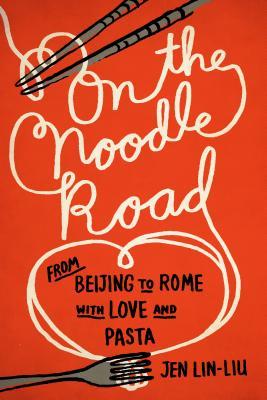
On the Noodle Road by Jen Lin-Liu
I love noodles. I could eat them every day whether it be macaroni and cheese, alfredo, filled pastas, lo-mein, well, you get the picture. There's something very comforting about them and it isn't a surprise that they are found in most cuisines around the world. But just how did they spread among all those cuisines is the question Lin-Liu attempts to answer in this book.
Lin-Liu, while living in China and working at her cooking school, decides to follow the Silk Road from China to Italy in search of where noodles originated and how they have persevered through the cultures. She'll go through all of China, Iran, Turkey, and many other countries before finally finishing in Italy. And she'll seek out noodles in each of these places although in some, they are harder to find. Additionally, this is a memoir of sorts that expresses Lin-Liu's troubles with her new marriage and search for herself in the relationship.
Lin-Liu and her husband aren't the only people featured in this book though. She encounters so many people in her travels that they are all included here as well. And she offers a commentary on their lives as they are bound by their customs and rules of the countries. She expresses her vehemence quite often at some of the traditions that bind women to their homes and their kitchens, even as she enjoys the tasty food that comes out of them. Her relationship with her husband is less interesting though, and while I can appreciate that she tried to make this a memoir in addition to food writing, I just don't think it was the right mix to make it interesting. I cared more about the food and who made it than I did about her personal life, right or wrong as that may be.
There was a lot of food in this book (recipes too). And the majority of the book was luckily about food, because as said before, I wasn't as interested in the memoir part of this book. I do think that China was probably my favorite region that Lin-Liu described. All of the noodle dishes sounded wonderful and I think I'll definitely make good use of that recipe section (all the recipes are at the end of the chapter for each respective country). Iran, the people she spoke with were interesting, but the food didn't hold as much appeal for me. The same goes for Turkey. And Italy wasn't described near as much as I thought it would be, considering they are known for their noodles. And while the writing was a little choppy, with less than smooth transitions between the countries, it was still approachable writing and easy to read. Lin-Liu writes like she probably talks, and it is easy to get absorbed, although long-winded at times.
I enjoyed the book but I don't see myself going back to it again and again (unless it's to use the recipes). It offered a unique perspective on noodle dishes and nice descriptions of foods for any foodie, but was a bit too meandering to be a repetitive read.
On The Noodle Road
Copyright 2013
384 pages
January 23, 2013
Kosher Chinese by Michael Levy
I'd like to join the Peace Corps someday. And I had
thought that if I did, I would very much like to serve in China. So
this was a good book for me to read, as it brought about some things
about volunteering in China that I would never have thought about.
Plus, the author is just downright funny.
Michael Levy decides to join the peace corps and is shipped off to China where he is to be a language teacher. There, he faces each day with students who are eager to learn, but not in a way he is accustomed to. And to add to this, he comes from a Jewish background, which makes him a little different than the Americans the Chinese he meets have experienced before. It makes him an oddity among oddities yet still able to have mostly positive interactions with his community. Having come down from the strict rules of Mao, they are still finding their way in a new government in which things are very different for them. But he makes numerous friends and even joins a basketball team. And while there is some culture shock, he loves the job he is doing and truly enjoys the company of the people he meets (except for the guy who punches puppies).
This book is mostly about the people Michael interacts with. From businessmen, to his basketball coach to the students, they all are different from him, but he is surprised to learn how different from each other they are as well. Not only are some of them just trying to make a better life for themselves, they are experiencing new trends in their culture like popular music, the notion of romance, and holidays from other countries. And while these may seem like silly things to be obsessed with, it's such a difference and such a freedom that wasn't there before that these are big things. And I like the way he describes everyone as being so enthusiastic about things. You rarely see someone get that excited for Christmas or pizza here that it's refreshing. He has a few students that identify with the Communist party but he even describes them as being deeply intelligent with good points on a lot of topics and is fair to them even though their views differ from his own. Actually that's about the best compliment (although there are many) that I could give Michael; he is exceedingly fair to everyone around him.
This is definitely a memoir and covers the two years that Michael spent in the Peace Corps. While it made me rethink my China notion because of some of the customs there I might have trouble with (learning to eat dog, contests not being fairly won, not being able to exercise in some parts because of air quality) it still made me realize I want to be a volunteer, no matter where I would end up. There are so many opportunities and learning experiences and while you may not be lifting people from poor living conditions in every case, you can still do a lot of other things like provide education and cultural understanding. And sometimes that is just as important. I do have to say the book was a little fast paced, I could have kept on reading it because I was so enthralled and it ended too soon for me. Michael is a very funny guy and his humor comes out in his writing. He isn't afraid to make fun of himself either, which is a very important quality.
A great Peace Corps memoir and one I would highly recommend. If nothing else it made me aware that if I was to go to China, I need to work on my drinking in order to keep up with their social norms. Drunk on one wine cooler just isn't going to cut it. Four and a half stars from this reader for an enjoyable memoir.
Kosher Chinese
Copyright 2011
240 pages
Michael Levy decides to join the peace corps and is shipped off to China where he is to be a language teacher. There, he faces each day with students who are eager to learn, but not in a way he is accustomed to. And to add to this, he comes from a Jewish background, which makes him a little different than the Americans the Chinese he meets have experienced before. It makes him an oddity among oddities yet still able to have mostly positive interactions with his community. Having come down from the strict rules of Mao, they are still finding their way in a new government in which things are very different for them. But he makes numerous friends and even joins a basketball team. And while there is some culture shock, he loves the job he is doing and truly enjoys the company of the people he meets (except for the guy who punches puppies).
This book is mostly about the people Michael interacts with. From businessmen, to his basketball coach to the students, they all are different from him, but he is surprised to learn how different from each other they are as well. Not only are some of them just trying to make a better life for themselves, they are experiencing new trends in their culture like popular music, the notion of romance, and holidays from other countries. And while these may seem like silly things to be obsessed with, it's such a difference and such a freedom that wasn't there before that these are big things. And I like the way he describes everyone as being so enthusiastic about things. You rarely see someone get that excited for Christmas or pizza here that it's refreshing. He has a few students that identify with the Communist party but he even describes them as being deeply intelligent with good points on a lot of topics and is fair to them even though their views differ from his own. Actually that's about the best compliment (although there are many) that I could give Michael; he is exceedingly fair to everyone around him.
This is definitely a memoir and covers the two years that Michael spent in the Peace Corps. While it made me rethink my China notion because of some of the customs there I might have trouble with (learning to eat dog, contests not being fairly won, not being able to exercise in some parts because of air quality) it still made me realize I want to be a volunteer, no matter where I would end up. There are so many opportunities and learning experiences and while you may not be lifting people from poor living conditions in every case, you can still do a lot of other things like provide education and cultural understanding. And sometimes that is just as important. I do have to say the book was a little fast paced, I could have kept on reading it because I was so enthralled and it ended too soon for me. Michael is a very funny guy and his humor comes out in his writing. He isn't afraid to make fun of himself either, which is a very important quality.
A great Peace Corps memoir and one I would highly recommend. If nothing else it made me aware that if I was to go to China, I need to work on my drinking in order to keep up with their social norms. Drunk on one wine cooler just isn't going to cut it. Four and a half stars from this reader for an enjoyable memoir.
Kosher Chinese
Copyright 2011
240 pages
November 18, 2012
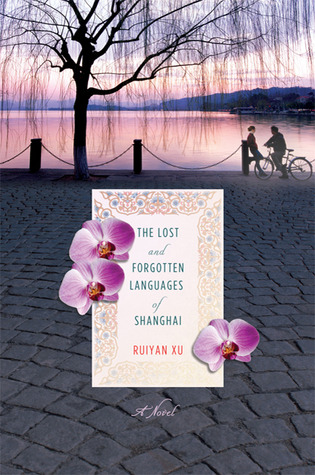
The Lost and Forgotten Languages of Shanghai by Ruiyan Xu
Alas, I misjudged a book by its cover. I thought the cover was so
beautiful that surely the book inside would be spectacular. Instead, I
only felt luke-warm to it, and even a little disappointed.
Li-Jing, after having been in an accident, has aphasia. But his aphasia is special, it has rendered his speaking of Chinese completely useless, and instead, only the limited English he learned as a child is his only means of communication. With a stoic wife and young son, things become rough on his family as he struggles to communicate. So Dr. Neal is brought in and he can finally feel at ease with someone he can communicate with. A specialist in aphasia, she is there to try to help him regain his lost language.
I couldn't really find any of these characters compelling. They were all kind of selfish and superficial. I know the author was probably trying to show the difference is culture, but surprisingly I found all the characters the same. They put themselves first. Sure Meiling is taking care of her family in the best way that she knows how, but she doesn't even try to show some warmth or understanding of her husband's predicament. Li-Jing, while struggling with his language issues is certainly somewhat sympathetic in that regard, but otherwise as a person I found him lazy and insincere. And Dr. Neal, I don't even know where to start with her. She was the typical not so great American that seems to screw things up. I'm not insulted by this portrayal of Americans, even though several others in the book were not so kindly describe either, but rather saddened that this is the image of us.
The plot was kind of slow moving. I was intrigued by the language aspects of the book and the presentation of the aphasia, but since this book was more about its characters than that, my curiosity wasn't entirely satisfied. I can't say I enjoyed the interactions between the characters, they were somewhat painful to watch unfold. But in a way they were brilliantly written as someone describing some non-perfect people with drama in their lives. I could certainly envision this scenario playing out in real life to some extent. I just couldn't get myself fully immersed in the book though to really take anything from it.
This book just wasn't for me. Someone who likes characters (but not necessarily development towards bettering themselves) might enjoy it a bit better than I did. I won't avoid Xu's books from this point on, but I won't make a habit of seeking them out either.
The Lost and Forgotten Languages of Shanghai
Copyright 2010
340 pages
Li-Jing, after having been in an accident, has aphasia. But his aphasia is special, it has rendered his speaking of Chinese completely useless, and instead, only the limited English he learned as a child is his only means of communication. With a stoic wife and young son, things become rough on his family as he struggles to communicate. So Dr. Neal is brought in and he can finally feel at ease with someone he can communicate with. A specialist in aphasia, she is there to try to help him regain his lost language.
I couldn't really find any of these characters compelling. They were all kind of selfish and superficial. I know the author was probably trying to show the difference is culture, but surprisingly I found all the characters the same. They put themselves first. Sure Meiling is taking care of her family in the best way that she knows how, but she doesn't even try to show some warmth or understanding of her husband's predicament. Li-Jing, while struggling with his language issues is certainly somewhat sympathetic in that regard, but otherwise as a person I found him lazy and insincere. And Dr. Neal, I don't even know where to start with her. She was the typical not so great American that seems to screw things up. I'm not insulted by this portrayal of Americans, even though several others in the book were not so kindly describe either, but rather saddened that this is the image of us.
The plot was kind of slow moving. I was intrigued by the language aspects of the book and the presentation of the aphasia, but since this book was more about its characters than that, my curiosity wasn't entirely satisfied. I can't say I enjoyed the interactions between the characters, they were somewhat painful to watch unfold. But in a way they were brilliantly written as someone describing some non-perfect people with drama in their lives. I could certainly envision this scenario playing out in real life to some extent. I just couldn't get myself fully immersed in the book though to really take anything from it.
This book just wasn't for me. Someone who likes characters (but not necessarily development towards bettering themselves) might enjoy it a bit better than I did. I won't avoid Xu's books from this point on, but I won't make a habit of seeking them out either.
The Lost and Forgotten Languages of Shanghai
Copyright 2010
340 pages
October 01, 2012
A Galaxy of Immortal Women by Brian Griffith
**This book was received as a free advanced reader's copy**
I'm fascinated with Chinese culture and with Women studies. So a book that combined the both of them was right up my alley. And this book was truly interesting. Coming from an author who himself says he's not sure he's qualified to write this kind of book, I appreciated his honesty and his want to learn more about the culture; it's like he tried to really talk to the women of China and understand what they were saying. And I think that even furthered the enjoyment of the book a little more for me. This book not only details some of the history of China, but it also explores its religions, and its outlook on women.
All kinds of topics are explored in this book. Confucianism, Daoist, Goddess religions. They're all here and women's impact on them are explored as well. It also offers a very broad history of China and its rulers, mainly focusing on the aspects religion played upon the different rulers, and how each ruling society treated women and their place in the household or government at large. Several small stories, such as legends about different figures considered to be raised to goddess-hood are included in the book. And a particular favorite of mine was the short story of the two lovers, separated in the stars by an overbearing father. These little gems of stories helped explain the people's thought processes through time and their secret hopes for what they wanted with their lives. There were also topics considering the Partnerships formed between women and men, family values as considered by different ruling regimes and even a glossary was included to list the Goddesses and other religious beings. There was also a great deal of sources listed and an index.
There were many people mentioned in this book. Some real, some not, but they were all treated with the same courtesy. I was actually a little amazed at how non-judgmental this book seemed to me. Different figures were presented factually without a lot of bias thrown against them. The author was just doing that, stating facts, rather than going on long tirades against different decisions and political aspects. I did like the mentions of the different goddesses (the outhouse goddesses were especially interesting). Each had their own unique story and something different that they represented and some of them were even real people at some point so it was interesting to see what qualified someone to become a religious figure. Since this book is mainly about women, the men may be described a little overbearing, but it wasn't done accusingly at least.
I liked all of the different topics this book covered. In fact, my only complaint is that I had a hard time keeping track of the timeline in this book as it bounced around a bit. There were some charts in front to help with that, but I would have liked for a little more of a straight timeline to keep things in line in my head. But other than that it was a very easy to read book considering the it covered a lot of big topics. The language was clear and precise and not hard to understand despite it being an educational sort of book and I can see most people picking it up and enjoying it. Although it is more geared towards women, I can see men interested in history, China, or religion enjoying this book quite a bit. It does offer a different view of China than what one normally expects. And although I don't know enough about China or its history and religions to comment on the authenticity of this book, it seemed exceptionally well researched and the large index bears witness that some research was actually done, so I'm satisfied with that.
A different look at China and its religion; a good non-fiction to pick up if you're interested in the country.
A Galaxy of Immortal Women
Copyright 2012
281 pages
I'm fascinated with Chinese culture and with Women studies. So a book that combined the both of them was right up my alley. And this book was truly interesting. Coming from an author who himself says he's not sure he's qualified to write this kind of book, I appreciated his honesty and his want to learn more about the culture; it's like he tried to really talk to the women of China and understand what they were saying. And I think that even furthered the enjoyment of the book a little more for me. This book not only details some of the history of China, but it also explores its religions, and its outlook on women.
All kinds of topics are explored in this book. Confucianism, Daoist, Goddess religions. They're all here and women's impact on them are explored as well. It also offers a very broad history of China and its rulers, mainly focusing on the aspects religion played upon the different rulers, and how each ruling society treated women and their place in the household or government at large. Several small stories, such as legends about different figures considered to be raised to goddess-hood are included in the book. And a particular favorite of mine was the short story of the two lovers, separated in the stars by an overbearing father. These little gems of stories helped explain the people's thought processes through time and their secret hopes for what they wanted with their lives. There were also topics considering the Partnerships formed between women and men, family values as considered by different ruling regimes and even a glossary was included to list the Goddesses and other religious beings. There was also a great deal of sources listed and an index.
There were many people mentioned in this book. Some real, some not, but they were all treated with the same courtesy. I was actually a little amazed at how non-judgmental this book seemed to me. Different figures were presented factually without a lot of bias thrown against them. The author was just doing that, stating facts, rather than going on long tirades against different decisions and political aspects. I did like the mentions of the different goddesses (the outhouse goddesses were especially interesting). Each had their own unique story and something different that they represented and some of them were even real people at some point so it was interesting to see what qualified someone to become a religious figure. Since this book is mainly about women, the men may be described a little overbearing, but it wasn't done accusingly at least.
I liked all of the different topics this book covered. In fact, my only complaint is that I had a hard time keeping track of the timeline in this book as it bounced around a bit. There were some charts in front to help with that, but I would have liked for a little more of a straight timeline to keep things in line in my head. But other than that it was a very easy to read book considering the it covered a lot of big topics. The language was clear and precise and not hard to understand despite it being an educational sort of book and I can see most people picking it up and enjoying it. Although it is more geared towards women, I can see men interested in history, China, or religion enjoying this book quite a bit. It does offer a different view of China than what one normally expects. And although I don't know enough about China or its history and religions to comment on the authenticity of this book, it seemed exceptionally well researched and the large index bears witness that some research was actually done, so I'm satisfied with that.
A different look at China and its religion; a good non-fiction to pick up if you're interested in the country.
A Galaxy of Immortal Women
Copyright 2012
281 pages
May 24, 2012
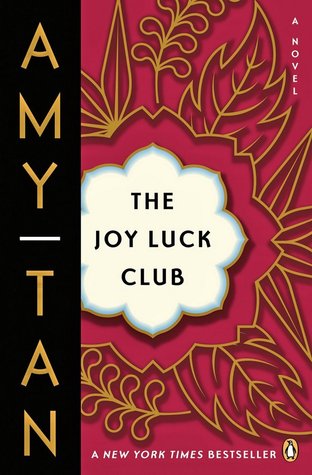
The Joy Luck Club by Amy Tan
I'm always interested in books about China. While this book is more
about women and their lives than China itself, it still is very
interesting and definitely an emotional read.
Four daughters and four mothers, all very much different and challenged to understand each other. This book weaves through their different lives and expresses the difficulties they face, not only in understanding each other, but understanding themselves as well as they struggle to be their own people, despite the expectations of others. In a sense it also includes the grandmothers, because as the mothers tell their stories, of growing up in China and leaving, their mothers play a big role in shaping their lives and decisions. It also shows their decisions with where to take their lives and the reactions when something happens that wasn't planned for. A noticeable story is where the Joy Luck Club name came from and how the actual club was originated, told by the mother of Jing-Mei Woo.
I have to say I enjoyed the mothers' stories more than the daughters'. They just seemed to have more depth to them. Their struggles seemed more poignant while the daughters' lives dealt more with divorce and jobs. Not that those aren't hardships, but they're familiar hardships that aren't quite as interesting. I think my lease favorite character was Waverly, I thought she was a bit conceited and I just couldn't identify with her character at all. In contrast, Suyuan Woo and her struggles with the war in China were much more interesting and made me appreciate her character more. The others had their ups and downs as well, but those were the two standouts.
I liked the concept of pitting mother against daughter and showing why they acted teh way they did. I can't speak on how relevant it is to the culture, but it did seem authentic and I really thought at times that I was reading about real people, even if I wasn't. I can definitely see these people being based off of real life stories. The writing was nice and full of description, but I did find it confusing keeping track of who's who at times. There's a small listing in the front of the book but I grew irritated of flipping back and forth to figure out who I was reading about. Perhaps it was just a bad week for me memory wise, but I think I would have rather had the stories fit together more cohesively so it was easier to follow.
A very interesting book and I would definitely say it's earned its reputation as a book club read. It's one that I could definitely say I would read again.
The Joy Luck Club
Copyright 1989
288 pages
Four daughters and four mothers, all very much different and challenged to understand each other. This book weaves through their different lives and expresses the difficulties they face, not only in understanding each other, but understanding themselves as well as they struggle to be their own people, despite the expectations of others. In a sense it also includes the grandmothers, because as the mothers tell their stories, of growing up in China and leaving, their mothers play a big role in shaping their lives and decisions. It also shows their decisions with where to take their lives and the reactions when something happens that wasn't planned for. A noticeable story is where the Joy Luck Club name came from and how the actual club was originated, told by the mother of Jing-Mei Woo.
I have to say I enjoyed the mothers' stories more than the daughters'. They just seemed to have more depth to them. Their struggles seemed more poignant while the daughters' lives dealt more with divorce and jobs. Not that those aren't hardships, but they're familiar hardships that aren't quite as interesting. I think my lease favorite character was Waverly, I thought she was a bit conceited and I just couldn't identify with her character at all. In contrast, Suyuan Woo and her struggles with the war in China were much more interesting and made me appreciate her character more. The others had their ups and downs as well, but those were the two standouts.
I liked the concept of pitting mother against daughter and showing why they acted teh way they did. I can't speak on how relevant it is to the culture, but it did seem authentic and I really thought at times that I was reading about real people, even if I wasn't. I can definitely see these people being based off of real life stories. The writing was nice and full of description, but I did find it confusing keeping track of who's who at times. There's a small listing in the front of the book but I grew irritated of flipping back and forth to figure out who I was reading about. Perhaps it was just a bad week for me memory wise, but I think I would have rather had the stories fit together more cohesively so it was easier to follow.
A very interesting book and I would definitely say it's earned its reputation as a book club read. It's one that I could definitely say I would read again.
The Joy Luck Club
Copyright 1989
288 pages
Subscribe to:
Posts (Atom)