I enjoyed the first book, Three Cups of Tea, much more than I enjoyed this one. This one just seemed a little too self-congratulatory for my taste. Sure, promote yourself, but don't do it in a way that comes across as bragging, which is kind of what this one did. That being said, it did offer some interesting insights into the way foreign government is run and the hazards and tribulations that charities can run into.
After Three Cups of Tea, Stones Into Schools takes up the story of where Mortenson left off building schools with his newly formed charity Central Asia Institute. He expands into Afghanistan and still maintains services in Pakistan, building schools in the most remote areas of the countries. The book covers how he worked with locals, officials, and got all of these projects off the ground. It also talked about the small staff he hired and their job duties.
Greg is very much in favor of himself. And he has done some wonderful things, he has a reason to be. But the way he narrated it in this book was off-putting and show-boaty, ,and it didn't really leave you liking him for those reasons. It could just be my personal take on it, but I felt like he was almost exaggerating when he described the different experiences he had and how he handled them. He was fair to everyone else though and you could tell he appreciated the people he was helping. And he also liked his staff and thought they had wonderful skills. So he redeems himself in that way.
You learn a lot about local politics in the regions in this book. The paperwork, the troubles, the bribing that needs to happen to get things done. It's a little mind boggling actually. And then there's how cheap it is to build a school. Often it isn't as much as a wing would be on a school here in the United States. They just want so much to learn, they'll study anywhere, including an old public toilet (according to the book). There is a nice section of pictures in the middle of the book, in case you want to see some of the people/places that Mortenson talks about.
Overall it was ok, but I could have preferred less grand-standing. Three Cups of Tea is definitely the book to read if you're going to read any of his books.
Stones into Schools
Copyright 2009
420 pages
Showing posts with label non-fiction. Show all posts
July 09, 2015
June 22, 2015
Confessions of a Key West Cabby by Michael Suib
Confessions of a Key West Cabby; there has got to be some great stories in this one! Well, sort of. In fact, there really wasn't anything that exciting or notable in these quick vignettes from Michael Suib. Sure, they were charming, but not all were relevant and the ones that really engaged me were far and few between.
Michael Suib, disenchanted with his life as a businessman, packs up and moves south with his wife to Key West. Among many odd jobs, he takes a job driving a cab in Key West. It's through this job that he encounters all sorts of characters, both locals and tourists. He gathers his stories into a few different sections such as "Love" (guess what these stories are about?), "Southernmost Homeless" (about the key's inhabitants who don't have a roof over their head), and others.
Suib definitely encounters some characters. Or at least, he describes them as such. I found the tourists to be some of the brashest. The homeless residents seemed to be like homeless people everywhere, and didn't have any defining characteristics that made them stand out or of note above the sad state that they are in. The tourists on the other hand could be quite horrible. And they definitely follow the rule that people act worse away from home. Luckily Suib had a no-nonsense approach to offensive customers and promptly would eject them from his cab.
The little stories were entertaining, and easy to read in small bits. But most of them weren't that interesting and I found myself questioning why they were in there. Some I didn't even really understand. Such as the lady who was looking for a decent meal for her nephew/grandson/whatever he was. Maybe I missed something but I didn't understand that story at all. Others were good, such as the offensive or racist people that he removed from his cab. It gave you a sense of justice.
Just ok, nothing special. I really don't feel like I know Key West any better. These stories could have happened at any tourist destination and weren't unique to the locale.
Confessions of a Key West Cabby
Copyright 2003
197 pages
Michael Suib, disenchanted with his life as a businessman, packs up and moves south with his wife to Key West. Among many odd jobs, he takes a job driving a cab in Key West. It's through this job that he encounters all sorts of characters, both locals and tourists. He gathers his stories into a few different sections such as "Love" (guess what these stories are about?), "Southernmost Homeless" (about the key's inhabitants who don't have a roof over their head), and others.
Suib definitely encounters some characters. Or at least, he describes them as such. I found the tourists to be some of the brashest. The homeless residents seemed to be like homeless people everywhere, and didn't have any defining characteristics that made them stand out or of note above the sad state that they are in. The tourists on the other hand could be quite horrible. And they definitely follow the rule that people act worse away from home. Luckily Suib had a no-nonsense approach to offensive customers and promptly would eject them from his cab.
The little stories were entertaining, and easy to read in small bits. But most of them weren't that interesting and I found myself questioning why they were in there. Some I didn't even really understand. Such as the lady who was looking for a decent meal for her nephew/grandson/whatever he was. Maybe I missed something but I didn't understand that story at all. Others were good, such as the offensive or racist people that he removed from his cab. It gave you a sense of justice.
Just ok, nothing special. I really don't feel like I know Key West any better. These stories could have happened at any tourist destination and weren't unique to the locale.
Confessions of a Key West Cabby
Copyright 2003
197 pages
June 21, 2015
Maiden Voyages by Mary Morris
There have always been women travelers, but they haven't been as prominent in the media's eyes and their works have perhaps garnered less attention than they should have. This book compiles the letters, short excerpts of novels of several women travelers over the past couple centuries.
Starting in the late 1600's, collections of writings from women traveler's have been compiled in this book and they span until the late 1900's. Some tell of adventures they took with their husbands. Others are solitary travelers and were only able to travel after they were relieved from taking care of their family. Some traveled just for fun while others went with a specific purpose in mind, like hunting butterflies.
Each of the writer's had their own style. Some gave great detail, while others were more focused on the reasoning behind the travels and the emotions evoked while traveling. Because of this, there were some stories that I enjoyed and some that I found myself just briefly flipping through as I didn't care for the description or subject matter. I did enjoy the story of the two girls traveling down the river. It was unique and an adventure that not many can say they have done. Because there are so many stories, it is easy to just pick up this book randomly and only read one or two at a time, there's no need to read the book in one sitting.
This was an interesting collection of writings. If you like travel or women's studies, it would probably be right up your alley.
Maiden Voyages
Copyright 1993
438 pages
Starting in the late 1600's, collections of writings from women traveler's have been compiled in this book and they span until the late 1900's. Some tell of adventures they took with their husbands. Others are solitary travelers and were only able to travel after they were relieved from taking care of their family. Some traveled just for fun while others went with a specific purpose in mind, like hunting butterflies.
Each of the writer's had their own style. Some gave great detail, while others were more focused on the reasoning behind the travels and the emotions evoked while traveling. Because of this, there were some stories that I enjoyed and some that I found myself just briefly flipping through as I didn't care for the description or subject matter. I did enjoy the story of the two girls traveling down the river. It was unique and an adventure that not many can say they have done. Because there are so many stories, it is easy to just pick up this book randomly and only read one or two at a time, there's no need to read the book in one sitting.
This was an interesting collection of writings. If you like travel or women's studies, it would probably be right up your alley.
Maiden Voyages
Copyright 1993
438 pages
April 24, 2015
Happy by Lonely Planet
Lonely Planet has a series of mini-books out with a different emotional state as the theme for each. This book covers "Happy" and the different secrets that people use all over the world to get happy.
This is a tiny little book. On the left side pages are the pictures and also a box that has the Secret, Tradition, and location of where it is used. The right side page is a full description saying how something is done in whatever country the tradition takes place. The book separates the activities into categories such as body or spirit. The pictures themselves are both photographs and illustrations.
I enjoyed this little book more than I did the other in the series, Calm. This one had more real photographs, which I felt was appropriate for a travel publisher's book. While the illustrations are nice photographs describe the tradition better. Since this is a small book, the print is very tiny and hard to read, so if you have poor vision, I wouldn't advise getting this book. That being said, it's a nice stocking stuffer or something to carry around in your car for a quick pick me up. It has many nice traditions, including a few I hadn't heard before like Zapotec fiestas.
Cute little book and fun for a quick read.
Happy
Copyright 2015
125 pages
This is a tiny little book. On the left side pages are the pictures and also a box that has the Secret, Tradition, and location of where it is used. The right side page is a full description saying how something is done in whatever country the tradition takes place. The book separates the activities into categories such as body or spirit. The pictures themselves are both photographs and illustrations.
I enjoyed this little book more than I did the other in the series, Calm. This one had more real photographs, which I felt was appropriate for a travel publisher's book. While the illustrations are nice photographs describe the tradition better. Since this is a small book, the print is very tiny and hard to read, so if you have poor vision, I wouldn't advise getting this book. That being said, it's a nice stocking stuffer or something to carry around in your car for a quick pick me up. It has many nice traditions, including a few I hadn't heard before like Zapotec fiestas.
Cute little book and fun for a quick read.
Happy
Copyright 2015
125 pages
December 28, 2014
Brush Cat by Jack McEnany
Ever wonder what it would be like to be a logger in the North? So do I, however, I don't think I know anymore about what it's like to be an actual logger, just what the journalist's experience was.
McEnany moved North and immediately became fascinated with the logging industry. He tried to make friends with the locals and got himself invited out as free labor a few times. He covers some of the figures, some of the equipment, and mostly the people in this book.
Some of them are characters. He profiles a few of the loggers, the actor Rusty Dewees, and birlers. Although the loggers and their activities take up the majority of the book. He also talks a lot about his experiences personally. I think the loggers were the most interesting, especially the one that did yoga!
I would have liked more actual logging figures. There wer quite a few already but but I found them very interesting. More so than his personal foibles with chainsaws. The stories made this more memoir than non-fiction general. I'm also not sure where the term brush cat came from. I think the author made it up as all I could find was an equipment part named that. I think a more known name for loggers would have been appropriate.
A decent book but not as in depth on the logging industry as I expected. Less memoir and more facts would have made it great.
Brush Cat
Copyright 2009
226 pages
McEnany moved North and immediately became fascinated with the logging industry. He tried to make friends with the locals and got himself invited out as free labor a few times. He covers some of the figures, some of the equipment, and mostly the people in this book.
Some of them are characters. He profiles a few of the loggers, the actor Rusty Dewees, and birlers. Although the loggers and their activities take up the majority of the book. He also talks a lot about his experiences personally. I think the loggers were the most interesting, especially the one that did yoga!
I would have liked more actual logging figures. There wer quite a few already but but I found them very interesting. More so than his personal foibles with chainsaws. The stories made this more memoir than non-fiction general. I'm also not sure where the term brush cat came from. I think the author made it up as all I could find was an equipment part named that. I think a more known name for loggers would have been appropriate.
A decent book but not as in depth on the logging industry as I expected. Less memoir and more facts would have made it great.
Brush Cat
Copyright 2009
226 pages
November 12, 2014
Margarita Wednesdays by Deborah Rodriguez
Maybe if I had read the author's first book I would have been more charmed by this one. Certainly the author was genuine and had done some off the beaten path type of things with her life. But I just couldn't find a connection or really appreciate the story she had to tell.
Having lived in Afghanistan and then leave abruptly when her son is threatened with kidnapping, Rodriguez finds herself back in the states struggling to make sense of what happened. She stays for awhile with a friend turned a little more until he decides he's had enough of the relationship. And then it's off to Mazatlan Mexico where she buys a little house and settles down to try to pull the pieces of her life together. Here she makes new friends but still feels as if something is missing, and with personal problems, family problems, and other problems, peace sometimes seems unobtainable.
Rodriguez can be pretty blunt about herself at times. Especially when it comes to her choices in men. She is very frank about all her mistakes there. And her two sons, while seemingly important to her, actually feature very little in her life. Yes, one comes and lives with her, but that's when she starts describing him in detail and showing a sense of caring. She has a lot of drama. And it gets tiring. You want to just shake her and say why do you keep doing this to your life? The other characters she describes nicely though and she usually has something nice to say about almost all of them.
This book is drama. It's disguised by the fact that it's about moving to Mexico and becoming part of the community there. But really it's about Rodriguez's personal struggles and how she tries to overcome them. Mexican culture is a second, although through her interactions with her son's married family help bring the culture to the reader. She also mentions her first book a lot and that gets a little tiring. After about the fifth mention, it's like, "ok, you have a book about the beauty school you started in Afghanistan. That's fantastic, and wonderful for those women, but you've told me this before." It's obvious she's very proud of it, but redundant after awhile.
This is an ok memoir. A little too much drama for me and not enough description of everything else. I'm sure those who read the first book though will find it much more absorbing.
**This book was won in a Goodreads Giveaway**
Margarita Wednesdays
Copyright 2014
276 pages
Having lived in Afghanistan and then leave abruptly when her son is threatened with kidnapping, Rodriguez finds herself back in the states struggling to make sense of what happened. She stays for awhile with a friend turned a little more until he decides he's had enough of the relationship. And then it's off to Mazatlan Mexico where she buys a little house and settles down to try to pull the pieces of her life together. Here she makes new friends but still feels as if something is missing, and with personal problems, family problems, and other problems, peace sometimes seems unobtainable.
Rodriguez can be pretty blunt about herself at times. Especially when it comes to her choices in men. She is very frank about all her mistakes there. And her two sons, while seemingly important to her, actually feature very little in her life. Yes, one comes and lives with her, but that's when she starts describing him in detail and showing a sense of caring. She has a lot of drama. And it gets tiring. You want to just shake her and say why do you keep doing this to your life? The other characters she describes nicely though and she usually has something nice to say about almost all of them.
This book is drama. It's disguised by the fact that it's about moving to Mexico and becoming part of the community there. But really it's about Rodriguez's personal struggles and how she tries to overcome them. Mexican culture is a second, although through her interactions with her son's married family help bring the culture to the reader. She also mentions her first book a lot and that gets a little tiring. After about the fifth mention, it's like, "ok, you have a book about the beauty school you started in Afghanistan. That's fantastic, and wonderful for those women, but you've told me this before." It's obvious she's very proud of it, but redundant after awhile.
This is an ok memoir. A little too much drama for me and not enough description of everything else. I'm sure those who read the first book though will find it much more absorbing.
**This book was won in a Goodreads Giveaway**
Margarita Wednesdays
Copyright 2014
276 pages
November 06, 2014
Mistresses of Mayhem: The Book of Women Criminals by Francine Hornberger
I'm fairly convinced that this book wasn't edited. Or at least if it
was, it was a rush job. While it was interesting subject matter, the
way it was written and the numerous mistakes and spelling errors made it
hard reading.
Mistresses of Mayhem is a resource book that describes some of the most famous women criminals in history and the present. In fact, some of the women featured in this book are still alive while others have been dead for hundreds of years. There are murderers, prostitutes, and even pirates. Background on each of the women is given, and the events of their crimes are provided.
There are some bad ladies in here. And a good one that had charges against her dropped. And some who there are doubts about their guilt and undecided charges against them. Because their backgrounds are provided, there is some speculation into why they did the crimes that they did. Although their history doesn't always account for the terrible things that they did. I hadn't heard of the majority of the women in here, and some of their stories definitely came as a shock. It's enough to make you want to wish it was fiction.
This would have been a great reference book, except it didn't really read as a standard non-fiction reference book. There was tons of personal opinion in it I'm always a little skeptical if in a book that's supposed to be non-fiction, the term "white trash" is used several times along with other non-professional names and descriptors. It also had numerous spelling errors, places where you can tell a "find and replace" feature was used incorrectly, and probably the worst of all, some facts actually weren't recorded correctly (IE: two sisters names are reversed leaving the wrong one dead in the book). An editing read-through would have caught a lot of these errors, so I'm not sure what happened. The formatting is a page or two for each woman and it is sorted in alphabetical order.
It certainly doesn't seem as if this book was actually ready to be published. A little cleanup and it would be a good tome on women readers. In its current condition, I just can't recommend it.
Mistresses of Mayhem
Copyright 2002
248 pages
Mistresses of Mayhem is a resource book that describes some of the most famous women criminals in history and the present. In fact, some of the women featured in this book are still alive while others have been dead for hundreds of years. There are murderers, prostitutes, and even pirates. Background on each of the women is given, and the events of their crimes are provided.
There are some bad ladies in here. And a good one that had charges against her dropped. And some who there are doubts about their guilt and undecided charges against them. Because their backgrounds are provided, there is some speculation into why they did the crimes that they did. Although their history doesn't always account for the terrible things that they did. I hadn't heard of the majority of the women in here, and some of their stories definitely came as a shock. It's enough to make you want to wish it was fiction.
This would have been a great reference book, except it didn't really read as a standard non-fiction reference book. There was tons of personal opinion in it I'm always a little skeptical if in a book that's supposed to be non-fiction, the term "white trash" is used several times along with other non-professional names and descriptors. It also had numerous spelling errors, places where you can tell a "find and replace" feature was used incorrectly, and probably the worst of all, some facts actually weren't recorded correctly (IE: two sisters names are reversed leaving the wrong one dead in the book). An editing read-through would have caught a lot of these errors, so I'm not sure what happened. The formatting is a page or two for each woman and it is sorted in alphabetical order.
It certainly doesn't seem as if this book was actually ready to be published. A little cleanup and it would be a good tome on women readers. In its current condition, I just can't recommend it.
Mistresses of Mayhem
Copyright 2002
248 pages
October 26, 2014
A Field Guide to Happiness by Linda Leaming
*This book was received through the Amazon Vine Program*
Bhutan, a country that many have heard about but few have really given in-depth study to. Which is amazing considering their practices as a country. Measuring how well they're doing by happiness rather than money. But it's a country worth getting to know and so this memoir/lessons book is one that opens the door a little wider on Bhutan.
A Field Guide to Happiness is part memoir, part lessons in how to live life happier. That's not to say that you have to move to Bhutan to achieve the things outlined in this book, it just shows how the author learned these lessons in life while living in the country and following their way of life. Each chapter has a small lesson and ties into an experience or story from the author's personal life.
I never really felt as if I actually knew the author or her husband. Which is strange because she did describe both of them, but it wasn't in-depth and I just didn't feel any kind of connection. And the people of Bhutan were just described in general ways, there was never much of a chance to get to know any of them in-depth as individuals, just as a collective. She wasn't mean or unkind in her descriptions, just brief, and you can tell she really does love her adopted country.
The whole book can be described as brief. I get that it was supposed to be in snippets as a lesson format to impart some of the wisdom she learned in Bhutan, but it just felt like large journal entries that were mixed with a self-help book. The writing was clear, good even, but again, that sense of connection just wasn't there for me. I don't know if it was the format or the briefness of the chapters, but I just couldn't bury myself into it. On the positive side though, I like that for her lessons she tried to include snippets of her life in Bhutan. Especially the descriptions of how the people of Bhutan share and the way they treat property there. Everyone is striving to be a better person (in general) and that's a commendable way to live.
I enjoyed the book mostly but wish it would have been something I could have immersed myself in. I think anyone who enjoys self-help, discovery memoirs will probably enjoy it though. I would definitely consider reading the author's other book on Bhutan.
A Field Guide to Happiness
Copyright 2014
232 pages
Bhutan, a country that many have heard about but few have really given in-depth study to. Which is amazing considering their practices as a country. Measuring how well they're doing by happiness rather than money. But it's a country worth getting to know and so this memoir/lessons book is one that opens the door a little wider on Bhutan.
A Field Guide to Happiness is part memoir, part lessons in how to live life happier. That's not to say that you have to move to Bhutan to achieve the things outlined in this book, it just shows how the author learned these lessons in life while living in the country and following their way of life. Each chapter has a small lesson and ties into an experience or story from the author's personal life.
I never really felt as if I actually knew the author or her husband. Which is strange because she did describe both of them, but it wasn't in-depth and I just didn't feel any kind of connection. And the people of Bhutan were just described in general ways, there was never much of a chance to get to know any of them in-depth as individuals, just as a collective. She wasn't mean or unkind in her descriptions, just brief, and you can tell she really does love her adopted country.
The whole book can be described as brief. I get that it was supposed to be in snippets as a lesson format to impart some of the wisdom she learned in Bhutan, but it just felt like large journal entries that were mixed with a self-help book. The writing was clear, good even, but again, that sense of connection just wasn't there for me. I don't know if it was the format or the briefness of the chapters, but I just couldn't bury myself into it. On the positive side though, I like that for her lessons she tried to include snippets of her life in Bhutan. Especially the descriptions of how the people of Bhutan share and the way they treat property there. Everyone is striving to be a better person (in general) and that's a commendable way to live.
I enjoyed the book mostly but wish it would have been something I could have immersed myself in. I think anyone who enjoys self-help, discovery memoirs will probably enjoy it though. I would definitely consider reading the author's other book on Bhutan.
A Field Guide to Happiness
Copyright 2014
232 pages
October 21, 2014
Russian Tattoo by Elena Gorokhova
*This book was received through the Amazon Vine Program*
I read "A Mountain of Crumbs" and really enjoyed it. So I was interested in seeing where the rest of Gorokhova's life went after she came to the United States on the arm of her new (stranger) husband. Having studied English for most of the time she was in Russia, it is still quite the transition to a new culture.
In her previous memoir, Elena meets a young American man who says he will marry her and have an "open" relationship in order to bring her to the United States. She isn't sure what she's signing up for, but quickly realizes that he is not the man she had thought he might be and that she is lonely and unsure of how to act in this new country. Eventually they fall apart and she is able to meet another man who will become her husband and the father of her child. As she transitions into a way of life here, her mother still worries about her though and eventually she has worries of her own as a mother that she must overcome in order to be more at peace with her life.
Elena was very much a worrier in this book. She worried about everything. And I can't say that I blame her. She had a lot going on and felt very out of place and didn't have the support she apparently needed when she first moved. Her first husband seemed distant and cold, but we are just getting her side of the story. I do wonder if she ever reimbursed him the money he spent in bringing her to the United States, but I suppose at this point it doesn't matter. Her mother was not as strongly written in this book either. She was a sideline, a strife that was dealt with sometimes, and an endearing mother in others that the author recalled fondly. The same goes for her sister who is briefly mentioned. Her husband gets a lot of detail though (the 2nd one) and I felt that he really was a good person.
I wasn't as engrossed in this one as I was the first. It was somehow both lengthy and too short all at once. The parts I wanted more detail on (transition to life in America, customs, etc.) there just didn't seem to be enough of, and those I didn't really care about (family members Dr. appointments) there was quite a bit of. I thought her interactions with her family were interesting, but didn't need to know every kind of Dr. her mother had appointments at. I was also surprised at how little time was spent on her daughter as I expected that to be a larger part of the book. Really, the best detail though was her description of encountering a hamburger for the first time. It made an impact and showed just how different life in the Soviet Union is from here.
I can't say that it was an exceptionally strong 2nd memoir, but it certainly was expressive writing. It does what a memoir should; bring you the life of the writer.
Russian Tattoo
Copyright 2014
315 pages
I read "A Mountain of Crumbs" and really enjoyed it. So I was interested in seeing where the rest of Gorokhova's life went after she came to the United States on the arm of her new (stranger) husband. Having studied English for most of the time she was in Russia, it is still quite the transition to a new culture.
In her previous memoir, Elena meets a young American man who says he will marry her and have an "open" relationship in order to bring her to the United States. She isn't sure what she's signing up for, but quickly realizes that he is not the man she had thought he might be and that she is lonely and unsure of how to act in this new country. Eventually they fall apart and she is able to meet another man who will become her husband and the father of her child. As she transitions into a way of life here, her mother still worries about her though and eventually she has worries of her own as a mother that she must overcome in order to be more at peace with her life.
Elena was very much a worrier in this book. She worried about everything. And I can't say that I blame her. She had a lot going on and felt very out of place and didn't have the support she apparently needed when she first moved. Her first husband seemed distant and cold, but we are just getting her side of the story. I do wonder if she ever reimbursed him the money he spent in bringing her to the United States, but I suppose at this point it doesn't matter. Her mother was not as strongly written in this book either. She was a sideline, a strife that was dealt with sometimes, and an endearing mother in others that the author recalled fondly. The same goes for her sister who is briefly mentioned. Her husband gets a lot of detail though (the 2nd one) and I felt that he really was a good person.
I wasn't as engrossed in this one as I was the first. It was somehow both lengthy and too short all at once. The parts I wanted more detail on (transition to life in America, customs, etc.) there just didn't seem to be enough of, and those I didn't really care about (family members Dr. appointments) there was quite a bit of. I thought her interactions with her family were interesting, but didn't need to know every kind of Dr. her mother had appointments at. I was also surprised at how little time was spent on her daughter as I expected that to be a larger part of the book. Really, the best detail though was her description of encountering a hamburger for the first time. It made an impact and showed just how different life in the Soviet Union is from here.
I can't say that it was an exceptionally strong 2nd memoir, but it certainly was expressive writing. It does what a memoir should; bring you the life of the writer.
Russian Tattoo
Copyright 2014
315 pages
October 11, 2014
Nine Hills to Nambonkaha by Sarah Erdman
Sometimes I'm sorely disappointed when I read a Peace Corps memoir because it is all about the person and includes little to no information about the place and people they volunteered with. This one is vastly different from that. Erdman tells little of herself but instead opens up the village of Nambonkaha to you and introduces you to some of its people.
Erdman is selected to be a health worker in the village of Nambonkaha as her Peace Corps assignment. For two years, she will work to bring better practices to the village and improve health there. She chooses to do this through the women of the village by introducing baby weighings and vaccination programs. She also focuses on AIDS education. But she just introduces and actually uses the villagers to enact the change on the village and uses a variety of local people to accomplish these tasks.
I actually still don't feel as if I know much about Erdman. Well, aside from the fact that she did a good job as a volunteer. I know more about her village. Because those are the people she described in the book. You feel as if you especially know the ones she was close with. The boys she taught to read, the women she interacted with on a daily basis, the nurse she worked with at the clinic. All of these people she described the good and bad on (although mostly good) and took great care to outline their personalities. It's what made this book worth reading. Because she took the time to know who she was working with rather than focusing on herself. And she is very non-judgemental, despite the practices that she abhors and witnesses.
That being said, this book is a long read because it is very detailed. While I enjoyed getting to know all the aspects of village life and the challenges there were to overcome in the education of healthcare, I felt as if things were very repetitive and drawn out. It was helpful that there was a glossary at the end for some of the translations and words specific to the village. There were several times I had to look up just what an object was so I could understand it in context. I also would have loved to see some pictures of the village and its people, so I could put faces to names.
If you enjoy Peace Corps memoirs or travel writing I think this will be a very good book to read. It details the experience, not the person writing it, and is one of the more honest accounts I've seen.
Nine Hills to Nambonkaha
Copyright 2003
322 pages
Erdman is selected to be a health worker in the village of Nambonkaha as her Peace Corps assignment. For two years, she will work to bring better practices to the village and improve health there. She chooses to do this through the women of the village by introducing baby weighings and vaccination programs. She also focuses on AIDS education. But she just introduces and actually uses the villagers to enact the change on the village and uses a variety of local people to accomplish these tasks.
I actually still don't feel as if I know much about Erdman. Well, aside from the fact that she did a good job as a volunteer. I know more about her village. Because those are the people she described in the book. You feel as if you especially know the ones she was close with. The boys she taught to read, the women she interacted with on a daily basis, the nurse she worked with at the clinic. All of these people she described the good and bad on (although mostly good) and took great care to outline their personalities. It's what made this book worth reading. Because she took the time to know who she was working with rather than focusing on herself. And she is very non-judgemental, despite the practices that she abhors and witnesses.
That being said, this book is a long read because it is very detailed. While I enjoyed getting to know all the aspects of village life and the challenges there were to overcome in the education of healthcare, I felt as if things were very repetitive and drawn out. It was helpful that there was a glossary at the end for some of the translations and words specific to the village. There were several times I had to look up just what an object was so I could understand it in context. I also would have loved to see some pictures of the village and its people, so I could put faces to names.
If you enjoy Peace Corps memoirs or travel writing I think this will be a very good book to read. It details the experience, not the person writing it, and is one of the more honest accounts I've seen.
Nine Hills to Nambonkaha
Copyright 2003
322 pages
September 28, 2014
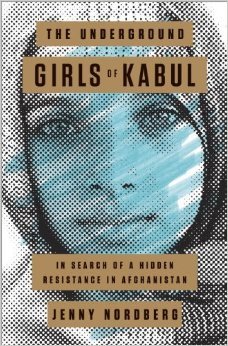
The Underground Girls of Kabul by Jenny Nordberg
Imagine living in a society where girls are not valued. In fact, they are property and subject to the whims of the males in their lives. Where they go from father to husband and never have a say in what happens. This isn't a fairytale. It's a reality in Afghanistan, even after the removal of the Taliban.
When Nordberg goes to Afghanistan she expects to find out about the lives of women. What she doesn't expect to find is an underground movement of women who are posing as men. And it's something everybody knows but doesn't speak on. More commonly found in pre-pubescent girls, it has become custom to turn a girl into a boy either for running errands, helping in a shop, or to give luck that a boy will be born next. The girls are normally returned to being their birth gender before puberty starts and they are married. But there are a few exceptions.
It's hard to imagine changing yourself into a different person to be integrated in society and have freedom of movement but that is exactly what happens in Afghan culture. Whether it is for necessity to survive and get an income or because there is shame from having all girls, the reasons are varied but all widely accepted. Nordberg does a great job of showing the different personalities of the girls that have been boys for awhile and their history. It was interesting to read about how they handled the transition back (if they transitioned) and how it set them up for the rest of their lives. The different reactions of people to her was telling as well, because as a foreigner she had a lot of freedom compared to most, but was still treated differently based on her gender.
The reporting in this book was handled very well. Nordberg researched, talked to many people, and got the different sides of everything. Pretty standard, but sadly not something that happens with a lot of journalists anymore. I think the attention she paid to the leads and as in-depth as she went in her reporting was remarkable. Especially considering she was in a closed-society that doesn't encourage outsiders to make contact with women. Sure, it probably helped she was a woman herself, but it's still a difficult culture to navigate and get answers. Which makes this view pretty important. Her take of the situation, that not just women should be being helped, but the men who encourage education in women should be helped as well, is an important thought and one frequently overlooked. And the stories are engaging and well written, done in a professional way but still having a lot of detail. I could have kept reading if there was more.
I think this is a great book that shows a hidden side of Afghan culture that could be key to improving lives for women over there. I definitely recommend this book for anyone interested in women's studies or Afghan culture.
**This book was received in a Goodreads Giveaway**
The Underground Girls of Kabul
Copyright 2014
333 pages
When Nordberg goes to Afghanistan she expects to find out about the lives of women. What she doesn't expect to find is an underground movement of women who are posing as men. And it's something everybody knows but doesn't speak on. More commonly found in pre-pubescent girls, it has become custom to turn a girl into a boy either for running errands, helping in a shop, or to give luck that a boy will be born next. The girls are normally returned to being their birth gender before puberty starts and they are married. But there are a few exceptions.
It's hard to imagine changing yourself into a different person to be integrated in society and have freedom of movement but that is exactly what happens in Afghan culture. Whether it is for necessity to survive and get an income or because there is shame from having all girls, the reasons are varied but all widely accepted. Nordberg does a great job of showing the different personalities of the girls that have been boys for awhile and their history. It was interesting to read about how they handled the transition back (if they transitioned) and how it set them up for the rest of their lives. The different reactions of people to her was telling as well, because as a foreigner she had a lot of freedom compared to most, but was still treated differently based on her gender.
The reporting in this book was handled very well. Nordberg researched, talked to many people, and got the different sides of everything. Pretty standard, but sadly not something that happens with a lot of journalists anymore. I think the attention she paid to the leads and as in-depth as she went in her reporting was remarkable. Especially considering she was in a closed-society that doesn't encourage outsiders to make contact with women. Sure, it probably helped she was a woman herself, but it's still a difficult culture to navigate and get answers. Which makes this view pretty important. Her take of the situation, that not just women should be being helped, but the men who encourage education in women should be helped as well, is an important thought and one frequently overlooked. And the stories are engaging and well written, done in a professional way but still having a lot of detail. I could have kept reading if there was more.
I think this is a great book that shows a hidden side of Afghan culture that could be key to improving lives for women over there. I definitely recommend this book for anyone interested in women's studies or Afghan culture.
**This book was received in a Goodreads Giveaway**
The Underground Girls of Kabul
Copyright 2014
333 pages
September 01, 2014
Travels with Casey by Benoit Denizet-Lewis
Travels with Casey; one immediately compares the title to the Travels with Charlie written by Steinbeck. And that's kind of the point. The author thought about that classic book and then decided to do his own spin on it. Take his dog on a trip around the country in an RV, but instead of learning about the people, he wanted to learn about the dogs of the country.
Denizet-Lewis never really felt connected to his dog. Sure he took care of Casey well, made sure he had everything he needed, but he always felt as if maybe Casey didn't want to be his dog. There just wasn't a connection with him despite several years together. So on a writing assignment he decides to pack it up and see if being stuck in an RV together will do anything for that connection. Along the way he'll stop at various points in the US known for Dog Shows, unique dog parks, dog people, and other such things relating to dogs.
Despite this being a book about dogs, Denizet-Lewis encounters several different people as well. From the guy who will stop at nothing to find a lost dog, to the guy who lives with wolf-dogs, people can be just as different as dog breeds. Some of them he describes as a bit crazy, but he takes care to show the goodness that they all have and the common bond of dog ownership. These are all people, that for various reasons, are obsessed with their dogs or helping dogs. And it's nice to read about that sometimes when there's so much on the news that points to the other directions. For himself, Denizet-Lewis tells you all about his flaws, but he comes across as a genuinely likable guy.
I liked the pace of this book. While there were sections I would have liked to read more on (Best Friends Animal Sanctuary) I think overall the different snippets were enough to keep the book moving along and interesting. I enjoyed all the different things related to dogs that he found on his travels and didn't know about some of the others (dog shaped hotel, etc.). The only part I didn't really like was that so much of his personal life and drama invaded the book. I think it's probably more of a memoir/dog travel book and while there was nothing particularly out there, I guess I just expected it to be more about the dogs and less about his personal anguish. It was a mix between. Again, that doesn't mean this book was poorly written, it just wasn't what I expected based on the title.
For those that like memoirs and books about dogs this is probably going to be a good read. It has enough whimsy mixed with enough serious topics to keep it interesting.
**This book was won in a Goodreads Giveaway**
Travels with Casey
Copyright 2014
309 pages
Denizet-Lewis never really felt connected to his dog. Sure he took care of Casey well, made sure he had everything he needed, but he always felt as if maybe Casey didn't want to be his dog. There just wasn't a connection with him despite several years together. So on a writing assignment he decides to pack it up and see if being stuck in an RV together will do anything for that connection. Along the way he'll stop at various points in the US known for Dog Shows, unique dog parks, dog people, and other such things relating to dogs.
Despite this being a book about dogs, Denizet-Lewis encounters several different people as well. From the guy who will stop at nothing to find a lost dog, to the guy who lives with wolf-dogs, people can be just as different as dog breeds. Some of them he describes as a bit crazy, but he takes care to show the goodness that they all have and the common bond of dog ownership. These are all people, that for various reasons, are obsessed with their dogs or helping dogs. And it's nice to read about that sometimes when there's so much on the news that points to the other directions. For himself, Denizet-Lewis tells you all about his flaws, but he comes across as a genuinely likable guy.
I liked the pace of this book. While there were sections I would have liked to read more on (Best Friends Animal Sanctuary) I think overall the different snippets were enough to keep the book moving along and interesting. I enjoyed all the different things related to dogs that he found on his travels and didn't know about some of the others (dog shaped hotel, etc.). The only part I didn't really like was that so much of his personal life and drama invaded the book. I think it's probably more of a memoir/dog travel book and while there was nothing particularly out there, I guess I just expected it to be more about the dogs and less about his personal anguish. It was a mix between. Again, that doesn't mean this book was poorly written, it just wasn't what I expected based on the title.
For those that like memoirs and books about dogs this is probably going to be a good read. It has enough whimsy mixed with enough serious topics to keep it interesting.
**This book was won in a Goodreads Giveaway**
Travels with Casey
Copyright 2014
309 pages
August 12, 2014
Wanderlust by Elisabeth Eaves
I'd love to travel, I'm somewhat scared of commitment. These are the things that make me readily identify with the author of this book. Even though in reality I'm nothing like her. While she's out traveling the world, I've never been out of the country (unless you count the Canadian side of Niagara Falls). While she bounces from relationship to relationship and seemingly doesn't care about sticking with one person at a time, I'm a serial monogamist. So why on earth am I so drawn to her life?
Eaves decides during college that she needs to travel. Her boyfriend at the time goes all over the world and it inspires her to do more with her life. She bounces along from Egypt, to Yemen, eventually finishing up college and going on to other relationships, to New Zealand, Australia, and other places. She has a few more boyfriends, goes back to school again, and travels to a few more countries. She never stops moving. And this book tells of all that moving, although it mostly focuses on her relationships.
The relationships in this book are somewhat shallow. Eaves herself admits love to several different men, sometimes at the same time, and it makes it hard to know whether what she was feeling was deep or authentic. Not that I'm to judge, I'm sure you can love multiple people on that level, but with the ease that she separates herself from some of these relationships, it calls it into question. For herself, we recognize that she doesn't want to be held down. That she likes the freedom of travel and that she seems to enjoy having superficial relationships that she can easily be freed from. She's very solitary in a way.
I enjoyed most of this book's descriptions of travel. Towards the end it was more about her relationships, and I would have liked to have more detail on the countries she was staying in. It seems that she sacrificed the part about travel for the part about social and her somewhat controlling boyfriend in the latter part of the book. Granted, she was in France, which she didn't think was terribly exciting, but I'm sure there were some positive things about it and some beautiful sights. Overall though, I thought the book moved fast and that it kept me fully engrossed in what was happening.
I enjoyed this book, although I recognize not everyone may agree with the way that Eaves travels or her relationships. I found it an interesting, non-conformist way of living life.
Wanderlust
Copyright 2011
301 pages
Eaves decides during college that she needs to travel. Her boyfriend at the time goes all over the world and it inspires her to do more with her life. She bounces along from Egypt, to Yemen, eventually finishing up college and going on to other relationships, to New Zealand, Australia, and other places. She has a few more boyfriends, goes back to school again, and travels to a few more countries. She never stops moving. And this book tells of all that moving, although it mostly focuses on her relationships.
The relationships in this book are somewhat shallow. Eaves herself admits love to several different men, sometimes at the same time, and it makes it hard to know whether what she was feeling was deep or authentic. Not that I'm to judge, I'm sure you can love multiple people on that level, but with the ease that she separates herself from some of these relationships, it calls it into question. For herself, we recognize that she doesn't want to be held down. That she likes the freedom of travel and that she seems to enjoy having superficial relationships that she can easily be freed from. She's very solitary in a way.
I enjoyed most of this book's descriptions of travel. Towards the end it was more about her relationships, and I would have liked to have more detail on the countries she was staying in. It seems that she sacrificed the part about travel for the part about social and her somewhat controlling boyfriend in the latter part of the book. Granted, she was in France, which she didn't think was terribly exciting, but I'm sure there were some positive things about it and some beautiful sights. Overall though, I thought the book moved fast and that it kept me fully engrossed in what was happening.
I enjoyed this book, although I recognize not everyone may agree with the way that Eaves travels or her relationships. I found it an interesting, non-conformist way of living life.
Wanderlust
Copyright 2011
301 pages
August 04, 2014
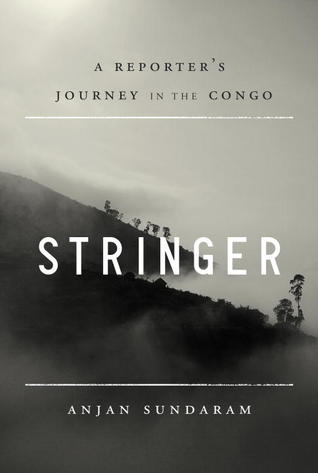
Stringer by Anjan Sundaram
*This review is part of the Amazon Vine Program*
I'm probably in the minority here, but I just couldn't get into this journalist's account of the time he spent in the Congo. As a rule travel books are one of my favored genres, and being as this was not Sundaram's native country I count it as travel in a journalistic capacity.
Sundaram quits pursuing a higher degree in mathematics to become a journalist in the Congo. Why the Congo? A chance meeting with someone in the US enables him to find a place to stay. Plus it's a war torn area is full of news and somewhere a freelancer can find work. So he spends a great deal of time traveling around the Congo and meeting some of the people in it, from the family that he stays with to military leaders and more.
Sundaram doesn't describe himself overly much. We know that he liked math at one point, that he's of Indian descent, and that he didn't mind the hardship of traveling to the Congo. We also know how he feels about people, especially the family that he stays with. But he spends most of his time writing about the people and places that he goes. The family he is honest about describing. Their quirks, flaws, how they can be kind and what happens when they are angry with him. He doesn't hold back at all. And that's the same for all he meets. There are a few unflattering descriptions of people in here. I also thought that while he did describe his interactions, I didn't get a full sense of the personalities of the people he was describing. Especially considering he lived with some of them for awhile.
The writing in this was a bit more flowery than I expected from a journalist writing from a country that has violence in the headlines every day. Very poetic. And I'm sure some people would appreciate it but it made it harder for me to read from a non-fiction perspective. But that was only in parts, in some areas of the book it was very cut and dry and to the point. And I appreciated those sections. It was just hard to mesh the two together for me. I also thought most of the book was spent on him getting to and fro rather than really talking to the people and getting a sense of their daily lives. I know the troubles he went through based on the fact that he was living with them, so there's some through association, but I never really felt as if I knew the complete story behind the family he was staying with or any of the other people he encountered. And the pace felt a bit slow, as if there was stuff going on but the author was removed from it for the majority of the book (although he had a few exciting moments).
I just couldn't get enamored with this book. It has some good parts to it but largely I didn't come away feeling as if I knew anything more about the Congo than I did before.
Stringer
Copyright 2014
265 pages
I'm probably in the minority here, but I just couldn't get into this journalist's account of the time he spent in the Congo. As a rule travel books are one of my favored genres, and being as this was not Sundaram's native country I count it as travel in a journalistic capacity.
Sundaram quits pursuing a higher degree in mathematics to become a journalist in the Congo. Why the Congo? A chance meeting with someone in the US enables him to find a place to stay. Plus it's a war torn area is full of news and somewhere a freelancer can find work. So he spends a great deal of time traveling around the Congo and meeting some of the people in it, from the family that he stays with to military leaders and more.
Sundaram doesn't describe himself overly much. We know that he liked math at one point, that he's of Indian descent, and that he didn't mind the hardship of traveling to the Congo. We also know how he feels about people, especially the family that he stays with. But he spends most of his time writing about the people and places that he goes. The family he is honest about describing. Their quirks, flaws, how they can be kind and what happens when they are angry with him. He doesn't hold back at all. And that's the same for all he meets. There are a few unflattering descriptions of people in here. I also thought that while he did describe his interactions, I didn't get a full sense of the personalities of the people he was describing. Especially considering he lived with some of them for awhile.
The writing in this was a bit more flowery than I expected from a journalist writing from a country that has violence in the headlines every day. Very poetic. And I'm sure some people would appreciate it but it made it harder for me to read from a non-fiction perspective. But that was only in parts, in some areas of the book it was very cut and dry and to the point. And I appreciated those sections. It was just hard to mesh the two together for me. I also thought most of the book was spent on him getting to and fro rather than really talking to the people and getting a sense of their daily lives. I know the troubles he went through based on the fact that he was living with them, so there's some through association, but I never really felt as if I knew the complete story behind the family he was staying with or any of the other people he encountered. And the pace felt a bit slow, as if there was stuff going on but the author was removed from it for the majority of the book (although he had a few exciting moments).
I just couldn't get enamored with this book. It has some good parts to it but largely I didn't come away feeling as if I knew anything more about the Congo than I did before.
Stringer
Copyright 2014
265 pages
July 29, 2014
A Fortune Teller Told Me by Tiziano Terzani
What would you do if you were a journalist and told that you shouldn't travel by plane for an entire year? Would you heed the warning, or would you continue to do as you please for your jobs sake. Terzani decided to heed the warning and since he still needed to make a living, traveled around Asia and Europe any way but by plane.
After a fortune teller tells him that he shouldn't travel by plane, Terzani decides to make an exploration not only of Asia, but also of the different seers and fortune tellers that are found in each of the countries he visits. He wants to see how accurate they are and whether or not they'll echo the warning against flight like the original. Along his journeys he also comments on how the different countries have changed, what the leadership is like, how the people live, and the difficulties of travel in each country.
Terzani is a somewhat mixed narrator. For some people he shows the utmost respect and describes kindly, others he shows nothing but disdain. And honestly, those two categories kind of merged all the people together for me as all the ones he liked had the same attributes and all the ones he didn't had the same attributes so they didn't seem like as many people as what he actually met. And then there was his wife. Despite his constant mention of her I still didn't feel as if I knew that much about her. Himself he doesn't really describe other than to relate what the fortune tellers say about him.
I found this book excruciatingly repetitive. While at first it was interesting after awhile I got tired of him describing going to a fortune teller and having his fortune read. The countries, people and places might as well have all be the same for me and it slowed down the pace dramatically. That's not to say he isn't a good writer. He has a clear way of writing and there is a substantial amount of detail. It was just slow moving and didn't capture my interest despite the fact that it should have been an interesting topic. The pace was also weird in that the first half the book only captured two months of the year while the second half captured the rest of the year. I think had it been drawn out more evenly it might have been a little more interesting.
I can't say that I'd recommend this book to anyone unless they really liked mysticism with a little hint of travel. There was just too much of the same story in the book.
A Fortune Teller Told Me
Copyright 1997
367 pages
After a fortune teller tells him that he shouldn't travel by plane, Terzani decides to make an exploration not only of Asia, but also of the different seers and fortune tellers that are found in each of the countries he visits. He wants to see how accurate they are and whether or not they'll echo the warning against flight like the original. Along his journeys he also comments on how the different countries have changed, what the leadership is like, how the people live, and the difficulties of travel in each country.
Terzani is a somewhat mixed narrator. For some people he shows the utmost respect and describes kindly, others he shows nothing but disdain. And honestly, those two categories kind of merged all the people together for me as all the ones he liked had the same attributes and all the ones he didn't had the same attributes so they didn't seem like as many people as what he actually met. And then there was his wife. Despite his constant mention of her I still didn't feel as if I knew that much about her. Himself he doesn't really describe other than to relate what the fortune tellers say about him.
I found this book excruciatingly repetitive. While at first it was interesting after awhile I got tired of him describing going to a fortune teller and having his fortune read. The countries, people and places might as well have all be the same for me and it slowed down the pace dramatically. That's not to say he isn't a good writer. He has a clear way of writing and there is a substantial amount of detail. It was just slow moving and didn't capture my interest despite the fact that it should have been an interesting topic. The pace was also weird in that the first half the book only captured two months of the year while the second half captured the rest of the year. I think had it been drawn out more evenly it might have been a little more interesting.
I can't say that I'd recommend this book to anyone unless they really liked mysticism with a little hint of travel. There was just too much of the same story in the book.
A Fortune Teller Told Me
Copyright 1997
367 pages
June 22, 2014
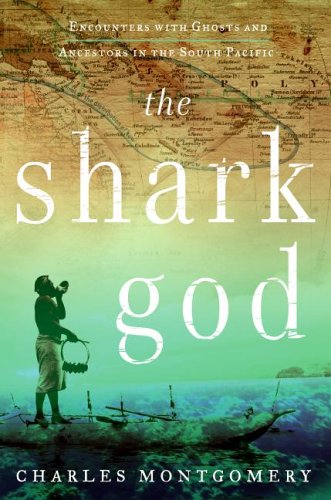
The Shark God by Charles Montgomery
Montgomery went in search of magic. Well actually he just wanted to trace his ancestor's footsteps, but then his mission quickly became the unknown and magic once he was in Melanesia. This book, rather than be on comparative religion and travel like I thought it would be, actually read more as a memoir (although to be sure there is religion and travel included).
As a young boy, Montgomery discovered journals from his missionary ancestor and the stories contained within fascinated him enough that he wanted to retrace those steps in history. Armed with his savings account and a little bit of knowledge on writing in the travel industry, he flies out to the islands in the Pacific to meet with the locals and see if there is any traditional religion left or if everyone had converted to Christianity. What he found was a surprising mix between the two and a people divided by their beliefs.
While Montgomery fully fleshes himself and his beliefs in the book, I couldn't help but feeling that the local people were left more two-dimensional. They all had a personality quirk that set them off but their true description was in their religion and that seemed to be what defined them. Their actual personal lives, hopes, and dreams we never heard much about and so it made it hard to care about their other beliefs. Mongomery at least was interesting in his own thought exploration and it was interesting to see the goals of his travels change as he progressed through the islands.
The premise was a good one. He wanted to see what those before him had seen and how the missionaries' work had changed the islands. But then he started wanting to see the magic side and the customs that the native people gave up in favor of Christianity. He puts in a lot of detail, but I do think that it starts to get repetitive and drawn out after awhile. Every person's story seemed the same and I felt like I was reading about the same person over and over again. There were a few standouts; mainly about the missionary Patterson and some of the older stories and I did enjoy those parts of the book. As for the other stories though I would rather have read more about the landscape and less about the people's betel nut habit.
An ok book. It has a lot of interesting points from an anthropological standpoint but it presents it in a way that can be quite dry at times.
The Shark God
Copyright 2004
370 pages
As a young boy, Montgomery discovered journals from his missionary ancestor and the stories contained within fascinated him enough that he wanted to retrace those steps in history. Armed with his savings account and a little bit of knowledge on writing in the travel industry, he flies out to the islands in the Pacific to meet with the locals and see if there is any traditional religion left or if everyone had converted to Christianity. What he found was a surprising mix between the two and a people divided by their beliefs.
While Montgomery fully fleshes himself and his beliefs in the book, I couldn't help but feeling that the local people were left more two-dimensional. They all had a personality quirk that set them off but their true description was in their religion and that seemed to be what defined them. Their actual personal lives, hopes, and dreams we never heard much about and so it made it hard to care about their other beliefs. Mongomery at least was interesting in his own thought exploration and it was interesting to see the goals of his travels change as he progressed through the islands.
The premise was a good one. He wanted to see what those before him had seen and how the missionaries' work had changed the islands. But then he started wanting to see the magic side and the customs that the native people gave up in favor of Christianity. He puts in a lot of detail, but I do think that it starts to get repetitive and drawn out after awhile. Every person's story seemed the same and I felt like I was reading about the same person over and over again. There were a few standouts; mainly about the missionary Patterson and some of the older stories and I did enjoy those parts of the book. As for the other stories though I would rather have read more about the landscape and less about the people's betel nut habit.
An ok book. It has a lot of interesting points from an anthropological standpoint but it presents it in a way that can be quite dry at times.
The Shark God
Copyright 2004
370 pages
June 11, 2014
The Daily Coyote by Shreve Stockton
Coyotes are generally considered a nuisance. Not a pet. So when Stockton adopts an orphaned coyote, she doesn't quite know what she's getting herself into. But she's willing to try.
Stockton fell in love with Wyoming while driving across the country on her vespa. After seeing it, she knew that was where she had to end up and so found a small rental and a way to make a living and moved. She quickly met the acquaintance of a local land manager/rancher and ends up renting property off of him in addition to dating him. And then he decides to give her a coyote puppy. Something made him save it out of all the other ones he was putting down for his job and Stockton decides to raise it. The book covers the first year of the the pup Charlie's life and the different challenges Stockton faces in raising him.
Stockton is pretty open about her life and the people around her. Even her boyfriend she gets pretty candid about. Telling when she's upset with him or the personal aspects of his life. But she does the same for herself as well. Charlie gets the most description of course, and since he's the star of the show that just makes sense. I enjoyed reading about his personality and his antics, and even his bad quirks. Stockton took a long look at herself to see why she might be having troubles with him and wasn't afraid to admit her mistakes and failing and try to do something about them; which is admirable.
This book moves kind of slow for only covering a year. A lot of time is spent on Charlie as a puppy and during the times where he and Stockton were having personality conflicts. I find it interesting, but honestly would have preferred to hear a little more than that year as the last third of the book just seemed to be about her struggles with him and it barely got to being better before the book was ended. I suppose this is due to the timeline she had to write it in, but I wish they would have let her have a little more time to expand on the story. Otherwise the description is good, the pictures are lovely and adorable and I really did enjoy reading Charlie's (and Stockton's) story. The only warning I would give is that there is quite a bit of description about coyote killings. It's reality unfortunately, but if you can't handle that kind of stuff, don't read the book.
If you like animal stories this is a good one. Stockton does a great job with Charlie and it's a pleasure to see the pictures and read the book.
The Daily Coyote
Copyright 2008
287 pages
Stockton fell in love with Wyoming while driving across the country on her vespa. After seeing it, she knew that was where she had to end up and so found a small rental and a way to make a living and moved. She quickly met the acquaintance of a local land manager/rancher and ends up renting property off of him in addition to dating him. And then he decides to give her a coyote puppy. Something made him save it out of all the other ones he was putting down for his job and Stockton decides to raise it. The book covers the first year of the the pup Charlie's life and the different challenges Stockton faces in raising him.
Stockton is pretty open about her life and the people around her. Even her boyfriend she gets pretty candid about. Telling when she's upset with him or the personal aspects of his life. But she does the same for herself as well. Charlie gets the most description of course, and since he's the star of the show that just makes sense. I enjoyed reading about his personality and his antics, and even his bad quirks. Stockton took a long look at herself to see why she might be having troubles with him and wasn't afraid to admit her mistakes and failing and try to do something about them; which is admirable.
This book moves kind of slow for only covering a year. A lot of time is spent on Charlie as a puppy and during the times where he and Stockton were having personality conflicts. I find it interesting, but honestly would have preferred to hear a little more than that year as the last third of the book just seemed to be about her struggles with him and it barely got to being better before the book was ended. I suppose this is due to the timeline she had to write it in, but I wish they would have let her have a little more time to expand on the story. Otherwise the description is good, the pictures are lovely and adorable and I really did enjoy reading Charlie's (and Stockton's) story. The only warning I would give is that there is quite a bit of description about coyote killings. It's reality unfortunately, but if you can't handle that kind of stuff, don't read the book.
If you like animal stories this is a good one. Stockton does a great job with Charlie and it's a pleasure to see the pictures and read the book.
The Daily Coyote
Copyright 2008
287 pages
June 02, 2014
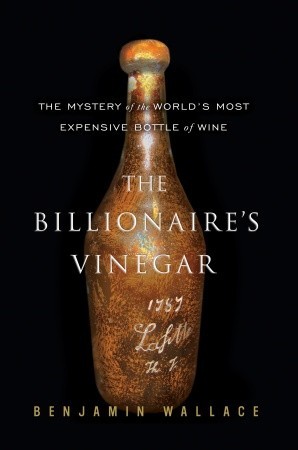
The Billionaire's Vinegar by Benjamin Wallace
It is amazing, if you have money, just what you can purchase. In this case, a really old bottle of wine that was supposedly owned by Thomas Jefferson. I can't say it is something I'd ever want to possess, but to each their own.
The Billionaire's Vinegar chronicles the auctions, private sales, findings, tastings, and pretty much everything having to do with wine from the eighties onward. Specifically, it delves into the mystery of the Thomas Jefferson bottles. Rare wine supposedly owned by Thomas Jefferson and auctioned off at great sums. Later, there would be controversy surrounding the authenticity of the bottles though and both the players (ultra-rich people who have bought these bottles), scientists (analyzing the age of the bottles), tasters, and others would get involved.
There were a lot of people in this book, and with the exception of a few that came up every chapter, it was hard to keep track of them. All the tasters, journalists, auctioneers, vintners, etc; there are a lot of people involved in the wine industry, and this book just tracked a small circle of them. I didn't really care for any of them though. Probably because I couldn't identify with any of them. Well, that and with the exception of the really sweet wines, it all tastes like vinegar to me (and it's why I like the title). I did find the history on Thomas Jefferson very informative though. I learned things about him that I never knew, especially in regards to his spending habits.
This book started off very interesting with the information about wine and the history lesson. But then it tapered off in the middle and became quite dry. I disliked the politics and the intrigue and the drama that the bottles caused, especially since nothing was ever resolved so the book didn't feel finished. I'm sure wine aficionados would have more of an appreciation for some of the people described in the book and would understand a lot more about the different vintages and bottlers. Or at least they'd understand more of the terminology that was used.
Not a great book but it did have some good facts and was engaging in the first half. History or wine lovers will probably enjoy it the most.
The Billionaire's Vinegar
Copyright 2008
319 pages
The Billionaire's Vinegar chronicles the auctions, private sales, findings, tastings, and pretty much everything having to do with wine from the eighties onward. Specifically, it delves into the mystery of the Thomas Jefferson bottles. Rare wine supposedly owned by Thomas Jefferson and auctioned off at great sums. Later, there would be controversy surrounding the authenticity of the bottles though and both the players (ultra-rich people who have bought these bottles), scientists (analyzing the age of the bottles), tasters, and others would get involved.
There were a lot of people in this book, and with the exception of a few that came up every chapter, it was hard to keep track of them. All the tasters, journalists, auctioneers, vintners, etc; there are a lot of people involved in the wine industry, and this book just tracked a small circle of them. I didn't really care for any of them though. Probably because I couldn't identify with any of them. Well, that and with the exception of the really sweet wines, it all tastes like vinegar to me (and it's why I like the title). I did find the history on Thomas Jefferson very informative though. I learned things about him that I never knew, especially in regards to his spending habits.
This book started off very interesting with the information about wine and the history lesson. But then it tapered off in the middle and became quite dry. I disliked the politics and the intrigue and the drama that the bottles caused, especially since nothing was ever resolved so the book didn't feel finished. I'm sure wine aficionados would have more of an appreciation for some of the people described in the book and would understand a lot more about the different vintages and bottlers. Or at least they'd understand more of the terminology that was used.
Not a great book but it did have some good facts and was engaging in the first half. History or wine lovers will probably enjoy it the most.
The Billionaire's Vinegar
Copyright 2008
319 pages
May 22, 2014
My Home Sweet Rome by Sari Gilbert
I am an armchair traveler. So I do my traveling through books from people who either live in or have visited all the places I want to go. Enter Rome. A city with a lot of history, art, and delicious food, it's definitely a stop for most travelers. But Gilbert takes it a little further. She lives in Rome, and has done so for decades, giving her an experience that most have not had.
While in college, Gilbert moved to Rome to continue her schooling and then pursue a career in journalism. Fond of Rome and the opportunities it offered to her, she stayed and worked for several newspapers and as a freelance journalist. This offered her the chance to talk to many important people, cover interesting stories, and just appreciate all that Rome had to share. In this book she also talks about Roman/Italian lifestyles, history, government and a myriad of other topics.
Gilbert is a very honest narrator. She doesn't hold back on any topics, including those of her own personal life. Which can be disconcerting at times. She's also very honest about the people she meets and has relationships with. I actually wondered at times if she had changed people's names as to avoid getting them angry, because she is brutally honest. But it offers a very clear look at Italy and some of its people and their habits. And Gilbert knows a lot of people because of the line of work she is in, so it's just not neighbors and friends, but also politicians and some celebrities that she writes about in this book.
I can honestly say that I enjoyed most of this book. I found the information on the politics, history, lifestyle and many other topics fascinating. What I didn't find so fascinating was the amount of detail given to her romantic exploits. While some was useful for seeing how Roman lifestyles worked, others were just a bit gratuitous and detracted from the book as a whole. But, since I could just skim past those sections it didn't bother me too bad. She does put a lot of detail in and I especially enjoyed the descriptions of the food. It made me want to just make a plate of pasta and find a good hunk of cheese to gobble down. Maybe a glass of wine too. And now I'm hungry. Some time is given to the landscape and scenery of Italy and Rome too, although I would have definitely enjoyed hearing more about it as I'm sure the same level of detail would have been given in the writing.
Definitely an interesting book on living in Rome. It offered a unique perspective from someone who's been living a Roman life for awhile and isn't afraid to tell it how it is.
**This book was received as a free advanced reader's copy**
My Home Sweet Rome
Copyright 2013
328 pages
While in college, Gilbert moved to Rome to continue her schooling and then pursue a career in journalism. Fond of Rome and the opportunities it offered to her, she stayed and worked for several newspapers and as a freelance journalist. This offered her the chance to talk to many important people, cover interesting stories, and just appreciate all that Rome had to share. In this book she also talks about Roman/Italian lifestyles, history, government and a myriad of other topics.
Gilbert is a very honest narrator. She doesn't hold back on any topics, including those of her own personal life. Which can be disconcerting at times. She's also very honest about the people she meets and has relationships with. I actually wondered at times if she had changed people's names as to avoid getting them angry, because she is brutally honest. But it offers a very clear look at Italy and some of its people and their habits. And Gilbert knows a lot of people because of the line of work she is in, so it's just not neighbors and friends, but also politicians and some celebrities that she writes about in this book.
I can honestly say that I enjoyed most of this book. I found the information on the politics, history, lifestyle and many other topics fascinating. What I didn't find so fascinating was the amount of detail given to her romantic exploits. While some was useful for seeing how Roman lifestyles worked, others were just a bit gratuitous and detracted from the book as a whole. But, since I could just skim past those sections it didn't bother me too bad. She does put a lot of detail in and I especially enjoyed the descriptions of the food. It made me want to just make a plate of pasta and find a good hunk of cheese to gobble down. Maybe a glass of wine too. And now I'm hungry. Some time is given to the landscape and scenery of Italy and Rome too, although I would have definitely enjoyed hearing more about it as I'm sure the same level of detail would have been given in the writing.
Definitely an interesting book on living in Rome. It offered a unique perspective from someone who's been living a Roman life for awhile and isn't afraid to tell it how it is.
**This book was received as a free advanced reader's copy**
My Home Sweet Rome
Copyright 2013
328 pages
May 04, 2014
Seeds of Hope by Jane Goodall
So, the only thing I ever really knew about Jane Goodall was that she was the lady who worked with chimpanzees. That's it. Turns out, she has done a lot more than that. And a lot of that had to do with plants.
From an early age, Goodall loved plants, and even had a special tree at her grandmother's house. While off fighting to save the chimpanzees she was studying the local vegetation as well. In this book there are some accounts of her own experience, but it is also a book of history and current activities in regards to the plant world and the development of world crops. She covers GMO's, plantations, poisonous plants, beneficial plants and much more. The actual book is broken into four parts. My Love For the Natural World, which is just Goodall's history with plants. Hunting, Gathering and Gardening, which talks about the different gardens and seed banks in the world and even has a special section on orchids. Uses and Abuses of Plants, which includes sections on healing, drug plants, plantations, mono-crops and GMO's. And the Way Forward which shows what is going on now to help preserve some of the different plants of the world that are rapidly becoming extinct.
Goodall is almost always polite. When faced with distasteful topics she kind of side steps around the people who are making it bad and instead focuses on those who are doing good and making differences. So nothing is scathing in this book in regards to anyone. And a lot of her personal stories are very nice too. It's easy to see she was close to her family and enjoyed spending time with her grandmother and the garden that she had.
This book covers some controversial topics. Goodall is a pretty large name and she blasts GMO's and other crop practices pretty hard. There's going to be some mad people as a result. But, since I'm anti-GMO I'm perfectly fine with what she has to say. If you don't believe the same way though, you won't be happy. You have been warned. She did bring up a bunch of topics I knew nothing about and found incredibly interesting. Like the amount of methane that is produced by rice paddies. I always thought rice was a pretty good crop, but on a large scale that doesn't appear to be the case. Just little facts like that make the book well worth reading. And the pleasant tone, despite the hard topics, makes it very engaging and easy to read.
I enjoyed this book by Goodall and because of that would probably read more of her books. She takes an interesting topic and introduces readers to all parts of it.
**This book was received as a Goodreads Giveaway**
Seeds of Hope
Copyright 2014
420 pages
From an early age, Goodall loved plants, and even had a special tree at her grandmother's house. While off fighting to save the chimpanzees she was studying the local vegetation as well. In this book there are some accounts of her own experience, but it is also a book of history and current activities in regards to the plant world and the development of world crops. She covers GMO's, plantations, poisonous plants, beneficial plants and much more. The actual book is broken into four parts. My Love For the Natural World, which is just Goodall's history with plants. Hunting, Gathering and Gardening, which talks about the different gardens and seed banks in the world and even has a special section on orchids. Uses and Abuses of Plants, which includes sections on healing, drug plants, plantations, mono-crops and GMO's. And the Way Forward which shows what is going on now to help preserve some of the different plants of the world that are rapidly becoming extinct.
Goodall is almost always polite. When faced with distasteful topics she kind of side steps around the people who are making it bad and instead focuses on those who are doing good and making differences. So nothing is scathing in this book in regards to anyone. And a lot of her personal stories are very nice too. It's easy to see she was close to her family and enjoyed spending time with her grandmother and the garden that she had.
This book covers some controversial topics. Goodall is a pretty large name and she blasts GMO's and other crop practices pretty hard. There's going to be some mad people as a result. But, since I'm anti-GMO I'm perfectly fine with what she has to say. If you don't believe the same way though, you won't be happy. You have been warned. She did bring up a bunch of topics I knew nothing about and found incredibly interesting. Like the amount of methane that is produced by rice paddies. I always thought rice was a pretty good crop, but on a large scale that doesn't appear to be the case. Just little facts like that make the book well worth reading. And the pleasant tone, despite the hard topics, makes it very engaging and easy to read.
I enjoyed this book by Goodall and because of that would probably read more of her books. She takes an interesting topic and introduces readers to all parts of it.
**This book was received as a Goodreads Giveaway**
Seeds of Hope
Copyright 2014
420 pages
Subscribe to:
Posts (Atom)