Imagine living in a society where girls are not valued. In fact, they are property and subject to the whims of the males in their lives. Where they go from father to husband and never have a say in what happens. This isn't a fairytale. It's a reality in Afghanistan, even after the removal of the Taliban.
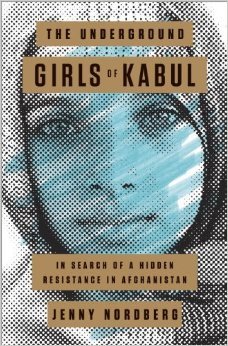
When Nordberg goes to Afghanistan she expects to find out about the lives of women. What she doesn't expect to find is an underground movement of women who are posing as men. And it's something everybody knows but doesn't speak on. More commonly found in pre-pubescent girls, it has become custom to turn a girl into a boy either for running errands, helping in a shop, or to give luck that a boy will be born next. The girls are normally returned to being their birth gender before puberty starts and they are married. But there are a few exceptions.
It's hard to imagine changing yourself into a different person to be integrated in society and have freedom of movement but that is exactly what happens in Afghan culture. Whether it is for necessity to survive and get an income or because there is shame from having all girls, the reasons are varied but all widely accepted. Nordberg does a great job of showing the different personalities of the girls that have been boys for awhile and their history. It was interesting to read about how they handled the transition back (if they transitioned) and how it set them up for the rest of their lives. The different reactions of people to her was telling as well, because as a foreigner she had a lot of freedom compared to most, but was still treated differently based on her gender.
The reporting in this book was handled very well. Nordberg researched, talked to many people, and got the different sides of everything. Pretty standard, but sadly not something that happens with a lot of journalists anymore. I think the attention she paid to the leads and as in-depth as she went in her reporting was remarkable. Especially considering she was in a closed-society that doesn't encourage outsiders to make contact with women. Sure, it probably helped she was a woman herself, but it's still a difficult culture to navigate and get answers. Which makes this view pretty important. Her take of the situation, that not just women should be being helped, but the men who encourage education in women should be helped as well, is an important thought and one frequently overlooked. And the stories are engaging and well written, done in a professional way but still having a lot of detail. I could have kept reading if there was more.
I think this is a great book that shows a hidden side of Afghan culture that could be key to improving lives for women over there. I definitely recommend this book for anyone interested in women's studies or Afghan culture.
**This book was received in a Goodreads Giveaway**
The Underground Girls of Kabul
Copyright 2014
333 pages
Showing posts with label Afghanistan. Show all posts
September 28, 2014
July 30, 2013
An American Bride in Kabul by Phyllis Chesler
**This review is part of the Amazon Vine program**
Chesler had a very harrowing, unique experience. This memoir/history/social topics book really explores what she went through in Kabul and her reactions to some of the customs practiced in the Eastern world.
In the sixties, Chesler was young, in college, and in love with a man from Afghanistan. After marrying, he decides they will go back to Kabul, where his family is. She of course thinks this is an adventure and dreams about all the exploring and traveling they will do. She is quite surprised then when she is placed under "house arrest" and expected to follow the customs of the Afghani women. With her health failing and freedom taken, her only hope is to get home, but it is exceptionally difficult in a culture where only men can give permission. That was the first half of the book anyway. The second half described what she did when she was back in America and her thoughts on feminism and women in the Eastern world.
I don't understand a lot of Chesler's motives. Not with herself, she is completely frank about why she thinks she did things and why she does certain actions. But I don't understand her connection to her ex-husband. The way he treated her (regardless of it being a cultural thing) makes me wonder why she continued to have contact with him. Perhaps a form of Stockholm syndrome? I just can't imagine tying yourself to those memories. But I guess everyone is different. She tries to show him as a courageous person. But her words in this book make him out to be quite small minded and incapable of empathy. Almost a socio-path of sorts, or at the very least someone with narcissistic tendencies.
She says that she almost died in the two months that she was in Afghanistan and I can believe it. Illness can take a person quickly and it was horrifying to know that her husband's family appeared to be so callous and unconcerned as to her condition. I would have liked more description of Afghanistan itself though. While she does have some memoirs in this book, her descriptions of her actual experiences take up less room of the book than her musings on feminism, politics, women's subjects, and other topics do. It almost felt like I was more reading a history/women's studies book rather than a memoir. I wanted more of her personal experiences. It was informative, just not what I expected.
I'd probably give this book three and a half stars. I appreciated the inside look at life for a woman in Afghanistan during the 60's, but would have liked for that inside look to be a little more in depth and not so hurried. Chesler has led an interesting life, and you can definitely tell where her work in feminism was inspired from.
An American Bride in Kabul
Copyright 2013
219 pages
Chesler had a very harrowing, unique experience. This memoir/history/social topics book really explores what she went through in Kabul and her reactions to some of the customs practiced in the Eastern world.
In the sixties, Chesler was young, in college, and in love with a man from Afghanistan. After marrying, he decides they will go back to Kabul, where his family is. She of course thinks this is an adventure and dreams about all the exploring and traveling they will do. She is quite surprised then when she is placed under "house arrest" and expected to follow the customs of the Afghani women. With her health failing and freedom taken, her only hope is to get home, but it is exceptionally difficult in a culture where only men can give permission. That was the first half of the book anyway. The second half described what she did when she was back in America and her thoughts on feminism and women in the Eastern world.
I don't understand a lot of Chesler's motives. Not with herself, she is completely frank about why she thinks she did things and why she does certain actions. But I don't understand her connection to her ex-husband. The way he treated her (regardless of it being a cultural thing) makes me wonder why she continued to have contact with him. Perhaps a form of Stockholm syndrome? I just can't imagine tying yourself to those memories. But I guess everyone is different. She tries to show him as a courageous person. But her words in this book make him out to be quite small minded and incapable of empathy. Almost a socio-path of sorts, or at the very least someone with narcissistic tendencies.
She says that she almost died in the two months that she was in Afghanistan and I can believe it. Illness can take a person quickly and it was horrifying to know that her husband's family appeared to be so callous and unconcerned as to her condition. I would have liked more description of Afghanistan itself though. While she does have some memoirs in this book, her descriptions of her actual experiences take up less room of the book than her musings on feminism, politics, women's subjects, and other topics do. It almost felt like I was more reading a history/women's studies book rather than a memoir. I wanted more of her personal experiences. It was informative, just not what I expected.
I'd probably give this book three and a half stars. I appreciated the inside look at life for a woman in Afghanistan during the 60's, but would have liked for that inside look to be a little more in depth and not so hurried. Chesler has led an interesting life, and you can definitely tell where her work in feminism was inspired from.
An American Bride in Kabul
Copyright 2013
219 pages
June 20, 2013
A Fort of Nine Towers by Qais Akbar Omar
When people hear "Afghanistan" a lot of things come to their minds.
Some think of terrorism and Al-Qaeda. Others think of their loved ones overseas there. But a few might think of the lives of the everyday people there
and what they have suffered through. For those people, this book opens
that up to what the average family endured in the last twenty years in
Afghanistan.
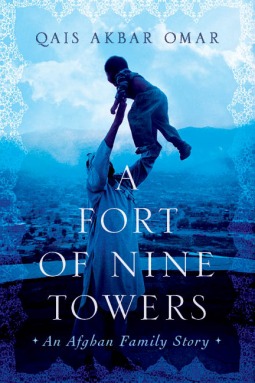
Qais Akbar Omar was seven when his country devolved into chaos. His family, fairly affluent, were almost immediately targeted by corrupt officials and members of the different factions that vied for power. Even more harrowing were the rockets that rained down on the city, destroying everything in their wake. Forced to move from their home, they found refuge in a friend's home and also traveling around as they searched for a way to leave the country. But bad luck followed them everywhere they went and Qais had to endure some very hard times and horrors beyond imagining.
Qais tells everything like it happened. Whether describing a family member or a stranger, it seems like he tells exactly the truth as he knows it about them and doesn't elaborate. Even in his well-respected father and grandfather he is able to still admire them despite their flaws and he doesn't write them as perfect beings, just good ones. He's a little rough on his one sister, but it sounded as if she had a lot of laughs at his expense. And he does a lot of soul searching himself and strives to be a better person, despite setbacks. As for the evil people he describes in this book, they truly are evil, and it is horrific he had to experience what he did.
This is a hard book to read. And it's even harder because it's true. Many will compare it to "The Kite Runner" but that book is fiction. This stuff really happened and it makes it that much worse. But it is also interesting. While I know there has been war over there once America entered the mix, I didn't know about all the fighting between the factions before that time. And all the atrocities committed against the regular people was also an eye-opener. It's amazing that Qais is as good a person as he is since violence often begets violence. But he overcomes it, and that is admirable. Add in his writing skills and this is a book to be reckoned with, as he draws you in and keeps you hooked through the whole book.
A very well done book and a scary, yet hopeful look into Afghanistan and its people.
A Fort of Nine Towers
Copyright 2013
388 pages
Qais Akbar Omar was seven when his country devolved into chaos. His family, fairly affluent, were almost immediately targeted by corrupt officials and members of the different factions that vied for power. Even more harrowing were the rockets that rained down on the city, destroying everything in their wake. Forced to move from their home, they found refuge in a friend's home and also traveling around as they searched for a way to leave the country. But bad luck followed them everywhere they went and Qais had to endure some very hard times and horrors beyond imagining.
Qais tells everything like it happened. Whether describing a family member or a stranger, it seems like he tells exactly the truth as he knows it about them and doesn't elaborate. Even in his well-respected father and grandfather he is able to still admire them despite their flaws and he doesn't write them as perfect beings, just good ones. He's a little rough on his one sister, but it sounded as if she had a lot of laughs at his expense. And he does a lot of soul searching himself and strives to be a better person, despite setbacks. As for the evil people he describes in this book, they truly are evil, and it is horrific he had to experience what he did.
This is a hard book to read. And it's even harder because it's true. Many will compare it to "The Kite Runner" but that book is fiction. This stuff really happened and it makes it that much worse. But it is also interesting. While I know there has been war over there once America entered the mix, I didn't know about all the fighting between the factions before that time. And all the atrocities committed against the regular people was also an eye-opener. It's amazing that Qais is as good a person as he is since violence often begets violence. But he overcomes it, and that is admirable. Add in his writing skills and this is a book to be reckoned with, as he draws you in and keeps you hooked through the whole book.
A very well done book and a scary, yet hopeful look into Afghanistan and its people.
A Fort of Nine Towers
Copyright 2013
388 pages
February 17, 2013
The Kite Runner by Khaled Hosseini
Amir has always wanted his father's approval, but it isn't easy for him to get. Rather, it seems that the servant boy he has grown up with, Hassan, gets the approval more. So even though they are somewhat friends, Amir has a jealousy of Hassan that he can't quite get rid of. So when something terrible happens, Amir just stands to the side, and carries that guilt for the rest of his life. And even as time passes, Amir stays with this cowardice until he is given a chance and a decision to change a few things.
Amir is an imperfect character. A self-described coward he is not near as loyal as Hassan. And he can be a bit of a bully too, as cowards often are. But he wants to be a better person, and he does grow throughout the book. Hassan, on the other hand, is his polar opposite. He's actually almost too perfect and devoted and I find his character a little unbelievable at times. But we're also seeing things from Amir's point of view, so that could skew Hassan's character a little bit too. Baba, the father of Amire, is tough but unyielding. And while I agree that he could have been a little more patient with Amir, I think overall he was a good guy. There are several other characters in this book as well, but they are side characters that support Amir's story and help him through his travails.
The plot was a good one. A deep dark secret that haunts Amir and follows him through life. But I had a big problem with the ending. I don't want to say too much but Amir meets someone from his past and gets to change things a little, but the way he meets this person is just completely unbelievable to me. Of all the chances it would be the same person, it just doesn't work. And in fact, from that part of the book on it just didn't ring as authentic and even felt a little rushed. But still, the story was good and presented a good look at the culture of Afghanistan before the Taliban took over. And the information about Kites, I'd never really thought about kite fighting until this book, but it seems an interesting hobby.
There are some very hard topics in this book though. Violence, rape, combined with some evil people, it is described in a good amount of detail. And there are some things about culture as well that can be hard to accept (like the joke about beating women). This book has a little bit of hope in it, but largely it is a melancholy look at the mistakes we make in life and a culture that has had more than its fair share of tragedy.
I would definitely read more by this author. He has a nice writing style that explains everything fully while not getting bogged down in too much detail. And his characters are people you can care about.
The Kite Runner
Copyright 2003
371 pages
February 01, 2013
Dear Zari by Zarghuna Kargar
Sometimes, when moaning about unfairness, reading a book like this one
really teaches you what fair is. Half the things in this book my brain
couldn't even fathom let alone try to relate to what the women if
Afghanistan go through. And as hard as it was to read, I think it truly
was an important read.
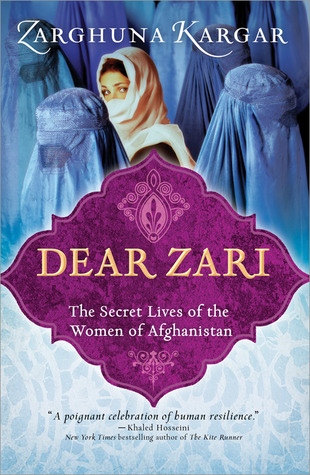
The author, Zarghuna Kargar, is from Afghanistan. They fled when she was young and ended up in Europe where she started working for the BBC and their radio programs. Most specifically, she helped start a program called the Afghan Women's hour which showcased stories from women around Afghanistan. It featured their jobs, troubles, and important topics of the day. From these stories she chose a few to write this book showing different troubles the women of Afghanistan has. And in between, she intersperses her own story, that of a woman who's in a "western" civilization but was still forced to go through an arranged marriage and her struggles with it.
The stories of the women in here are heartbreaking. The amount of suffering they have to go through is overwhelming and they must be a very strong culture in order for the women to survive it. Here, if someone gets a bad grade on a test they can go into complete breakdown. In Afghanistan a woman can be married off, raped, beaten every day, and still not be able to complain about it. And the different stories in this book were all very moving. Zari (Zarghuna) herself is also very brave. She was not afraid to do what it took to get these stories and deal with her own trouble of an arranged marriage at the same time. She is unflinching in telling these stories too. Most people might try to soften it for a reader, but Zari, like a true reporter, tells it as it happened, which I think is respectful to the people who's stories are contained here.
The style is mainly one of short stories, but they are all connected. The tales range from being sold to repay a debt, to being widowed, and falling in love (which is forbidden for most women in Afghanistan). And they are hard topics. It could be too much for people, I know I had tears running down my face as I was reading this book. My only real complaint of the book has nothing to do with the tragic stories within though. It was more the way it was put together. The short stories were a little too short and bounced about a bit. It was hard to maintain focus, especially since the book made you want to read it in short bits already because of the sadness.
A sad, tragic book. But well worth reading. If nothing else these women's voices need to be heard, and this book makes sure that happens.
Dear Zari
Copyright 2012
250 pages
The author, Zarghuna Kargar, is from Afghanistan. They fled when she was young and ended up in Europe where she started working for the BBC and their radio programs. Most specifically, she helped start a program called the Afghan Women's hour which showcased stories from women around Afghanistan. It featured their jobs, troubles, and important topics of the day. From these stories she chose a few to write this book showing different troubles the women of Afghanistan has. And in between, she intersperses her own story, that of a woman who's in a "western" civilization but was still forced to go through an arranged marriage and her struggles with it.
The stories of the women in here are heartbreaking. The amount of suffering they have to go through is overwhelming and they must be a very strong culture in order for the women to survive it. Here, if someone gets a bad grade on a test they can go into complete breakdown. In Afghanistan a woman can be married off, raped, beaten every day, and still not be able to complain about it. And the different stories in this book were all very moving. Zari (Zarghuna) herself is also very brave. She was not afraid to do what it took to get these stories and deal with her own trouble of an arranged marriage at the same time. She is unflinching in telling these stories too. Most people might try to soften it for a reader, but Zari, like a true reporter, tells it as it happened, which I think is respectful to the people who's stories are contained here.
The style is mainly one of short stories, but they are all connected. The tales range from being sold to repay a debt, to being widowed, and falling in love (which is forbidden for most women in Afghanistan). And they are hard topics. It could be too much for people, I know I had tears running down my face as I was reading this book. My only real complaint of the book has nothing to do with the tragic stories within though. It was more the way it was put together. The short stories were a little too short and bounced about a bit. It was hard to maintain focus, especially since the book made you want to read it in short bits already because of the sadness.
A sad, tragic book. But well worth reading. If nothing else these women's voices need to be heard, and this book makes sure that happens.
Dear Zari
Copyright 2012
250 pages
Subscribe to:
Posts (Atom)