Showing posts with label travel. Show all posts

June 22, 2015

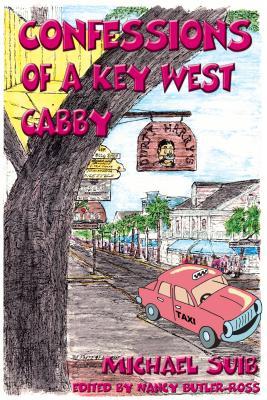
Confessions of a Key West Cabby by Michael Suib

Confessions of a Key West Cabby; there has got to be some great stories in this one!  Well, sort of.  In fact, there really wasn't anything that exciting or notable in these quick vignettes from Michael Suib.  Sure, they were charming, but not all were relevant and the ones that really engaged me were far and few between.

Michael Suib, disenchanted with his life as a businessman, packs up and moves south with his wife to Key West.  Among many odd jobs, he takes a job driving a cab in Key West.  It's through this job that he encounters all sorts of characters, both locals and tourists.  He gathers his stories into a few different sections such as "Love" (guess what these stories are about?), "Southernmost Homeless" (about the key's inhabitants who don't have a roof over their head), and others.

Suib definitely encounters some characters.  Or at least, he describes them as such.  I found the tourists to be some of the brashest.  The homeless residents seemed to be like homeless people everywhere, and didn't have any defining characteristics that made them stand out or of note above the sad state that they are in.  The tourists on the other hand could be quite horrible.  And they definitely follow the rule that people act worse away from home.  Luckily Suib had a no-nonsense approach to offensive customers and promptly would eject them from his cab.

The little stories were entertaining, and easy to read in small bits.  But most of them weren't that interesting and I found myself questioning why they were in there.  Some I didn't even really understand.  Such as the lady who was looking for a decent meal for her nephew/grandson/whatever he was.  Maybe I missed something but I didn't understand that story at all.  Others were good, such as the offensive or racist people that he removed from his cab.  It gave you a sense of justice.

Just ok, nothing special.  I really don't feel like I know Key West any better.  These stories could have happened at any tourist destination and weren't unique to the locale.

Confessions of a Key West Cabby
Copyright 2003
197 pages

June 21, 2015

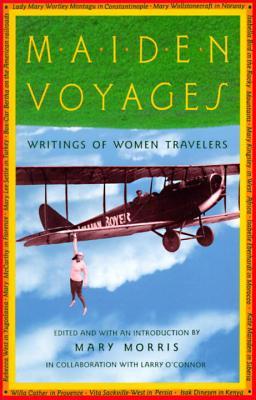
Maiden Voyages by Mary Morris

There have always been women travelers, but they haven't been as prominent in the media's eyes and their works have perhaps garnered less attention than they should have.  This book compiles the letters, short excerpts of novels of several women travelers over the past couple centuries. 

Starting in the late 1600's, collections of writings from women traveler's have been compiled in this book and they span until the late 1900's.  Some tell of adventures they took with their husbands.  Others are solitary travelers and were only able to travel after they were relieved from taking care of their family.  Some traveled just for fun while others went with a specific purpose in mind, like hunting butterflies.

Each of the writer's had their own style.  Some gave great detail, while others were more focused on the reasoning behind the travels and the emotions evoked while traveling.  Because of this, there were some stories that I enjoyed and some that I found myself just briefly flipping through as I didn't care for the description or subject matter.  I did enjoy the story of the two girls traveling down the river.  It was unique and an adventure that not many can say they have done.  Because there are so many stories, it is easy to just pick up this book randomly and only read one or two at a time, there's no need to read the book in one sitting.

This was an interesting collection of writings.  If you like travel or women's studies,  it would probably be right up your alley.

Maiden Voyages
Copyright 1993
438 pages

April 24, 2015

Happy by Lonely Planet

Lonely Planet has a series of mini-books out with a different emotional state as the theme for each.  This book covers "Happy" and the different secrets that people use all over the world to get happy.

This is a tiny little book.  On the left side pages are the pictures and also a box that has the Secret, Tradition, and location of where it is used.  The right side page is a full description saying how something is done in whatever country the tradition takes place.  The book separates the activities into categories such as body or spirit.  The pictures themselves are both photographs and illustrations.

I enjoyed this little book more than I did the other in the series, Calm.  This one had more real photographs, which I felt was appropriate for a travel publisher's book.  While the illustrations are nice photographs describe the tradition better.  Since this is a small book, the print is very tiny and hard to read, so if you have poor vision, I wouldn't advise getting this book.  That being said, it's a nice stocking stuffer or something to carry around in your car for a quick pick me up.  It has many nice traditions, including a few I hadn't heard before like Zapotec fiestas.

Cute little book and fun for a quick read.

Happy
Copyright 2015
125 pages


April 10, 2015

River Horse by William Least Heat-Moon

Have you ever thought about traveling across America by boat?  No really, not around, across; through the rivers and portages taking each snakey way around the land in a trusty motorized boat or canoe.  Well Least Heat-Moon did, and with a friend (well a few friends at times) he did just that.  Having read his Blue Highways and enjoyed it, I figured this would be a good one too.

Later in life after having traveled the blue highways of America, and with an impending divorce, Least Heat-Moon decides that he wants to take another trip across America.  Only this time he wants to do it on a different kind of blue highway.  The watery kind.  So he buys a little boat, finds some friends who can help him on his way, and maps out a course where he can travel the most by river and by not having to use too many portages.  He meets people along the way, stops every night to rest in a different city, and learns what the majority of America's waterways look like.

Least Heat-Moon is a decent narrator.  He tells you a lot about himself and the people he travels with.  You get to hear a few stories about the people he meets along the way, but really not too many.  More often than not he's telling stories about the people he's traveling with's pasts and such.  He also treats the boat as if it were a person, and there's a ton of description and history behind the boat and why it's named what it is and why he chose such a boat.

While this was an interesting book I still don't feel as if I know America's waterways.  I know the laws, the ways that it has changed due to the damming and infrastructure and population of America, but I don't really recall too much in the way of scenery described.  Oh sure there was some, but not the in-depth descriptions I was looking for.  And that goes for almost everything aside from the boat itself.  I wanted to know more about the people and the nature scenes and I felt that it was a bit lacking in this book.  There was a lot of social commentary, a little politics, and a lot of personal history about the author and his friends.  Which made it seem more like a memoir than a travel narrative.

An ok book, but not quite what I had expected it to be.  If you're fond of Least Heat-Moon's writing, you'll like it.

River Horse
Copyright 1999
502 pages

Calm by Lonely Planet

Who doesn't a little more serenity in their life?  We all are constantly rushed, going about our days, rarely taking the time to just stop and appreciate everything.  This little book aims at sharing the secrets to being "calm" from around the world.

Calm is a mini-book that splits up ideas for achieving serenity into different sections like "sharing" or "nature" and offer a brief description of what different people in the world do.  Each page has a picture on the left side and the description on the right side.  The pictures are both drawings and photographs.  On the photograph is a little caption saying what the secret is, what the tradition or activity is, and where it originated.

This is a very tiny book with small print.  If you have bad eyesight you're not going to be able to read it.  That being said, it's perfect to carry in your purse or keep in your desk when you need a little pick me up.  And it does seem geared towards women (which is why I mentioned the purse), although not very obtrusively.  I just happened to notice, especially in the one that mentioned dancing, that the women's role was more described than the man's and seemed like the particular tradition was being recommended more to women.  But again, not really a huge deal, I think anyone would probably like this book.

The pictures are where I was slightly disappointed.  While I found the cartoons and illustrations nice, this is a lonely planet book, which being a travel publisher, I expected there to be more photographs.  I would have much rather seen a real picture of the tradition as opposed to the illustration. I think it would have been easier to connect to the traditions and understand them better that way as well.

It's a cute little book and would make a great stocking stuffer or small gift.  And again, who doesn't need more serenity in their life?

**This book was received through the Amazon Vine Program**

Calm
Copyright 2015
125 pages

January 07, 2015

Wide-Open World by John Marshall

Voluntourism is becoming a popular way for people to spend their vacations.  At times it can help lower the financial burden of taking an exotic location, or if it doesn't fill that purpose, it's a good way to feel like you're helping and making a difference with your time.  Any of these reasons are good reasons for participating though, as is all the lessons you'll learn yourself while helping out in a foreign (or even domestic) locale.  Wide-Open World is actually John Marshall's story about how he and his family took six months to volun-tour around the world.

Marshall had a solid job, two kids in high school, and a wife that was a little bit of a dreamer.  Sensing his family growing apart, they came up with a plan to travel around the world for six months.  But had to do it on a budget.  Enter the world of voluntourism.  They planned out different locations they would go to volunteer, pay for airflights and boarding there, and that would help them get around the world.  On average they spent about a month at each places with varying degrees of time spent being a tourist in between them.  They volunteered at an animal rescue, WOOFED around at farms in New Zealand, taught English in Thailand and spent some time at an orphanage in India, among other things.  At each they did a different type of volunteering and all had their own tasks.

Marshall seems to be pretty honest about his family.  Despite his daughter saying she'd destroy his book if he wrote something unflattering about her, I have to say, he did paint her as being kind of spoiled.  But also learning, she was pretty much a typical American teenager, which can be an unflattering description anymore.  His son was a little more quiet, he didn't seem to have as much of a connection with him as he did his daughter, so while he's present in the book, he's not as much of a standout description.  And his wife.  It's clear that he loved her but that she was a free spirit and maybe they weren't so great of a match when it came down to it.  All the people they met (except the ones that rented their house while they were gone) seemed to be excellent as well and I really enjoyed reading the descriptions of the children in the orphanage, the different families they stayed with in New Zealand, and the spiritual leaders in India.  I was also pretty amused by the actions of the monkeys at the first stop in their trip.

The book introduces a pretty neat concept.  How many people would just quit and risk everything to do this with their family?  It took some planning (although not as much as you think), some bravery, and a willingness to try the unknown.  It does help that the kids were mostly grown and they were not in a lot of debt.  But the book makes this traveling seem approachable for most anyone.  The variety of places was nice as well as it showed all different types of volunteering.  The only thing I didn't really like about this book was probably the drama between the author and his wife.  It wasn't blatant, but it was continuous through the book.  But since this was a memoir I can't fault it too hard for that as he was telling about his life and how he and his family fared on the trip.  Another interesting feature about this book was that it featured three epilogues.  Ok, so two were actually just chapters, but they told of what happened after the trip, and then what happened after that, and then finally something actually called the epilogue followed.  It was more that before publication things that were relevant kept happening so the author included them.

A very interesting book, especially if you like volunteering or have wanted to find a way to travel around the world.  It introduces a lot of concepts that most won't even know existed let alone thought possible that they could do.

Wide-Open World
Copyright 2015
325 pages

**This review is part of the Amazon Vine Program**

October 26, 2014

A Field Guide to Happiness by Linda Leaming

*This book was received through the Amazon Vine Program*

Bhutan, a country that many have heard about but few have really given in-depth study to.  Which is amazing considering their practices as a country.  Measuring how well they're doing by happiness rather than money.  But it's a country worth getting to know and so this memoir/lessons book is one that opens the door a little wider on Bhutan.

A Field Guide to Happiness is part memoir, part lessons in how to live life happier.  That's not to say that you have to move to Bhutan to achieve the things outlined in this book, it just shows how the author learned these lessons in life while living in the country and following their way of life.  Each chapter has a small lesson and ties into an experience or story from the author's personal life.

I never really felt as if I actually knew the author or her husband.  Which is strange because she did describe both of them, but it wasn't in-depth and I just didn't feel any kind of connection.  And the people of Bhutan were just described in general ways, there was never much of a chance to get to know any of them in-depth as individuals, just as a collective.  She wasn't mean or unkind in her descriptions, just brief, and you can tell she really does love her adopted country.

The whole book can be described as brief.  I get that it was supposed to be in snippets as a lesson format to impart some of the wisdom she learned in Bhutan, but it just felt like large journal entries that were mixed with a self-help book.  The writing was clear, good even, but again, that sense of connection just wasn't there for me.  I don't know if it was the format or the briefness of the chapters, but I just couldn't bury myself into it.  On the positive side though, I like that for her lessons she tried to include snippets of her life in Bhutan.  Especially the descriptions of how the people of Bhutan share and the way they treat property there.  Everyone is striving to be a better person (in general) and that's a commendable way to live.

I enjoyed the book mostly but wish it would have been something I could have immersed myself in.  I think anyone who enjoys self-help, discovery memoirs will probably enjoy it though.  I would definitely consider reading the author's other book on Bhutan.

A Field Guide to Happiness
Copyright 2014
232 pages

September 01, 2014

Travels with Casey by Benoit Denizet-Lewis

Travels with Casey; one immediately compares the title to the Travels with Charlie written by Steinbeck.  And that's kind of the point.  The author thought about that classic book and then decided to do his own spin on it.  Take his dog on a trip around the country in an RV, but instead of learning about the people, he wanted to learn about the dogs of the country.

Denizet-Lewis never really felt connected to his dog.  Sure he took care of Casey well, made sure he had everything he needed, but he always felt as if maybe Casey didn't want to be his dog.  There just wasn't a connection with him despite several years together.  So on a writing assignment he decides to pack it up and see if being stuck in an RV together will do anything for that connection.  Along the way he'll stop at various points in the US known for Dog Shows, unique dog parks, dog people, and other such things relating to dogs.

Despite this being a book about dogs, Denizet-Lewis encounters several different people as well.  From the guy who will stop at nothing to find a lost dog, to the guy who lives with wolf-dogs, people can be just as different as dog breeds.  Some of them he describes as a bit crazy, but he takes care to show the goodness that they all have and the common bond of dog ownership.  These are all people, that for various reasons, are obsessed with their dogs or helping dogs.  And it's nice to read about that sometimes when there's so much on the news that points to the other directions.  For himself, Denizet-Lewis tells you all about his flaws, but he comes across as a genuinely likable guy. 

I liked the pace of this book.  While there were sections I would have liked to read more on (Best Friends Animal Sanctuary) I think overall the different snippets were enough to keep the book moving along and interesting.  I enjoyed all the different things related to dogs that he found on his travels and didn't know about some of the others (dog shaped hotel, etc.).  The only part I didn't really like was that so much of his personal life and drama invaded the book.  I think it's probably more of a memoir/dog travel book and while there was nothing particularly out there, I guess I just expected it to be more about the dogs and less about his personal anguish.  It was a mix between.  Again, that doesn't mean this book was poorly written, it just wasn't what I expected based on the title.

For those that like memoirs and books about dogs this is probably going to be a good read.  It has enough whimsy mixed with enough serious topics to keep it interesting.

**This book was won in a Goodreads Giveaway**

Travels with Casey
Copyright 2014
309 pages

August 12, 2014

Wanderlust by Elisabeth Eaves

I'd love to travel, I'm somewhat scared of commitment.  These are the things that make me readily identify with the author of this book.  Even though in reality I'm nothing like her.  While she's out traveling the world, I've never been out of the country (unless you count the Canadian side of Niagara Falls).  While she bounces from relationship to relationship and seemingly doesn't care about sticking with one person at a time, I'm a serial monogamist.  So why on earth am I so drawn to her life?

Eaves decides during college that she needs to travel.  Her boyfriend at the time goes all over the world and it inspires her to do more with her life.  She bounces along from Egypt, to Yemen, eventually finishing up college and going on to other relationships, to New Zealand, Australia, and other places.  She has a few more boyfriends, goes back to school again, and travels to a few more countries.  She never stops moving.  And this book tells of all that moving, although it mostly focuses on her relationships.

The relationships in this book are somewhat shallow.  Eaves herself admits love to several different men, sometimes at the same time, and it makes it hard to know whether what she was feeling was deep or authentic.  Not that I'm to judge, I'm sure you can love multiple people on that level, but with the ease that she separates herself from some of these relationships, it calls it into question.  For herself, we recognize that she doesn't want to be held down.  That she likes the freedom of travel and that she seems to enjoy having superficial relationships that she can easily be freed from.  She's very solitary in a way.

I enjoyed most of this book's descriptions of travel.  Towards the end it was more about her relationships, and I would have liked to have more detail on the countries she was staying in.  It seems that she sacrificed the part about travel for the part about social and her somewhat controlling boyfriend in the latter part of the book.  Granted, she was in France, which she didn't think was terribly exciting, but I'm sure there were some positive things about it and some beautiful sights.  Overall though, I thought the book moved fast and that it kept me fully engrossed in what was happening.

I enjoyed this book, although I recognize not everyone may agree with the way that Eaves travels or her relationships.  I found it an interesting, non-conformist way of living life.

Wanderlust
Copyright 2011
301 pages

August 04, 2014

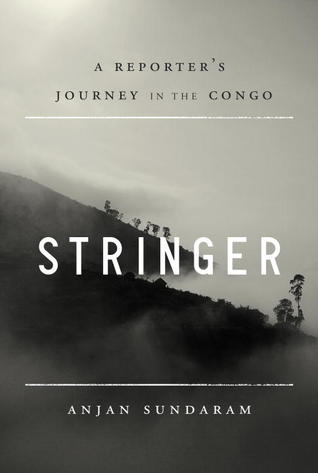
Stringer by Anjan Sundaram

*This review is part of the Amazon Vine Program*

I'm probably in the minority here, but I just couldn't get into this journalist's account of the time he spent in the Congo.  As a rule travel books are one of my favored genres, and being as this was not Sundaram's native country I count it as travel in a journalistic capacity.

Sundaram quits pursuing a higher degree in mathematics to become a journalist in the Congo.  Why the Congo?  A chance meeting with someone in the US enables him to find a place to stay.  Plus it's a war torn area is full of news and somewhere a freelancer can find work.  So he spends a great deal of time traveling around the Congo and meeting some of the people in it, from the family that he stays with to military leaders and more. 

Sundaram doesn't describe himself overly much.  We know that he liked math at one point, that he's of Indian descent, and that he didn't mind the hardship of traveling to the Congo.  We also know how he feels about people, especially the family that he stays with.  But he spends most of his time writing about the people and places that he goes.  The family he is honest about describing.  Their quirks, flaws, how they can be kind and what happens when they are angry with him.  He doesn't hold back at all.  And that's the same for all he meets.  There are a few unflattering descriptions of people in here.  I also thought that while he did describe his interactions, I didn't get a full sense of the personalities of the people he was describing.  Especially considering he lived with some of them for awhile.

The writing in this was a bit more flowery than I expected from a journalist writing from a country that has violence in the headlines every day.  Very poetic.  And I'm sure some people would appreciate it but it made it harder for me to read from a non-fiction perspective.  But that was only in parts, in some areas of the book it was very cut and dry and to the point.  And I appreciated those sections.  It was just hard to mesh the two together for me.  I also thought most of the book was spent on him getting to and fro rather than really talking to the people and getting a sense of their daily lives.  I know the troubles he went through based on the fact that he was living with them, so there's some through association, but I never really felt as if I knew the complete story behind the family he was staying with or any of the other people he encountered.  And the pace felt a bit slow, as if there was stuff going on but the author was removed from it for the majority of the book (although he had a few exciting moments).

I just couldn't get enamored with this book.  It has some good parts to it but largely I didn't come away feeling as if I knew anything more about the Congo than I did before.

Stringer
Copyright 2014
265 pages

July 29, 2014

A Fortune Teller Told Me by Tiziano Terzani

What would you do if you were a journalist and told that you shouldn't travel by plane for an entire year?  Would you heed the warning, or would you continue to do as you please for your jobs sake.  Terzani decided to heed the warning and since he still needed to make a living, traveled around Asia and Europe any way but by plane.

After a fortune teller tells him that he shouldn't travel by plane, Terzani decides to make an exploration not only of Asia, but also of the different seers and fortune tellers that are found in each of the countries he visits.  He wants to see how accurate they are and whether or not they'll echo the warning against flight like the original.  Along his journeys he also comments on how the different countries have changed, what the leadership is like, how the people live, and the difficulties of travel in each country.

Terzani is a somewhat mixed narrator.  For some people he shows the utmost respect and describes kindly, others he shows nothing but disdain.  And honestly, those two categories kind of merged all the people together for me as all the ones he liked had the same attributes and all the ones he didn't had the same attributes so they didn't seem like as many people as what he actually met.  And then there was his wife.  Despite his constant mention of her I still didn't feel as if I knew that much about her.  Himself he doesn't really describe other than to relate what the fortune tellers say about him.

I found this book excruciatingly repetitive.  While at first it was interesting after awhile I got tired of him describing going to a fortune teller and having his fortune read.  The countries, people and places might as well have all be the same for me and it slowed down the pace dramatically.  That's not to say he isn't a good writer.  He has a clear way of writing and there is a substantial amount of detail.  It was just slow moving and didn't capture my interest despite the fact that it should have been an interesting topic.  The pace was also weird in that the first half the book only captured two months of the year while the second half captured the rest of the year.  I think had it been drawn out more evenly it might have been a little more interesting.

I can't say that I'd recommend this book to anyone unless they really liked mysticism with a little hint of travel.  There was just too much of the same story in the book.

A Fortune Teller Told Me
Copyright 1997
367 pages

June 22, 2014

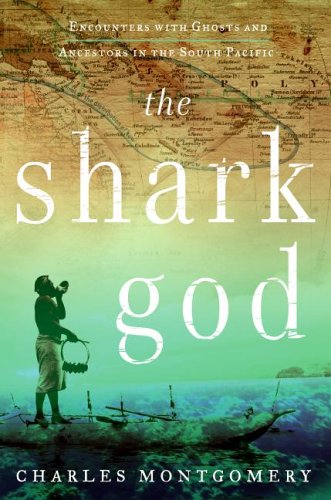
The Shark God by Charles Montgomery

Montgomery went in search of magic.  Well actually he just wanted to trace his ancestor's footsteps, but then his mission quickly became the unknown and magic once he was in Melanesia.  This book, rather than be on comparative religion and travel like I thought it would be, actually read more as a memoir (although to be sure there is religion and travel included).

As a young boy, Montgomery discovered journals from his missionary ancestor and the stories contained within fascinated him enough that he wanted to retrace those steps in history.  Armed with his savings account and a little bit of knowledge on writing in the travel industry, he flies out to the islands in the Pacific to meet with the locals and see if there is any traditional religion left or if everyone had converted to Christianity.  What he found was a surprising mix between the two and a people divided by their beliefs.

While Montgomery fully fleshes himself and his beliefs in the book, I couldn't help but feeling that the local people were left more two-dimensional.  They all had a personality quirk that set them off but their true description was in their religion and that seemed to be what defined them.  Their actual personal lives, hopes, and dreams we never heard much about and so it made it hard to care about their other beliefs.  Mongomery at least was interesting in his own thought exploration and it was interesting to see the goals of his travels change as he progressed through the islands.

The premise was a good one.  He wanted to see what those before him had seen and how the missionaries' work had changed the islands.  But then he started wanting to see the magic side and the customs that the native people gave up in favor of Christianity.  He puts in a lot of detail, but I do think that it starts to get repetitive and drawn out after awhile. Every person's story seemed the same and I felt like I was reading about the same person over and over again.  There were a few standouts; mainly about the missionary Patterson and some of the older stories and I did enjoy those parts of the book.  As for the other stories though I would rather have read more about the landscape and less about the people's betel nut habit.

An ok book.  It has a lot of interesting points from an anthropological standpoint but it presents it in a way that can be quite dry at times.

The Shark God
Copyright 2004
370 pages

January 01, 2014

A Thousand Days in Venice by Marlena De Blasi

This is a love story more than a travel story.  And not all of those thousand days are spent in Venice.  I actually read the sequel to this book "A Thousand Days in Tuscany" before I read this book.  I really don't think it matters what order you read them in though.

De Blasi was in Venice for a job.  With a few friends she was scoping out some wine bars, working on an article.  When she goes to leave though she's told by the owner that she has a phone call.  It turns out to be a man who has admired her from afar.  Many phone calls later she agrees to meet him, and this stranger becomes a new journey in life for her.

Peter, I mean Fernando, looks like Peter Sellers.  No really, De Blasi reminds us of this nearly ever chapter.  He seems sullen and moody to me and I'm not sure what the attraction is, but she seems to like him well enough.  De Blasi herself really likes the physical things in life.  Food, fabric, and other such novelties.  Which I can't blame her for.  I'm obsessed with the same things myself.  And I think she's brave for leaving most everything behind to live somewhere else, although I do think it was a little foolhardy.  I would have liked to hear more about the other people they interacted with, but it didn't get beyond little snippets on anyone else.

So there actually wasn't much of Venice described.  There was some, and a lot of description about food, but overall this was a love story and the story of how she met her husband.  Not what I was expecting but at least the small amount of travel and food kept me through it. I did like the descriptions of the food, De Blasi definitely deserves her spot as a food writer as she is able to write about food in an evocative way.  You can almost taste it.   It's a small book, and the back of it actually has a bunch of recipes and a section on what to do in Venice.  There's also a reading group section. 

Not a book for those looking to learn about Venice I think, but if you want a little love story with some food, this is probably going to be up your alley.

A Thousand Days In Venice
Copyright 2002
272 pages

December 20, 2013

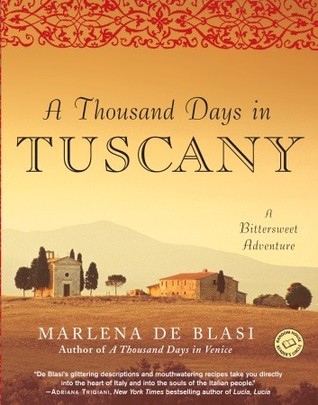
A Thousand Days in Tuscany by Marlena De Blasi

This is a book about food.  Really.  Ok, well maybe it's a book about Italian culture too.  But there's a lot of food in it.

Three years after marrying her husband in Venice, Marlena is apprehensive when they sell everything and move to Tuscany.  Here they have no job, are renting a house, but they quickly become adapted to village life and make a few friends.  One of these is a man who used to live in their house long ago and is a great source of help on projects from making a bread oven to harvesting grapes.  And of course, the entire time that they're living there, there is a lot of food and cooking going on.

Marlena describes her husband in favorable terms most of the time.  But does share that he has a quicksilver aspect of his personality which gets him gloomy.  In fact, most of the Italian men Marlena encounters (and one Russian) seem to have this trait.  She herself, while the narrator, doesn't go beyond describing herself in terms of clothes and the food she's eating.  She is very focused on clothes.  In fact, the person who gets the most description is probably Barlozzo, the man who used to live in their house.  He is kind of a funny character but seems to have a good heart.

I'm not sure where the thousand days part of this book came into play.  It seems to span only a year.  I'm guessing it was just a naming convention passed on from one of her other books.  I loved all the descriptions of the food (and the recipes included are mouth watering as well).  It was really that part of the book that shined.  She had good material to work with though with all the local produce and markets.  The actual renovation of the house and grounds I wasn't as interested in.  But her stories of the people in the village were good and you really cared about what happened to the people and how their lives were going.

A nice book about travel/living in Italy in the Tuscany region.  I'm sure most who enjoy other such books will take to this one with no problem.  It seems to fit that whole genre of woman moves to Tuscany and finds love and food.

A Thousand Days in Tuscany
Copyright 2004
325 pages

December 08, 2013

Chasing Chaos by Jessica Alexander

**This review is part of the Amazon Vine Program**

It's easy to glamorize Aid work.  I mean, you're out there helping people, pretty selfless work right?  Well, yes and no.  As Alexander describes it, Aid work is like any other, you get paid for doing a job, the setting is just a little different and the stresses are different.

Originally in advertizing, Alexander goes back to school after the death of her mother and begins work in the Aid field.  During her decade of working she goes to places like Rwanda, Sierra Leone, and Darfur.  While there her jobs range from managing a camp, researching demobilized child soldiers, and taking interviews.  She also takes time to describe the personal lives of Aid workers and what they do in their off hours.  The frustrations that they have and the good that they do find in their work.

Alexander is a straight forward narrator.  She doesn't pull punches and she doesn't sugar coat things.  In fact, she almost makes the life of an Aid worker sound downright dreary.  A job that no one but the insane would want to do.  Or at least, that's how her descriptions come across to me.  The people she work with all seem stressed out and eager for vacation, and don't seem to find much joy in their work.  There are a few that do, but honestly, it was hard to tell what drew these people to the field in the first place.

I actually enjoyed most of the stories that she had that were about the work itself.  There were a lot of varied things and I learned way more than I ever knew before about Humanitarian Aid.  But the tone was certainly not upbeat or approachable.  I'm not saying it should have been, after all, some horrible things are discussed in this book.  But the amount of disdain Alexander and other Aid Workers have for the other relief groups out there (the non-professional ones) is kind of disheartening.  You'd think if they were doing such a bad job or making things worse it would be better to organize something to share that kind of information with them rather than being disgusted with them.  I don't know, it just sort of put me off the book.  Luckily though the pace of the book is relatively fast and you don't have time to dwell on any one topic.

This was interesting but not what I expected.  I'm not sure who I'd recommend it to other than people who are interested in Humanitarian Aid.

Chasing Chaos
Copyright 2013
377 pages

R

November 14, 2013

Stop Drifting Start Rowing by Roz Savage

This is more of an environmental and spiritual quest book than it is one of adventure. Sure a woman rows across the Pacific Ocean, but that's actually more of a side note.

Stop Drifting Start Rowing is the tale of Roz Savage's trip across the Pacific Ocean in her rowboat. Having already completed the trip across the Atlantic she wants to try to do the same with the Pacific to help promote awareness of her cause of taking care of the environment and the fight against plastic. (We will ignore the fact that in the picture of her supplies there is quite a bit of plastic, the stuff is just unavoidable unfortunately). Her first attempt at the Pacific ends in a Coast Guard rescue but she is able to try again the next year and starts a journey from California, to Hawaii, to Kiribati and then on to Papau New Guinea. All by rowboat.

Savage interacts with a lot of people on their journey and they all support her. Which is rare. She is fortunate in this as it allows her to complete these trips and attend functions for her cause to speak on taking better care of the environment. I do have to say that I had never heard of her before this book though and wonder where exactly her trip was being advertised. After all, there were a lot of plane rides and other resource consuming activities that accompanied these trips so I'm hoping the awareness she spread was more than enough to counterbalance that. I'm sure it was, but her journey wasn't really advertised here in the East side of the U.S. that I know of.

The book itself followed a fast and interesting pace. I enjoyed the transitions between the actual trip and some of Roz's thoughts on the environment and what she had done in her personal life to stop being as much of a consumer (although I did tire of hearing about Larabars, even though I too think they're good). Someone who decides to change their life in such a big way has got a pretty strong spirit. There's not many who could be completely alone out on the ocean in only a rowboat and stay sane. I also appreciated the pictures that she included of the trip as it really showed how small that boat was.

This was a lively book and Roz has led an interesting life. I'll probably check out her first book on the Atlantic trip she made just because this one was so interesting.

Stop Drifting Start Rowing
Copyright 2013
200 pages


**This book was received as part of the Amazon Vine Program**

November 06, 2013

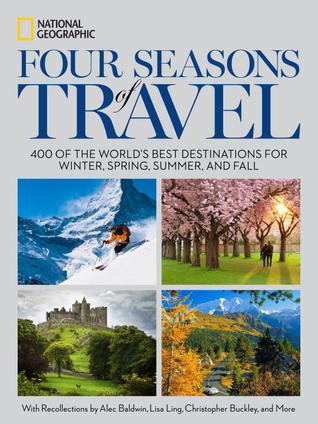
Four Seasons of Travel by National Geographic

**This review is part of the Amazon Vine program**

Oh! All the places I'm probably never going to get to visit. Good thing these sorts of books exist to live vicariously through the authors and their pictures. And this one is a little bit different than a lot because it breaks down the places into the best season to visit.

Obviously, since this is separated into seasons we have entries covering Spring, Summer, Fall and Winter; in that order. And these are United States seasons because in the winter section it will mention places around the world to visit that are actually in their summers (i.e. Antarctica). For each of these seasons there are several places that are highlighted with a page or two and pictures. The places are featured either because of the scenery, local events or music, food and sporting activities. Sometimes a small box would appear with the listing called "In the Know" that told about great places to stay, topics for foodies, and other such tidbits. Interspersed are also Top Ten lists featuring such things as Top Ten Hot Drinks, Top Ten Valentines Spots, etc. And at the end are two pages that have general destinations and activities listed and a Calendar of Events. This makes for a great area to look up things quickly. And in the front of the book is a large map that has all the places numbered and shown.

Spring started the book and it highlighted such areas as Idaho Craters of the Moon, Netherland's Scheveningen, and Romania's Danube Delta. Summer featured Rhode Island's Newport, Norway's Svalbard, and Kakadu National Park. Fall has raptor watching at Hawk Mountain in PA, the Galapagos Islands and Scotland's Shetland Islands. Finally, some of the places for Winter were Easter Island Tapati Rapa Nui, Mallorca and Prague. But these are only a little of the many places that were shown in this book.

I honestly couldn't really tell the different voices that wrote the articles in this book. They were all quite short, often only a few paragraphs and in some cases just a few sentences. So the pictures really showed more of what was going on than the writing did. I really wish there had been more description of the local activities and maybe some side lists of additional things you could do if you went to a location for a specific event. It would have made the book feel a little more complete. But as it is, this is a great coffee table book because of the short snippets of information and the vibrant pictures. I have no complaints on the pictures. The small ones had great clarity and color and the larger ones, while not quite as crisp, were still wonderfully done. They, more than anything, made me want to visit some of the places in the book.

Because this is a large and heavy book, it could be difficult for some people to read. Again, this is where the coffee table book comes into play. Having it on a flat surface is going to work much better for people than picking this up and reading it like you would a novel. So just a word of the wise to people who are looking for more of a pleasure reading travel book.

This was a fun book. I wouldn't say it would be something you'd plan a vacation on, but at least it gives you some ideas to get started. And best of all, it has things in the United States and all over the world, so even if you're not a world traveler, there still may be something for you here.

October 14, 2013

In Movement There Is Peace by Elaine Foster & Joseph Foster

**This book was received as a Free Advanced Reviewer's Copy**

I'd never heard of The Camino De Santiago before reading this book. The Appalachian Trail, yes. The Camino, no. Maybe that's because even though it is a 800 km trek, it's more of a spiritual journey than a physical one. After all, you're supposed to receive forgiveness at the end and it's considered a pilgrimage.

Elaine Foster, a Psychologist, takes an early retirement to work on her own issues. Her husband, Joe, encourages her to walk the Camino with him. So they get ready to travel and fly over to Spain to begin their journey. Aside from the brutal physical aspect of it, it proves to be an emotional journey for them. They learn things about themselves, relationships, and other people and also meet quite a few eclectic people also traveling the Camino for their own reasons.

Elaine and Joe both take turns writing this book. It's broken up into each day (or almost each day, not every single one is here) and they both tell what they experience in that day in their own sections (labeled as who is narrating). They actually must be well suited for one another as I found their "voice" to be quite similar. They both focus on the emotional aspects of the journey and the introspection they experience. Joe tends to focus a little more on the food they encounter while Elaine focuses a tad more on the people. They're both brutally honest about their feelings and own perceived shortcomings and I think it was courageous that they could talk about their weaknesses like that. Perhaps that freedom is just one of the many things they learned on the Camino. I also liked some of the people they got to meet along the way. It was such a varied group and they all seemed like good people. I can't really recall any mean person that they encountered.

The dual writing style was a bit repetitive at first, but as the book got further in they had different things to talk about. In addition to their feelings of walking the Camino, they shared a little bit about equipment, a lot about the different places they stayed every night, and there were even a couple of recipes included in the book. In fact, the only thing that didn't have a lot of description was the trail itself. I was a bit saddened at the lack of scenery and mountain trails in the writing. There was a little, but the hostels they stayed at generally got more description than the beauty of nature. I understand that it was a spiritual journey, so emotions and people were of utmost importance to write about, but surrounded by all that beauty I just can't imagine not writing chapters upon chapters about it. It was still good writing though and it kept you engaged throughout the entire book. In fact, I'm not religious at all (and religion was a theme in this book) but there were several passages that really moved me, and one most poignantly right now "No matter how prepared we try to make ourselves for the inevitable reality of death, the work of true grief will always feel raw and painful. Accepting this truth helps to separate pain from unnecessary layers of suffering (pg.161)." I have a pet that was recently diagnosed with kidney failure. And it doesn't matter that I knew she was growing old, it still hurts to know that I'll be losing her at some point when she's been the only real constant in my life. But this sentence helped me to realize that even though it hurts, I can still enjoy what time I have. Maybe not what the author intended by this lesson, but still one that helped me.

Will I be hiking the Camino any time soon myself? No, probably not. I'm not at the point yet where I can just up and go because of responsibilities that keep me tied down. But it's always a possibility in the future and I am very grateful to this book for not only showing me the emotional path it offers, but letting me know of its existence in the first place! This is an excellent read for the traveler, self-help aficionado or lover of non-fiction journeys.

In Movement There Is Peace
Copyright 2013
296 pages

October 07, 2013

Living In A Foreign Language by Michael Tucker

This could have been such a beautiful book. Too bad the author turns you off in the first part of the book by alienating about 99% of the population. "There were other people--regular people--but you can't imagine how easy it is to tell the difference." And "I mean it's hard enough being a star, but when there's nobody there to worship you, it's damn near impossible." And plenty more just like that.

Michael Tucker and his wife Jill have been tv stars for awhile (LA Law I think?) and after the show ends they find themselves floating adrift. But then, at a birthday party in Italy, they discover a little villa called The Rustico that they fall in love with. They buy it and start changing it, having friends over and finding great food in the area. They also decide to go back to work and so spend their time between the States and Italy.

I've already mentioned my distaste for the author's ego. Maybe he was a really good actor, I don't know, I've never seen him in anything, but it's still not flattering to have quite that much conceit. Although at least he was impressed with his wife and you can tell that he appreciated her. I guess that's a redeeming point in his favor. She herself is only described through his eyes, but she seems like a very focused individual. And they had a ton of friends. One, Caroline, seems to be a helper/surrogate daughter and we definitely know she's Korean, as that's how Tucker described her mostly. But the rest of the people were so numerous that a really great description is never given.

Although that's completely different for the food. That's the best part of this book. I may not like Tucker but he can write about food. All his descriptions of the courses and pasta and deli that he incorporated into the book made me salivate. I wanted to hop a plane to Italy and just eat until I burst. There were stories that weren't about food, but food was definitely the focus. I was surprised by the amount of cursing in this book. It didn't start out that way, but by the end f-bombs are dropped all over the place. Which doesn't bother me but I know a lot of people don't appreciate reading it and so I thought I'd provide a warning.

I can't say that I wholly enjoyed this book. Just the descriptions of food. For those comparing it to Under the Tuscan Sun, I can see similarities, but it is definitely a different kind of book.

Living in a Foreign Language
Copyright 2007
252 pages

August 25, 2013

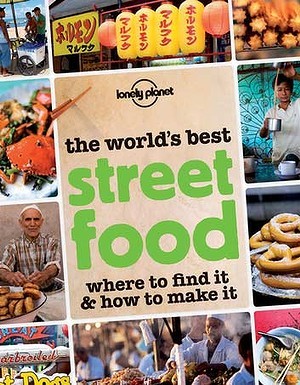
Lonely Plant: The World's Best Street Food

**This book is part of the Amazon Vine program**

Travel and food. Two wonderful things. And this book combines the two of them. Although in some ways scary and it some ways fantastic.

The book is broken up into two sections, the savory and the sweet. Each recipe has a description the left hand side including "What is it?", Origin, Tasting, and finding it. Sometimes there are tips, variations and other tidbits. The right hand side is the recipe itself, usually with a picture. And they come in alphabetical order so it's somewhat easy to find what you're looking for. And there's a lot of color in the book too in the backgrounds and text. It's very visually pleasing.

The recipes are also quite interesting. While I can't envision myself preparing chicken feet, there are plenty of approachable recipes that can be tried even if you aren't that brave. I've tried quite a few recipes in the Savory section though.

Bsarra, from Morocco, was a lovely soup that while thicker than I expected, had a terrific flavor. The Burek, from Bosnia, was also good, but it just didn't hold together well and was hard to shape. I did like the Mushroom Crostini, it was quick to make too. Pastys are either a love or hate food, but these weren't too bad and the variety of fillings are endless. Currywurst was actually really sweet, and I didn't enjoy it that much. One of the best recipes is Gozleme which, while time consuming, was tasty and filling. The Chicago-Style Hot Dogs are just that, down to the celery salt. Kelewele was easy to make, but you couldn't taste the spices, it needed to be stronger. The same with the Knish, just not a lot of flavor. One of the most interesting recipes was the Kushari. Although I didn't like the massive amount of dishes it produced, I did like the food itself. The tomato sauce had good flavor.

The Maine Lobster Roll was easy to make, surprisingly. But I felt it was kind of a waste of Lobster, to smother it in mayo like that. The Pastizzi was also relatively simple, and interesting, but a bit plain. But the pierogies. Oh, they turned out fantastic and I'll be returning to that recipe. It was fantastic. Same with the Poutine. It's fattening, but delicious. And the Pretzels. Must be something about food that starts with "p". Lastly, the Zapiekanka, was kind of like a french bread pizza, but I wasn't thrilled with the mayo.

The Sweet section wasn't near as bit as the savory. And admittedly I didn't make as many recipes in this section either. But the Baklava did taste just like store bought and were quite good. However, the Beaver Tails were ok, but didn't hold on to their cinnamon sugar that well. The Sfenj was good. But the water measurement was off by 1 1/2 cups for me. And it definitely needed a sweet topping or it was kind of savory.

Overall, most of these recipes were a success. Not all had a ton of flavor, and some were hard to cook, but the majority were well worth making. I enjoyed them quite a bit. And I did love the pierogies. The whole book is worth it just for that one recipe. And I enjoyed all the stories and history that were included for each recipe.

A great book! This is one that either a cook or world traveler will like.