May 05, 2013

Rabid: A Cultural History of the World's Most Diabolical Virus by Bill Wasik and Monica Murphy

So I'm sure I'm not the only kid who squirted a ton of whipped cream in her mouth and then ran around pretending to be rabid. With a disease that the majority of the population thinks is eradicated, it's easy to make light of what was once thought of as a death sentence. This book explores Rabies and its manifestations throughout history and its current movement in the modern world.

People still die of rabies. And a lot of people don't realize that fact. They think it's gone because of all the vaccinations and other such preventative measures. Even way back in history though, rabies has been a problem. This book covers the whole timeline. It also covers treatments, the development of the vaccine and other methods used for healing. And it gets into the nitty gritty of the disease itself and its symptoms.

A bit focus of this book was on Louis Pasteur. Everybody has heard of Pasteurization but few know that Pasteur also developed the rabies vaccine. I certainly didn't know that until I read this book. While he was the primary person focused on this book, it did go into detail about a lot of beliefs from people on where rabies came from (some very racist in nature), how people chose to heal the disease before the vaccine (very strange stuff), and new advances for helping people in which the disease has already progressed.

This book was engaging and well written. It's one of those books on histories that you actually want to read and find the scientific stuff fascinating instead of tedious. Sure there were a few tedious parts, especially when we got to the werewolf/vampire connection (or maybe that was just my personal preference stepping in), but I did appreciate the light approach the authors took to such a terrible disease. It was approachable and in being approachable it will educate a larger audience. While I do wish there was a little more science involved, the way everything was explained will be largely understandable to most people as it doesn't get too technical. And that's probably why I found it easy to become immersed in the book and even learn a few things.

A very well written book on a fascinating subject. A little gross and disturbing at times, but still very informative.

Rabid
Copyright 2012
236 pages


May 04, 2013

Twinkie, Deconstructed by Steve Ettlinger

I just could not get into this book.  And it's even in the genre I like, food history and information.  And the twinkie?  It's an icon!

Ettlinger is surprised when his daughter asks where an unpronounceable ingredient on a package of food comes from.  He can't answer it, and that bothers him.  So he decides to research it and other food additives.  And he settles on the twinkie because it is an icon and has so many unusual ingredients on it.  Researching these ingredients, he visits mines, plants, and many other places to find out where the twinkie had its ingredients sourced and how it was developed.

A lot of what he finds isn't actually that helpful as all too frequently it says he wasn't allowed in the plant or noone knew much about a certain ingredient or where it comes from.  It certainly presents the industry as quite secretive.  And he himself is rather waffly on the subject.  I expected this to be against all the additives in the food, but Ettlinger's tone is actually admiring at points, which I thought strange considering some of the stuff he tells us in this book.  But he was very sympathetic to the big food manufacturers and their weird food products.

I liked the premise of the book.  Who wouldn't want to learn more about twinkies?  But the carry through left a little to be desired.  There was a lot of information, and I learned quite a bit I didn't know, but it was hard to get through.  He welds his chapters together ok but the way the information was presented was so dry that I had a hard time being absorbed or focusing on the book.  And as said before, the tone was different than I expected.  You'll learn a lot about what kind of rocks go into your food (it's more than you think!) but in-depth research simply wasn't possible because of the industry secrets so there's nothing too big in it.

I like these types of books but not this one.  I think there are better written books about the food industry out there (Pandora's Lunchbox).

Twinkie, Deconstructed
Copyright 2007
282 pages

May 02, 2013

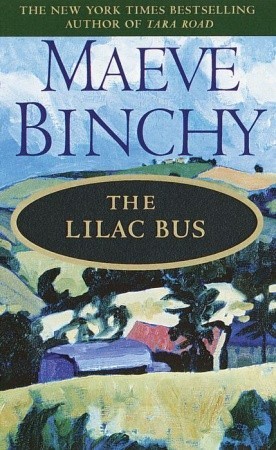
The Lilac Bus by Maeve Binchy

I think I may have missed something. I've heard a lot about Binchy and that her books are fabulous, etc. But this was my first time reading something of hers, and I have to say, I'm not really impressed.

The Lilac Bus is a series of short stories that are all somewhat related in a way, but individual stories all the same. They involve a bus load of people that are driven from Dublin to their hometown on the weekend. In the hometown they all have their little secrets and things they're trying to cope with. The latter part of the book though deals with some other people who are living in Dublin and have issues all their own. I wish I could write a better description, but really, that's what the book is about.

Since we only get to see these people for limited amounts of time (even if they do appear in each other's stories) there is no real connection here. The first story was about a miserly girl who is finally told off for being miserly. There is a woman dealing with her drunken mother, another dealing with her drunken husband. A man who doesn't connect with his parents and can't tell them about his secret. And so forth. Everyone in this book has some kind of problem.

Yet all these problems are unresolved. For the people on the Lilac bus we only hear about their lives for the space of a weekend. The latter part of the book the stories encompass more time, but still have no resolution. It's very annoying and unsatisfying and to make it even worse, it's exceptionally depressing. There are only a few stories that ended with an upbeat note, and even then it wasn't so much upbeat as it was just average living. None of the stories are ever followed up on either so we don't know what happens. If I wanted to read unfinished stories, I would have just went to the file of documents I have on my own computer. I like to have a finish to my stories. But still, I'm giving this book at least two stars because Binchy's writing style is nice and clear and had she finished her stories, I expect they would have been good. It was the only redeeming feature of this book.

Not for me, and even though I have a couple of other books by Binchy sitting on my shelf, I may hold off on reading them as a result of having read this book.

The Lilac Bus
Copyright 1982
390 pages