I'm a little sick of the young adult novels coming out
where the plot includes a boyfriend who's allowed to lie (amongst other
creepy actions) to his girlfriend to protect her or hide a secret of
his own. Like a certain vampire who rates high on the abusive boyfriend
scale the main man in this one disturbs me and sets off some alarm
bells as well. Which is why it is with great shame that I actually have
to admit I was pretty engrossed in this book and found it
entertaining. And it's the first in the series, so I'm guaranteed more
books to read in sequence.
Ever hasn't been the same since a car
accident that killed all of her family except for her. It merely
changed her into someone who can see auras and hear people's thoughts,
and oh yeah, communicate with her dead sister who likes to come around
every day. It's made her go into her own little shell which is made up
of a hooded sweatshirt and ipod to drown out the thoughts of those
around her. But when Damen comes around things change. The voices
aren't so loud and he's attracted to her, although he has an odd way of
showing it and is incredibly mysterious.
So let's talk about the
characters since they were probably the weakest part of this whole
book. I've already mentioned Damen and his habit of lying to Ever for
her own good. Nevermind the fact that it's entirely creepy and
controlling. Apparently he is handsome, rich, and has tons of talents
in other areas so it more than makes up for it. But I can tell you
right now I don't care if he looked like Brad Pitt, I would be entirely
uninterested myself. Ever is a little better, she has a tragic story
and her way of coping seems real. However, her life of luxury is a
little unbelievable. Why is it the girls always have to be beautiful
and rich in these things? I did like her little sister although she
wasn't used very effectively. Mostly she bounced around commenting on
Ever's clothes. And I didn't really feel anything for either of her
friends as they were just there to comment on her love life. Her aunt
Sabine, who is just the token adult in the book, actually had a lot more
promise of being an interesting character than either of her friends.
And as a side note I couldn't help but noticing that almost every
character in this book had a very uncommon name, which struck me as
slightly unrealistic.
Somehow the plot drew me in despite my not
liking the love connection. I liked the concept of the secrets around
Damen and hope to learn more about them in future books. And as I said
before, I liked the way Ever copes with her new-found abilities as it
seems realistic. The writing is pretty tame too since it is for a young
adult audience. Just some kissing and that's about it. I can't even
recall any cussing in this book, although there is some violence and
battle towards the end. I do have to point out that in this book the
meaning of flowers are discussed, and as much as I searched the
Internet, I couldn't find the same meaning for a white rose as what the
author says it is in this book. In fact, it seems to be the opposite.
But I did like the concept of the dark red tulips and it was accurate
according to an Internet search. Although there isn't really any setup
for the next book as far as bad guys, plot struggle, etc. (the
antagonist is taken care of pretty quickly and easily in this book) I'm
still interested in reading it because maybe we'll unravel a little more
of Damen's mystery.
Not a fantastic series but still pretty entertaining. I'm hoping as I read the next few books the characters will improve.
Evermore
Copyright 2009
301 pages
February 02, 2013
February 01, 2013
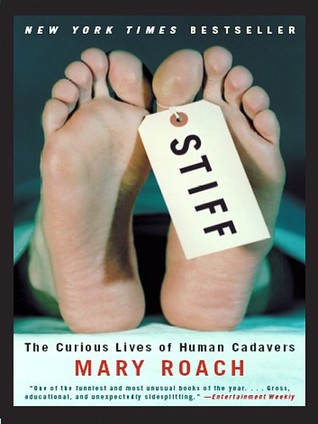
Stiff: The Curious Lives of Human Cadavers by Mary Roach
I've read a couple of other books by Mary Roach with
mixed results. In actuality, this was really the one I wanted to read,
but I wasn't able to get my hands on it until recently. And actually it
was good timing, just a few weeks back I went and saw the Body Worlds
exhibit (which is mentioned in this book) and my reaction to it was only
a little more uncomfortable than my reaction to this.
For those of you who don't know what Body Worlds is, it's an exhibit of human cadavers that have undergone Plastination and then displayed around the world. The first reaction is a good five minutes of your heart going hollow and trying to adjust to what you're seeing. Once that distance is reached then it becomes very interesting to see the exhibit and the bodies up close. This book is a lot like that because it deals with the uses of cadavers throughout history and even now. It covers such things as organ donation, whole body donation, crast test dummy research, cadaver cannibalism, and a few other things. Roach personally attends a lot of the different research facilities and body donation centers to get a personal look at what happens to the cadavers. Although she does not try out the cannibalism obviously.
Roach talks to a lot of people in this book for the interviews and research on cadavers. And everyone was highly respectful of the bodies and their contributions. It was rather nice to see. Sure some were a bit strange, but when you're working with the dead it probably draws a unique sort of people to the field. I'm not sure I could ever work with dead bodies, I much prefer the living myself, but I admire the people who can. And even the dead bodies themselves Roach is mostly respectful. I won't deny that she cracks a few jokes and makes a couple of odd observations, but with such an uncomfortable topic, it isn't surprising and it isn't done with any malice.
This isn't a book of pure research. Roach inserts humor and her own scientific observations. But I guarantee it's a lot more knowledge about the subject than the average person would know. I certainly learned a lot. And it also reinforced my want to donate my body to a body farm when I die. But it's not for everyone. If you have strict beliefs about bodies and where they are supposed to go after death due to moral or religious reasons, you might not appreciate this book too much. And there were a couple boring parts. For instance, the shroud of turin chapter didn't interest me at all, and the older uses of bodies I didn't find as interesting as the modern stuff. There's only so much I can read about body snatchers taking bodies to anatomy schools before I want to move on to something else. Largely though this is an interesting book with a lot of information that was surprising.
This is one of the better books by Roach that I've read. If she comes out with another interesting science book, I'll probably read it.
Stiff: The Curious Lives of Human Cadavers
Copyright 2003
303 pages
For those of you who don't know what Body Worlds is, it's an exhibit of human cadavers that have undergone Plastination and then displayed around the world. The first reaction is a good five minutes of your heart going hollow and trying to adjust to what you're seeing. Once that distance is reached then it becomes very interesting to see the exhibit and the bodies up close. This book is a lot like that because it deals with the uses of cadavers throughout history and even now. It covers such things as organ donation, whole body donation, crast test dummy research, cadaver cannibalism, and a few other things. Roach personally attends a lot of the different research facilities and body donation centers to get a personal look at what happens to the cadavers. Although she does not try out the cannibalism obviously.
Roach talks to a lot of people in this book for the interviews and research on cadavers. And everyone was highly respectful of the bodies and their contributions. It was rather nice to see. Sure some were a bit strange, but when you're working with the dead it probably draws a unique sort of people to the field. I'm not sure I could ever work with dead bodies, I much prefer the living myself, but I admire the people who can. And even the dead bodies themselves Roach is mostly respectful. I won't deny that she cracks a few jokes and makes a couple of odd observations, but with such an uncomfortable topic, it isn't surprising and it isn't done with any malice.
This isn't a book of pure research. Roach inserts humor and her own scientific observations. But I guarantee it's a lot more knowledge about the subject than the average person would know. I certainly learned a lot. And it also reinforced my want to donate my body to a body farm when I die. But it's not for everyone. If you have strict beliefs about bodies and where they are supposed to go after death due to moral or religious reasons, you might not appreciate this book too much. And there were a couple boring parts. For instance, the shroud of turin chapter didn't interest me at all, and the older uses of bodies I didn't find as interesting as the modern stuff. There's only so much I can read about body snatchers taking bodies to anatomy schools before I want to move on to something else. Largely though this is an interesting book with a lot of information that was surprising.
This is one of the better books by Roach that I've read. If she comes out with another interesting science book, I'll probably read it.
Stiff: The Curious Lives of Human Cadavers
Copyright 2003
303 pages
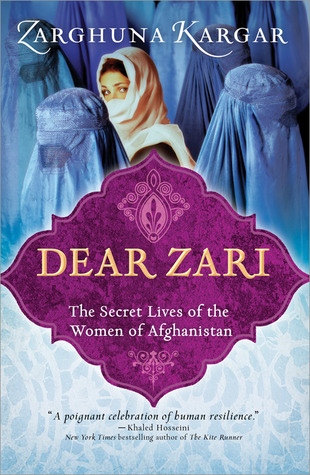
Dear Zari by Zarghuna Kargar
Sometimes, when moaning about unfairness, reading a book like this one
really teaches you what fair is. Half the things in this book my brain
couldn't even fathom let alone try to relate to what the women if
Afghanistan go through. And as hard as it was to read, I think it truly
was an important read.
The author, Zarghuna Kargar, is from Afghanistan. They fled when she was young and ended up in Europe where she started working for the BBC and their radio programs. Most specifically, she helped start a program called the Afghan Women's hour which showcased stories from women around Afghanistan. It featured their jobs, troubles, and important topics of the day. From these stories she chose a few to write this book showing different troubles the women of Afghanistan has. And in between, she intersperses her own story, that of a woman who's in a "western" civilization but was still forced to go through an arranged marriage and her struggles with it.
The stories of the women in here are heartbreaking. The amount of suffering they have to go through is overwhelming and they must be a very strong culture in order for the women to survive it. Here, if someone gets a bad grade on a test they can go into complete breakdown. In Afghanistan a woman can be married off, raped, beaten every day, and still not be able to complain about it. And the different stories in this book were all very moving. Zari (Zarghuna) herself is also very brave. She was not afraid to do what it took to get these stories and deal with her own trouble of an arranged marriage at the same time. She is unflinching in telling these stories too. Most people might try to soften it for a reader, but Zari, like a true reporter, tells it as it happened, which I think is respectful to the people who's stories are contained here.
The style is mainly one of short stories, but they are all connected. The tales range from being sold to repay a debt, to being widowed, and falling in love (which is forbidden for most women in Afghanistan). And they are hard topics. It could be too much for people, I know I had tears running down my face as I was reading this book. My only real complaint of the book has nothing to do with the tragic stories within though. It was more the way it was put together. The short stories were a little too short and bounced about a bit. It was hard to maintain focus, especially since the book made you want to read it in short bits already because of the sadness.
A sad, tragic book. But well worth reading. If nothing else these women's voices need to be heard, and this book makes sure that happens.
Dear Zari
Copyright 2012
250 pages
The author, Zarghuna Kargar, is from Afghanistan. They fled when she was young and ended up in Europe where she started working for the BBC and their radio programs. Most specifically, she helped start a program called the Afghan Women's hour which showcased stories from women around Afghanistan. It featured their jobs, troubles, and important topics of the day. From these stories she chose a few to write this book showing different troubles the women of Afghanistan has. And in between, she intersperses her own story, that of a woman who's in a "western" civilization but was still forced to go through an arranged marriage and her struggles with it.
The stories of the women in here are heartbreaking. The amount of suffering they have to go through is overwhelming and they must be a very strong culture in order for the women to survive it. Here, if someone gets a bad grade on a test they can go into complete breakdown. In Afghanistan a woman can be married off, raped, beaten every day, and still not be able to complain about it. And the different stories in this book were all very moving. Zari (Zarghuna) herself is also very brave. She was not afraid to do what it took to get these stories and deal with her own trouble of an arranged marriage at the same time. She is unflinching in telling these stories too. Most people might try to soften it for a reader, but Zari, like a true reporter, tells it as it happened, which I think is respectful to the people who's stories are contained here.
The style is mainly one of short stories, but they are all connected. The tales range from being sold to repay a debt, to being widowed, and falling in love (which is forbidden for most women in Afghanistan). And they are hard topics. It could be too much for people, I know I had tears running down my face as I was reading this book. My only real complaint of the book has nothing to do with the tragic stories within though. It was more the way it was put together. The short stories were a little too short and bounced about a bit. It was hard to maintain focus, especially since the book made you want to read it in short bits already because of the sadness.
A sad, tragic book. But well worth reading. If nothing else these women's voices need to be heard, and this book makes sure that happens.
Dear Zari
Copyright 2012
250 pages
Subscribe to:
Posts (Atom)