**This review is part of the Amazon Vine program**
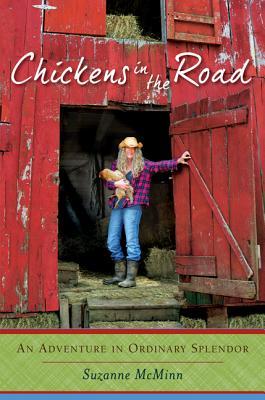
I greatly enjoyed this memoir. Partly because it reminded me some of my
own life, and partly because I liked the descriptions of farm life and
animal stories. And I never even knew there was a blog that it came out
of, I'll definitely be checking that out.
After a divorce,
McMinn packs up her kids and moves to West Virginia, right in the area
that her father grew up. For the first year or so, they live in a
slanted house that is rural, but not a farm. And after meeting a man
she calls "52", they eventually buy a farm and forty acres out in the
middle of nowhere and she starts her farm dream. She starts adding
animals and discovers that there is a lot of work to running a farm.
And even more when relationships aren't all you thought they would be.
McMinn
is living a dream. I'm very envious of her. I've always wanted my own
farm and to have animals and chickens. And I did once, but I ended up
with someone much like 52 and that dream got put on hold as a result.
So that's why I feel a kinship to McMinn. She's experienced the same as
what I have. 52, while originally nice, started becoming emotionally
and verbally abusive as soon as they bought the house. When she wrote
about what he said it could have been taken right out of my life, down
to the same type of words. It was a little scary actually. And it
drove me nuts that she tried to overlook things that he did because love
is blind sometimes. She does meet a lot of good people though. Just
the townsfolk and neighbors that she has are often characters and lend a
helping hand whenever needed.
I enjoyed hearing about her farm
life and the animals she took care of. She has some great stories. But
this book could have also been called "Escape from 52" because that was
just as much of the plot. And she writes it very well. I couldn't put
it down because I wanted to know what happened and how she dealt wit
him. A lot of suspense there. This is a memoir in every sense of the
word, not just a homesteading book. Although it had those elements as
well. And there is a nice little section in the back with craft
instructions and recipes. And a section in the middle with a lot of
great pictures.
An inspiring book and one that rekindles my want
of a farm someday. It's nice to know that people can make dreams
happen, even if they have to face some obstacles to get there.
Chickens in the Road
Copyright 2013
294 pages
Showing posts with label homesteading. Show all posts
August 27, 2013
February 21, 2013
Buffalo for the Broken Heart by Dan O'Brien
Dan O'Brien has owned a ranch in the Black Hills for some time. And he started out with cattle. But like most ranchers in the area, making ends meet with this type of ranching is near impossible. So much so that he has to take jobs elsewhere just to make the mortgage payment. But in addition to being a rancher, O'Brien is also a teacher, ecologist, and so many more roles and he's interested in bringing the wildlife back to the Black Hills after years of overgrazing. One step further has him start raising Buffalo instead of cattle and while he's a novice to begin with, he learns as he goes. This book greatly details how running a sustainable Buffalo farm works for O'Brien and his hardships and triumphs within the first few years.
O'Brien talks about the Buffalo in this book mainly, but there are small snippets of his life. From his sadness over his divorce, his joy in children discovering the buffalo, and just getting along with his neighbors, we can see that overall he's a good person, who's committed to the land. He doesn't hesitate to point out flaws, like the sloppiness of the guy who helps him work the ranch, but he is kind about it and still makes sure to point out all the good things too. And he cares about all the animals. From the falcons he keeps as a hobby, to the bird dogs, to the buffalo themselves, he doesn't mistreat them. He lets nature take it's course and doesn't add any cruelty to it. He lets them be animals.
I'm not going to lie, I did find this book dull at times. Most specifically when he is at auction buying more buffalo. I much prefer his descriptions of them out on the land and the care of them. Even the roundups are kind of exciting, but still not nearly as good as him just describing the land. And it is nice he's still making it work, even selling the meat on the internet through his wildideabuffalo site. He's a believer in not finishing his buffalo in feed lots, and that's admirable. O'Brien does a good job describing the life of a rancher. It's not glorious or romantic and you can tell you really have to love what you're doing to stay in the business.
An inspiring read. I definitely learned a lot more about buffalo than I ever knew before.
Buffalo for the Broken Heart
Copyright 2001
254 pages
January 28, 2013
The Compassionate Carnivore by Catherine Friend
I read the author's first book, "Hit By A Farm", and really enjoyed it.
This one however, felt forced and rushed to me, and I didn't find it
nearly as informative or entertaining to read. The author raises some
good points, but lacks the follow through to really make an impact.
Catherine Friend runs a sheep farm with her partner Melissa. They are low scale farmers, and produce a small amount of sheep bound for the slaughter as compared to larger farms or factory farms. But because of her daily workings with these sheep, Friend decides to take a more in-depth look at the type of meat she's eating in other areas other than lamb. More specifically, she raises the question of whether she should be eating these creatures if they were not raised humanely. As she explores these questions she looks at research from factory farms, methods used to slaughter animals, and the diet of the average American when it comes to meat.
I'm not going to say that factory farms aren't painted harshly, because they are by Friend. She offers data and research to back up her claims and I don't disagree with her either. She also is careful to mention that just because someone is a small scale farmer, doesn't mean they treat their animals well. There is good and bad animal husbandry at all scales of farming. And she doesn't condemn the people eating factory farmed meat, but offers alternatives and says to start small with a goal to change personal consumption. It's easier to take baby steps instead of going full force into something. As someone who was a vegetarian for almost three years (but alas succumbed to bacon) I agree on many of her points. I've thought about going back to vegetarianism not because I don't like meat, but because I can't afford the types of meat I think I should be eating (sustainable, organic, and humanely raised). I like Friend's compromise in saying that just shoot for one meal a week that would have this type of ingredient to make it more doable.
While Friend has many good points, the book does appear rushed though. We're bounced about from facts, to Friend's own farm and animals, to different methods of slaughter, etc. and are never really set on one specific topic for a great amount of time. It's like she was just trying to get everything on paper and the format suffered a little bit. I found it hard to read continuously even though topics like this usually keep me hooked into a book. Additionally, some of the websites she mentions (but not all) didn't work for me when I tried to type them in. Considering the book isn't that old it is surprising, but such is the way of life in the internet world and books should be careful referencing websites because they can be short lived. I did like that she provided a list of questions to ask a farmer about when looking for humanely raised local meat. I fully intend on referring to those questions when I do have an opportunity to buy meat like that.
Some good facts but a very rushed book. It can also cause a lot of contention between farmers who practice the methods Friend doesn't like in this book and on the other side of the spectrum, her thoughts about compassionate carnivores may not sit well with vegetarians who believe any meat consumption is cruel. There really isn't one right answer for everybody though because as with religion, people's thoughts on food are volatile and everyone thinks that they have the right answer. This is one opinion out of many that seeks a middle ground between no meat and all meat.
The Compassionate Carnivore
Copyright 2008
261 pages
Catherine Friend runs a sheep farm with her partner Melissa. They are low scale farmers, and produce a small amount of sheep bound for the slaughter as compared to larger farms or factory farms. But because of her daily workings with these sheep, Friend decides to take a more in-depth look at the type of meat she's eating in other areas other than lamb. More specifically, she raises the question of whether she should be eating these creatures if they were not raised humanely. As she explores these questions she looks at research from factory farms, methods used to slaughter animals, and the diet of the average American when it comes to meat.
I'm not going to say that factory farms aren't painted harshly, because they are by Friend. She offers data and research to back up her claims and I don't disagree with her either. She also is careful to mention that just because someone is a small scale farmer, doesn't mean they treat their animals well. There is good and bad animal husbandry at all scales of farming. And she doesn't condemn the people eating factory farmed meat, but offers alternatives and says to start small with a goal to change personal consumption. It's easier to take baby steps instead of going full force into something. As someone who was a vegetarian for almost three years (but alas succumbed to bacon) I agree on many of her points. I've thought about going back to vegetarianism not because I don't like meat, but because I can't afford the types of meat I think I should be eating (sustainable, organic, and humanely raised). I like Friend's compromise in saying that just shoot for one meal a week that would have this type of ingredient to make it more doable.
While Friend has many good points, the book does appear rushed though. We're bounced about from facts, to Friend's own farm and animals, to different methods of slaughter, etc. and are never really set on one specific topic for a great amount of time. It's like she was just trying to get everything on paper and the format suffered a little bit. I found it hard to read continuously even though topics like this usually keep me hooked into a book. Additionally, some of the websites she mentions (but not all) didn't work for me when I tried to type them in. Considering the book isn't that old it is surprising, but such is the way of life in the internet world and books should be careful referencing websites because they can be short lived. I did like that she provided a list of questions to ask a farmer about when looking for humanely raised local meat. I fully intend on referring to those questions when I do have an opportunity to buy meat like that.
Some good facts but a very rushed book. It can also cause a lot of contention between farmers who practice the methods Friend doesn't like in this book and on the other side of the spectrum, her thoughts about compassionate carnivores may not sit well with vegetarians who believe any meat consumption is cruel. There really isn't one right answer for everybody though because as with religion, people's thoughts on food are volatile and everyone thinks that they have the right answer. This is one opinion out of many that seeks a middle ground between no meat and all meat.
The Compassionate Carnivore
Copyright 2008
261 pages
January 22, 2013
Fifty Acres and a Poodle by Jeanne Marie Laskas
This book absolutely exhausted me. But by the end I knew I enjoyed it
despite that fact; there is something utterly heartwarming about this
memoir.
Jeanne has been a city girl for a long time. Single in her late thirties, she finds herself in a relationship with a man a decade or so her senior but the relationship works and she finds herself wanting other things. Alex is a pretty easy going guy too so when she gets the "farm dream" in her head, he's right there with her helping to look for a piece of property in which to go homestead on. Him and his poodle that is; one of Jeanne's greatest bewilderments with Alex is the fact that he likes poodles. They do find a farm though and start a great adventure, involving locals, groundhogs, stubborn brush, and a myriad of other things that city girl just wouldn't expect.
Jeanne is very fair to the people she describes. In fact, her neighbors sound like the best people on earth and she is very lucky to have them. I'm jealous in fact, I would love to have neighbors like that. Maybe one day, or maybe you just have to be in a rural area, it's hard to say. She also doesn't hold back on her affection for Alex either. It's plain to see that they both appreciate and love each other and that's special. Even her love for the animals comes right out of the pages. You feel very close to the people and animals and can definitely picture them in real life.
Her writing style is a bit wacky. As I said before the book made me exhausted and that's because the voice of the book was like an overexcited five year old. It jumped from topic to topic in a stream of consciousness and it was all I could do to keep up. I wasn't overly thrilled with that kind of writing style, but Jeanne was so open that I couldn't help but like her anyway. And I loved the way she did the ending, I very much appreciated the epilogue of sorts she provided. Since the book covers a year or so of her life I thought it was the appropriate length. A lot happened in that time and while the book could have been dull, it wasn't because she was able to make her activities sound exciting, even if they were as mundane as planting grass seed.
A hyper active book but one that's a good read and inspiring. Jeanne makes me want to have a farm of my own again someday.
Fifty Acres and a Poodle
Copyright 2000
272 pages
Jeanne has been a city girl for a long time. Single in her late thirties, she finds herself in a relationship with a man a decade or so her senior but the relationship works and she finds herself wanting other things. Alex is a pretty easy going guy too so when she gets the "farm dream" in her head, he's right there with her helping to look for a piece of property in which to go homestead on. Him and his poodle that is; one of Jeanne's greatest bewilderments with Alex is the fact that he likes poodles. They do find a farm though and start a great adventure, involving locals, groundhogs, stubborn brush, and a myriad of other things that city girl just wouldn't expect.
Jeanne is very fair to the people she describes. In fact, her neighbors sound like the best people on earth and she is very lucky to have them. I'm jealous in fact, I would love to have neighbors like that. Maybe one day, or maybe you just have to be in a rural area, it's hard to say. She also doesn't hold back on her affection for Alex either. It's plain to see that they both appreciate and love each other and that's special. Even her love for the animals comes right out of the pages. You feel very close to the people and animals and can definitely picture them in real life.
Her writing style is a bit wacky. As I said before the book made me exhausted and that's because the voice of the book was like an overexcited five year old. It jumped from topic to topic in a stream of consciousness and it was all I could do to keep up. I wasn't overly thrilled with that kind of writing style, but Jeanne was so open that I couldn't help but like her anyway. And I loved the way she did the ending, I very much appreciated the epilogue of sorts she provided. Since the book covers a year or so of her life I thought it was the appropriate length. A lot happened in that time and while the book could have been dull, it wasn't because she was able to make her activities sound exciting, even if they were as mundane as planting grass seed.
A hyper active book but one that's a good read and inspiring. Jeanne makes me want to have a farm of my own again someday.
Fifty Acres and a Poodle
Copyright 2000
272 pages
October 09, 2011
Hayfever by Angela Miller
A new homesteader, I pick up anything I can find on other people's accounts of homesteading. Not only are they informative, but they give me an idea of what I"m in for. However, for this book, while I mostly enjoyed it, there were a few things that made me a bit unsettled.
Angela Miller decides that being a literary agent is not enough. She wants to have a farm, and soon that extends into running and Artisan cheese making business. This requires the hiring of several employees and cheese makers (a common theme in the book) and developing a herd of dairy goats. Throughout this process the business has several ups and downs and Miller elaborates on them. She also tells of making cheeses and the process and then the animal husbandry side of raising the goats and dealing with their personalities as well. She doesn't just hint at the time consuming labors of the farm either, she lets you know just how it is and how hard of work it is.
For writing styles I had several problems with this book. For one, it was very very choppy and I would have liked the writing to be more linear. It seemed to bounce from place to place and if I didn't know any better I'd say it was written in several different parts and then mashed together as it was all over the place and some things were repeated constantly without there being a need. For a book written by a literary agent, I was surprised at this mish mash of writing. My next complaint would be with the tone of the book. In the first person from Miller's perspective it was a bit too prideful. There were constant instances of name-dropping and I'm not a big fan of that. I like a little humility in the books I read. In addition to this name dropping, she makes sure you know what these people do. Its not just Mark Bittman likes our cheese, every time it was "Mark Bittman, cookbook author and newspaper article writer" and the same applied for her making sure we knew she was a literary agent. It drove me mad to be quite honest.
Despite these criticisms though overall I did like the book. When she's not writing about the people, and instead focusing on the cheese itself and the animals, the book is quite enjoyable. Especially the sections on cheese. They made me want to go to the fridge, take out a wedge of whatever was in there and munch. If I ever have the opportunity to try Consider Bardwell Farm's cheese, I will, because they were so wonderfully described in this book. Miller too does a good job of explaining the personalities of her animals and instead of being one giant herd, they are distinct.
I think the biggest saving grace for this book though was the recipes included in the back. There's no better way to make me an enjoy a book than to throw a few recipes in it for me to use. Especially since one of them involves making actual cheese. I'll definitely be trying these recipes out and possibly reading the book again as in between the writing that makes me cringe, there are some gems in this book.
Hay Fever
Copyright 2010
275 pages
Angela Miller decides that being a literary agent is not enough. She wants to have a farm, and soon that extends into running and Artisan cheese making business. This requires the hiring of several employees and cheese makers (a common theme in the book) and developing a herd of dairy goats. Throughout this process the business has several ups and downs and Miller elaborates on them. She also tells of making cheeses and the process and then the animal husbandry side of raising the goats and dealing with their personalities as well. She doesn't just hint at the time consuming labors of the farm either, she lets you know just how it is and how hard of work it is.
For writing styles I had several problems with this book. For one, it was very very choppy and I would have liked the writing to be more linear. It seemed to bounce from place to place and if I didn't know any better I'd say it was written in several different parts and then mashed together as it was all over the place and some things were repeated constantly without there being a need. For a book written by a literary agent, I was surprised at this mish mash of writing. My next complaint would be with the tone of the book. In the first person from Miller's perspective it was a bit too prideful. There were constant instances of name-dropping and I'm not a big fan of that. I like a little humility in the books I read. In addition to this name dropping, she makes sure you know what these people do. Its not just Mark Bittman likes our cheese, every time it was "Mark Bittman, cookbook author and newspaper article writer" and the same applied for her making sure we knew she was a literary agent. It drove me mad to be quite honest.
Despite these criticisms though overall I did like the book. When she's not writing about the people, and instead focusing on the cheese itself and the animals, the book is quite enjoyable. Especially the sections on cheese. They made me want to go to the fridge, take out a wedge of whatever was in there and munch. If I ever have the opportunity to try Consider Bardwell Farm's cheese, I will, because they were so wonderfully described in this book. Miller too does a good job of explaining the personalities of her animals and instead of being one giant herd, they are distinct.
I think the biggest saving grace for this book though was the recipes included in the back. There's no better way to make me an enjoy a book than to throw a few recipes in it for me to use. Especially since one of them involves making actual cheese. I'll definitely be trying these recipes out and possibly reading the book again as in between the writing that makes me cringe, there are some gems in this book.
Hay Fever
Copyright 2010
275 pages
October 08, 2011
Homestead by Jane Kirkpatrick
Recently moved to the land, I was very curious to read Kirkpatrick's move to her own plot of land. I always like these type of stories and seeing how the people who choose this way of life fare or even if they enjoy their choice to move back to the country.
Jane and her husband decide to pursue a dream of moving back to the land and doing a bit of farming. They find a good portion of land in the wilderness and even though its hard to get to and not really built up any way, they decide to move to it. This is a gradual process first seeing them go out to visit and work, then move to a trailer on the property, until finally building their house. They also have to decide how they are going to improve upon the land and what they are going to farm, not to mention secure the funds to do it. They have a lot of setbacks though and homesteading life proves to be very difficult for the Kirkpatricks. More than once they question their decision and whether to stick with it.
Jane is a very good narrator, she tells of people without fogging the opinion of them too much. For instance, her step son and his wife really aren't the greatest of people, but she describes their good aspects as well and her hopes for them. That part of the book is actually very positive despite the subject matter. What did surprise me is that she didn't really mention her husband as much as I expected. He was there doing things, and they had talks at times, but he wasn't a main focus of the book.
I really wish Kirkpatrick had put more positives in this book. There were some parts of the novel where I just kind of set it down and wondered why on earth they strove with it after reading disaster upon disaster with no good instances to be found for several chapters. A more positive outlook would have helped and while I appreciate the reality of struggle, it can't have been all struggle or they wouldn't have stayed. Another note on the writing is that this book could be considered Christian Fiction. Those familiar with Kirkpatrick's fiction work would probably already have known this was her genre, but as a new reader, I did not. It didn't really distract in any way, but since this is her narrative about her life, adds to her belief system and explains her motivations.
It was an interesting tale, harrowing at times and if I wasn't already on the land it would probably make me think twice about getting back to it. However, there are many other books out there that tell the good of such an endeavor so I suppose there must be a book with all the warnings.
Homestead
Copyright 2005
374 pages
Jane and her husband decide to pursue a dream of moving back to the land and doing a bit of farming. They find a good portion of land in the wilderness and even though its hard to get to and not really built up any way, they decide to move to it. This is a gradual process first seeing them go out to visit and work, then move to a trailer on the property, until finally building their house. They also have to decide how they are going to improve upon the land and what they are going to farm, not to mention secure the funds to do it. They have a lot of setbacks though and homesteading life proves to be very difficult for the Kirkpatricks. More than once they question their decision and whether to stick with it.
Jane is a very good narrator, she tells of people without fogging the opinion of them too much. For instance, her step son and his wife really aren't the greatest of people, but she describes their good aspects as well and her hopes for them. That part of the book is actually very positive despite the subject matter. What did surprise me is that she didn't really mention her husband as much as I expected. He was there doing things, and they had talks at times, but he wasn't a main focus of the book.
I really wish Kirkpatrick had put more positives in this book. There were some parts of the novel where I just kind of set it down and wondered why on earth they strove with it after reading disaster upon disaster with no good instances to be found for several chapters. A more positive outlook would have helped and while I appreciate the reality of struggle, it can't have been all struggle or they wouldn't have stayed. Another note on the writing is that this book could be considered Christian Fiction. Those familiar with Kirkpatrick's fiction work would probably already have known this was her genre, but as a new reader, I did not. It didn't really distract in any way, but since this is her narrative about her life, adds to her belief system and explains her motivations.
It was an interesting tale, harrowing at times and if I wasn't already on the land it would probably make me think twice about getting back to it. However, there are many other books out there that tell the good of such an endeavor so I suppose there must be a book with all the warnings.
Homestead
Copyright 2005
374 pages
This Life Is In Your Hands by Melissa Coleman
**This review is part of the Amazon Vine Program**
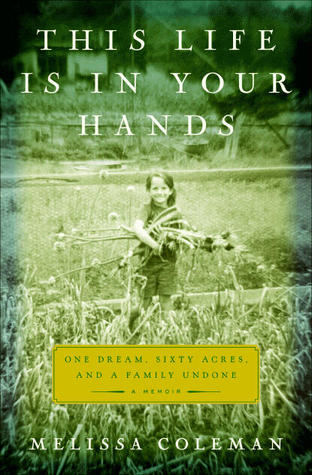
There is something hauntingly beautiful about this book. While its main theme seems to be one of sorrow and striving for happiness, it expresses a lot of life. It is actually a Memoir, written by Melissa Coleman, about her life growing up on a primitive homestead in a dream that was hatched by her mother and father during the back to the land movement.
Originally, her parents had met on a college campus, and while there, had kept a small place with a garden and a few animals. Wanting more, they traveled to visit the Nearings in Maine. They had been inspired by the Nearing's book The Good Life, which is about homesteading and returning back to the lands to create a life. Buying land on the cheap from their mentors, Melissa's father builds their little house himself and starts clearing the land to make an organic garden. Each year the are a little better at what they do and the dream starts changing; at least for her father. While apprentices start coming to learn and her father goes on grant funded trips to study organic gardening, Melissa's mother suffers through postpartum depression it would seem and "checks out" leaving she and her sister to run wild and free across the homestead. Gradually the life starts unraveling and a tragedy sets the destruction of the family even further into motion.
It probably hurt a lot to write this book. Coleman certainly chose not to paint a happy facade on any of her family and told everything as it was, no matter how dirty or unflattering. She makes no excuses (except perhaps blaming a vegetarian diet a little) for any of her family's hardships or actions. And I think that's what makes this book so great, it is very very real. Even some of her descriptions, while they are graphic (she and her sister had some questionable bathroom habits) just show what kind of life they were living. She does a great job of showing the freedom they experience, and also what they were lacking because of it.
I was originally drawn to this book because it was about homesteading, something I've always wanted to do (although not to the extent that the Coleman's did). There's something about growing your own food and being self sufficient that is really appealing to me. However, this book is not a guide about that and anyone looking for tips and tricks won't really find them in this book. Although there is one recipe shared in the text. This book is more about feelings and a family's experiences, and it is just fine that way.
Definitely a great memoir. I can see myself returning to this book to read it again, just because it is so wonderfully written. If there were any flaws, I certainly didn't notice them as I was caught up in the story.
This Life Is In Your Hands
Copyright 2011
321 pages
There is something hauntingly beautiful about this book. While its main theme seems to be one of sorrow and striving for happiness, it expresses a lot of life. It is actually a Memoir, written by Melissa Coleman, about her life growing up on a primitive homestead in a dream that was hatched by her mother and father during the back to the land movement.
Originally, her parents had met on a college campus, and while there, had kept a small place with a garden and a few animals. Wanting more, they traveled to visit the Nearings in Maine. They had been inspired by the Nearing's book The Good Life, which is about homesteading and returning back to the lands to create a life. Buying land on the cheap from their mentors, Melissa's father builds their little house himself and starts clearing the land to make an organic garden. Each year the are a little better at what they do and the dream starts changing; at least for her father. While apprentices start coming to learn and her father goes on grant funded trips to study organic gardening, Melissa's mother suffers through postpartum depression it would seem and "checks out" leaving she and her sister to run wild and free across the homestead. Gradually the life starts unraveling and a tragedy sets the destruction of the family even further into motion.
It probably hurt a lot to write this book. Coleman certainly chose not to paint a happy facade on any of her family and told everything as it was, no matter how dirty or unflattering. She makes no excuses (except perhaps blaming a vegetarian diet a little) for any of her family's hardships or actions. And I think that's what makes this book so great, it is very very real. Even some of her descriptions, while they are graphic (she and her sister had some questionable bathroom habits) just show what kind of life they were living. She does a great job of showing the freedom they experience, and also what they were lacking because of it.
I was originally drawn to this book because it was about homesteading, something I've always wanted to do (although not to the extent that the Coleman's did). There's something about growing your own food and being self sufficient that is really appealing to me. However, this book is not a guide about that and anyone looking for tips and tricks won't really find them in this book. Although there is one recipe shared in the text. This book is more about feelings and a family's experiences, and it is just fine that way.
Definitely a great memoir. I can see myself returning to this book to read it again, just because it is so wonderfully written. If there were any flaws, I certainly didn't notice them as I was caught up in the story.
This Life Is In Your Hands
Copyright 2011
321 pages
October 06, 2011
Better Off by Eric Brende
This was an interesting book. It was not quite what I expected but it read nicely as a journal and account of the time spent living without electricity.
The author Eric Brende, and his wife decide to take eighteen months and live without the modern benefits of technology. This includes electricity, washing machines, and motor powered farm equipment. They also do without refrigeration and have to come up with a way to preserve their own food; largely this is done by canning. While some of this is described, the majority of the book is more an account of the author's thoughts on everything and his interaction with the people of the community. He describes several work functions and takes time to explain in great detail each of the people in the community's habits, personalities, and backgrounds. It is interesting to note that the majority of them come from non-Amish background. Dubbed the Mininites by Brende, they live much like the Amish but have a few different doctrines of their own.
This book is not a good manual for learning how to do any of the homesteading skills or learning to live without electricity. It is more just an account of life and doesn't give the description necessary to performing these tasks safely. While it does have some interesting points (the bodies weakening by air condition)it should not be used as a how-to manual.
I did enjoy Brende's style of writing. It was richly descriptive and had a friendly approachable tone. He didn't try to act like he was better than anyone else because of his foray into this style of living. My only complaint would be that there is not a lot of description about his wife's thoughts and life living in this style. It made occasionally references to what she did but we never really learn how she felt about everything.
A great account on simply living. I would recommend it to anyone trying to get an idea about how to live the simple life.
Better Off
Copyright 2004
234 pages plus a P.S. section with About the Author, About the Book and Recommended Reading selections.
The author Eric Brende, and his wife decide to take eighteen months and live without the modern benefits of technology. This includes electricity, washing machines, and motor powered farm equipment. They also do without refrigeration and have to come up with a way to preserve their own food; largely this is done by canning. While some of this is described, the majority of the book is more an account of the author's thoughts on everything and his interaction with the people of the community. He describes several work functions and takes time to explain in great detail each of the people in the community's habits, personalities, and backgrounds. It is interesting to note that the majority of them come from non-Amish background. Dubbed the Mininites by Brende, they live much like the Amish but have a few different doctrines of their own.
This book is not a good manual for learning how to do any of the homesteading skills or learning to live without electricity. It is more just an account of life and doesn't give the description necessary to performing these tasks safely. While it does have some interesting points (the bodies weakening by air condition)it should not be used as a how-to manual.
I did enjoy Brende's style of writing. It was richly descriptive and had a friendly approachable tone. He didn't try to act like he was better than anyone else because of his foray into this style of living. My only complaint would be that there is not a lot of description about his wife's thoughts and life living in this style. It made occasionally references to what she did but we never really learn how she felt about everything.
A great account on simply living. I would recommend it to anyone trying to get an idea about how to live the simple life.
Better Off
Copyright 2004
234 pages plus a P.S. section with About the Author, About the Book and Recommended Reading selections.
October 05, 2011
Hit By A Farm by Catherine Friend
This book was a random book that popped up as a Amazon recommendation for me. Because I've taken a great interest in farming and homesteading lately, I thought it would be enjoyable to read an account from someone who has actually done what I want to do. Catherine Friend provided that in this memoir of her life when she moved out to the farm.
She and her partner Melissa, following one of Melissa's dreams, buy a farm and start putting up fences (literally and figuratively as the farm seems to be a source of contention sometimes). Their goal is to raise meat sheep, meat chickens, and cold weather grapes. All of these are actually pretty large endeavors and soon the two find themselves with plenty of animals, and only an inkling of whats in store for them. Of course the main focus of this book, as told by the cover, is the sheep. While there are funny stories about both the grapes and the chickens, the majority of the novel dealt with the sheep.
Raising the sheep proved to be a lot tougher than first glance. From lambing to "bum lambs", sickness and deaths, the raising of sheep is not to be taken lightly. The author especially has a hard time the first time one of the lambs she's grown to love is sent to the slaughter. Luckily, they followed the rule about not naming them and didn't have to go through as much pain as a result. In addition to this wonderful group of sheep, the two also dabble with llamas, goats, ducks, geese, and egg producing chickens. I believe even a peacock is mentioned.
Throughout this the story is not only about the farm but about the relationship between the author and her partner Melissa. While I can't get the visions of the underwear drawer out of my head, it was easy to see the connection and the troubles of this relationship. While I would have liked a little more insight into Melissa's predicaments (as it seems the author was upset with her for no good reason until the therapy shed some light on what was going on) I understand that this is the author's memoir and what detail was added was probably more fitting and comfortable for her.
This is not a book for if you are wanting to learn how to farm, and it isn't advertised as such. What this is is a story of two people and how the farm changed their life. It is about their struggles and their triumphs. A very pleasant read.
Hit By A Farm
Copyright 2006
237 pages
She and her partner Melissa, following one of Melissa's dreams, buy a farm and start putting up fences (literally and figuratively as the farm seems to be a source of contention sometimes). Their goal is to raise meat sheep, meat chickens, and cold weather grapes. All of these are actually pretty large endeavors and soon the two find themselves with plenty of animals, and only an inkling of whats in store for them. Of course the main focus of this book, as told by the cover, is the sheep. While there are funny stories about both the grapes and the chickens, the majority of the novel dealt with the sheep.
Raising the sheep proved to be a lot tougher than first glance. From lambing to "bum lambs", sickness and deaths, the raising of sheep is not to be taken lightly. The author especially has a hard time the first time one of the lambs she's grown to love is sent to the slaughter. Luckily, they followed the rule about not naming them and didn't have to go through as much pain as a result. In addition to this wonderful group of sheep, the two also dabble with llamas, goats, ducks, geese, and egg producing chickens. I believe even a peacock is mentioned.
Throughout this the story is not only about the farm but about the relationship between the author and her partner Melissa. While I can't get the visions of the underwear drawer out of my head, it was easy to see the connection and the troubles of this relationship. While I would have liked a little more insight into Melissa's predicaments (as it seems the author was upset with her for no good reason until the therapy shed some light on what was going on) I understand that this is the author's memoir and what detail was added was probably more fitting and comfortable for her.
This is not a book for if you are wanting to learn how to farm, and it isn't advertised as such. What this is is a story of two people and how the farm changed their life. It is about their struggles and their triumphs. A very pleasant read.
Hit By A Farm
Copyright 2006
237 pages
You Can Go Home Again by Gene Logsdon
Somewhat an autobiography, this book tells less of the tale of the author himself, and more of the happenings of the places he lived in. While it has some information, this is definitely not a how-to book.
Logsdon takes us to the later years of his childhood, where he is preparing for the priesthood. While he loves to write, farming calls out to him. However, he is slated to be one of the better scholars of the church and is pushed in that direction. That all changes when he has a chance to work on a farm in the service and discovers just what is missing from his life.
The next part details the early years of his marriage and his time spent writing for a farm magazine. While he enjoys the writing, the subjects do not always please him and he finds himself leaning to the smaller publications that cover Organic Farming and sustainable ways to use the land. He also discovers that he enjoys writing books as well.
With the success of some of his books he is able to return "home" and buy some land for a farm. The latter half of the book is located on or near this farm and he outlines greatly the life over the last century in the small towns around the area. He remembers fondly the good times and laments that the towns are slowly dieing now, being replaced by bigger cities.
Logson's writing is wonderful. It has a sense of humor and is greatly descriptive. While he tends to go on quite a bit on certain subjects its like listening to someone tell a story. You may have heard it a thousand times and groan outwardly, but inside you're always excited for the telling. The only part of the book I couldn't really get into was the softball chapter. While its great the community would come together for it, I just tired of reading it after it went on several pages.
You Can Go Home Again
Copyright 1998
204 pages
Logsdon takes us to the later years of his childhood, where he is preparing for the priesthood. While he loves to write, farming calls out to him. However, he is slated to be one of the better scholars of the church and is pushed in that direction. That all changes when he has a chance to work on a farm in the service and discovers just what is missing from his life.
The next part details the early years of his marriage and his time spent writing for a farm magazine. While he enjoys the writing, the subjects do not always please him and he finds himself leaning to the smaller publications that cover Organic Farming and sustainable ways to use the land. He also discovers that he enjoys writing books as well.
With the success of some of his books he is able to return "home" and buy some land for a farm. The latter half of the book is located on or near this farm and he outlines greatly the life over the last century in the small towns around the area. He remembers fondly the good times and laments that the towns are slowly dieing now, being replaced by bigger cities.
Logson's writing is wonderful. It has a sense of humor and is greatly descriptive. While he tends to go on quite a bit on certain subjects its like listening to someone tell a story. You may have heard it a thousand times and groan outwardly, but inside you're always excited for the telling. The only part of the book I couldn't really get into was the softball chapter. While its great the community would come together for it, I just tired of reading it after it went on several pages.
You Can Go Home Again
Copyright 1998
204 pages
Made From Scratch by Jenna Woginrich
A wonderful mix of how-to and storytelling, this book is a testament to the simple pleasures in life. Cunningly split into several chapters, it encompasses many aspects of farm life as seen through the authors eyes and performed by her hands.
The first chapter, Chickens, is exactly that. From her own experiences with chickens, to a basic guide on caring for them, this encompasses all of what it means to have a small flock of chickens. I enjoyed the stories of her chickens and their antics, and the detail she put into describing some of the different breeds and the description of what a banty chicken is.
Next is Grow Your Own Meal, a small chapter on the joys and hardships of gardening. She gives great ideas for raised beds and tells of her own successes (and not so successful attempts) at gardening on a piece of land in Idaho.
Beekeeping is a very basic guide to beekeeping. If this is a hobby that interests you, I strongly recommend buying supplemental reading. However, it does detail the hardships of keeping bees and just where a beginner can go wrong. While Woginrich would eventually learn to care for them the proper way, she had a hard lesson in the first couple years of keeping bees.
The Country Kitchen held a wonderful collection of the joys of baking and the pleasure it gives to cook not only for yourself, but friends as well from scratch. It also includes a recipe for bread, butter, and excellent coffee (so the writer proclaims).
Old Stuff is a small chapter on antiquing and making the most out of your old finds. Instead of going just for the value, she shows how you can find old things that are still quite usable today. As an added bonus most don't even run on electricity, saving energy.
DIY Wardrobe is also a small chapter. While she talks about making clothes and how wonderful it is to create something unique, there is no real guide in how to do this.
Working House Dogs describes the use of dogs for carrying packs, pulling a cart, and of course, dog sleds. Full of detail, it is probably very helpful for those who want to do this. However, it is probably not practical for most people who will read this book.
Angora Rabbits:Portable Livestock mainly covers the author's trials with her rabbits rather than be a guide on how to keep and collect from these fiber animals. However, the knowledge of her enjoyment in these creatures is enough to keep reading.
One of the later chapters, Homemade Mountain Music, has a description of how she learned the Dulcimer, Guitar, and Banjo. She also tells where these skills can be learned and the best instruments for what the person would like to do.
Outside the Farm is a short bit on finding like-minded people in the community with who you can learn a new skill, or just have a good conversation. She also arranges it by type so if you're looking for a hiking buddy, or someone to knit with, it is easy to tell the difference.
The last parts of the book are Want More, and the research section. This section includes recipes, links to helpful websites, and a great listing of books for more reading in the homesteading arts.
While Made from Scratch does not go as in depth as most other homesteading books, it is perfect for inspiring a first timer, or maybe an old time homesteader who would like to learn a new skill. It also shows that you don't have to own a farm to do all these things. They can be done in the smallest apartment (some of them anyway).
I vastly enjoyed this book, but then I love all books of this genre. Even for people not ready to go full out into this type of homesteading, I highly recommend it just for small things. Bake that loaf of bread, stitch your own skirt, it doesn't have to be something large to be enjoyable.
Made From Scratch
Copyright 2008
184 pages
The first chapter, Chickens, is exactly that. From her own experiences with chickens, to a basic guide on caring for them, this encompasses all of what it means to have a small flock of chickens. I enjoyed the stories of her chickens and their antics, and the detail she put into describing some of the different breeds and the description of what a banty chicken is.
Next is Grow Your Own Meal, a small chapter on the joys and hardships of gardening. She gives great ideas for raised beds and tells of her own successes (and not so successful attempts) at gardening on a piece of land in Idaho.
Beekeeping is a very basic guide to beekeeping. If this is a hobby that interests you, I strongly recommend buying supplemental reading. However, it does detail the hardships of keeping bees and just where a beginner can go wrong. While Woginrich would eventually learn to care for them the proper way, she had a hard lesson in the first couple years of keeping bees.
The Country Kitchen held a wonderful collection of the joys of baking and the pleasure it gives to cook not only for yourself, but friends as well from scratch. It also includes a recipe for bread, butter, and excellent coffee (so the writer proclaims).
Old Stuff is a small chapter on antiquing and making the most out of your old finds. Instead of going just for the value, she shows how you can find old things that are still quite usable today. As an added bonus most don't even run on electricity, saving energy.
DIY Wardrobe is also a small chapter. While she talks about making clothes and how wonderful it is to create something unique, there is no real guide in how to do this.
Working House Dogs describes the use of dogs for carrying packs, pulling a cart, and of course, dog sleds. Full of detail, it is probably very helpful for those who want to do this. However, it is probably not practical for most people who will read this book.
Angora Rabbits:Portable Livestock mainly covers the author's trials with her rabbits rather than be a guide on how to keep and collect from these fiber animals. However, the knowledge of her enjoyment in these creatures is enough to keep reading.
One of the later chapters, Homemade Mountain Music, has a description of how she learned the Dulcimer, Guitar, and Banjo. She also tells where these skills can be learned and the best instruments for what the person would like to do.
Outside the Farm is a short bit on finding like-minded people in the community with who you can learn a new skill, or just have a good conversation. She also arranges it by type so if you're looking for a hiking buddy, or someone to knit with, it is easy to tell the difference.
The last parts of the book are Want More, and the research section. This section includes recipes, links to helpful websites, and a great listing of books for more reading in the homesteading arts.
While Made from Scratch does not go as in depth as most other homesteading books, it is perfect for inspiring a first timer, or maybe an old time homesteader who would like to learn a new skill. It also shows that you don't have to own a farm to do all these things. They can be done in the smallest apartment (some of them anyway).
I vastly enjoyed this book, but then I love all books of this genre. Even for people not ready to go full out into this type of homesteading, I highly recommend it just for small things. Bake that loaf of bread, stitch your own skirt, it doesn't have to be something large to be enjoyable.
Made From Scratch
Copyright 2008
184 pages
Cross Creek by Marjorie Kinnan Rawlings
I had mixed feelings about this book. Before I read it I was expecting an account of Marjorie Kinnan Rawlings life and how she homesteaded. While this book has some of that, it actually wasn't the type of homesteading account I thought it would be.
There isn't really a set time line to this novel. She jumps around back and forth between years and seasons and people. While she does describe some life on the farm, the majority of her time is spent describing the people of Cross Creek, and not always in the friendliest of ways.
Since this book was published before the civil rights movement, I expected some of the language that this book contains and knew it could be offensive. That didn't bother me. What bothered me was that it actually was racist. I could have respected Rawlings if the only time she appeared blatantly racist was just in her names of Black people. However, with the exception of a few she paints a picture of them being lazy, unintelligent, primitive, and quality only for servants. As she was quite the progressive lady in other ways during the novel (being divorced, running a farm on her own) she disappointed me in this area and it really spoiled the book for me.
When she's not talking about the people of Cross Creek the book is beautiful. Luscious descriptions of food she make abound and I might have to take a look at her cookbook. She describes beautiful scenery and the passing of the seasons through her farm. She describes the harvest and the natural wildlife that frequently show up unexpected in the least likely of places (snake in the bathroom). To me, the food chapter was the saving grace of this novel. In fact, its the reason I gave it as high as three stars.
If you are going to read this novel please be prepared to be offended. But also be prepared to experience the joy of running a Floridian farm.
Cross Creek
Copyright 1942
368 pages
There isn't really a set time line to this novel. She jumps around back and forth between years and seasons and people. While she does describe some life on the farm, the majority of her time is spent describing the people of Cross Creek, and not always in the friendliest of ways.
Since this book was published before the civil rights movement, I expected some of the language that this book contains and knew it could be offensive. That didn't bother me. What bothered me was that it actually was racist. I could have respected Rawlings if the only time she appeared blatantly racist was just in her names of Black people. However, with the exception of a few she paints a picture of them being lazy, unintelligent, primitive, and quality only for servants. As she was quite the progressive lady in other ways during the novel (being divorced, running a farm on her own) she disappointed me in this area and it really spoiled the book for me.
When she's not talking about the people of Cross Creek the book is beautiful. Luscious descriptions of food she make abound and I might have to take a look at her cookbook. She describes beautiful scenery and the passing of the seasons through her farm. She describes the harvest and the natural wildlife that frequently show up unexpected in the least likely of places (snake in the bathroom). To me, the food chapter was the saving grace of this novel. In fact, its the reason I gave it as high as three stars.
If you are going to read this novel please be prepared to be offended. But also be prepared to experience the joy of running a Floridian farm.
Cross Creek
Copyright 1942
368 pages
Subscribe to:
Posts (Atom)