May 29, 2013

What I Talk About When I Talk About Running by Haruki Murakami

This memoir combines both running and writing; two subjects that I'm definitely interested in.  And Murakami is apparently a well known author, although this is the first I've read of his works.  And I can see why, it was interesting and well written.

Murakami was running a jazz bar and in college when he first got the notion to run.  And it stuck.  And then he decided to sell the jazz bar and take up writing.  And that stuck too.  From then on it was a passion that would spread over decades for him, although lagging at times when he developed other interests.  And running is weaved with writing for him so that both have a place in his life.  Although triathlons are taking hold now as well.

This is a translated work, but I think it was done very well.  Murakami has a nice approachable voice to his writing and while he doesn't really describe anyone but himself in this book (it is a memoir after all), the few that he does are approached kindly and with positive attributes highlighted.  For himself, he does show all his strengths and weaknesses.  He isn't shy about sharing his success in writing, but nor is he shy about showing his less than stellar run times and goals that he didn't make.  It shows him as a very balanced person.

The running is what really interested me in this book.  In fact, Murakami does such a good job of describing running and its effects on the mind and body that it made me feel rather guilty that I haven't been running lately, but blamed it on moving and work and other things in my life.  In fact, if I hadn't already packed my running clothes, I probably would be out there right now the book inspired me so much.  And I liked the way he tied it in with writing.  This book was actually written in short little pieces and then combined together, but the transition was easy and you'd never know it started out that way if he hadn't of told you.  And it was a quick read so it never had a chance to get boring either.  I did think that maybe this book would offer some tips on how to cure my short attention span while running, but Murakami just says that most runners don't always want to run and you can feel that way sometimes.  It apparently is more natural for him and while he does admit that he thinks about all sorts of things when he runs, he is never very precise because he says his thoughts are never very precise.  Not feeling that way when I run, it is hard to relate in a way.

But regardless, that fault lies with me, not him.  And this was a very good book to read, although maybe a bit limited in audience.  I don't really see non-runners getting into this book, but that's ok.  For those of us who want to run, it's there for inspiration.

What I Talk About When I Talk About Running
Copyright 2008
174 pages


May 25, 2013

Chicken A La King & The Buffalo Wing by Steven Gilbar

This has to be one of the driest books on food I've read. And usually I like anything about food and "devour" any type of book about it. But this one, well, it was a struggle to get through with hardly any little nuggets of goodness in it.

This book is a list of food names and the people and places that inspire them. It's broken down into dinner, breakfast, and lunch and several sub-categories within those categories (i.e. grains, drinks, etc.). Some are brief blurbs of only a few sentences while others encompass a paragraph of information. And at the end, there are several recipes cards for some of the dishes mentioned in the book.

A lot of the stories are really dry and uninteresting. There were just only so many times I could hear that this piece of food was believed to be from such and such place, and that was it. The few that were good were those that expanded a little on the story and gave more background and story type of telling than just a brief sentence with the location. The stories that said it was believed this person did it for their beloved (insert type of person here) were much more engrossing. But sadly, they were far and few between.

The recipe cards were different. They came attached in the book and you could break them out to put them in a recipe card holder. I've not seen a book come with that type of recipe collection like that and I appreciated how it was put together. Although there were only a few I would actually consider making. The organization was also ok, although I thought it weird they started with dinner, then went to breakfast, and then to lunch. It just seemed out of order.

I can't say I'd recommend this book. It just wasn't something I got real excited about and I'm not even going to rip any of the recipe cards out before giving it away. Maybe someone who prefers dictionary types of books would enjoy it more, but it just wasn't for me and it probably wasn't for a reader who would want entertainment value from it.

Chicken A La King & The Buffalo Wing
Copyright 2008
168 pages

May 23, 2013

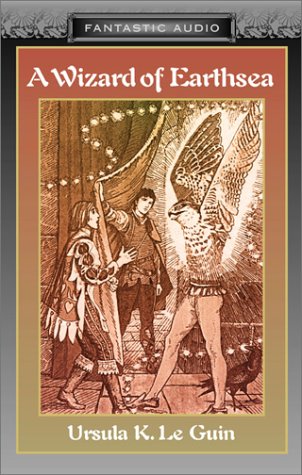
A Wizard of Earthsea by Ursula Le Guin

It's hard not to like a story about high fantasy.  And indeed, I can't say I disliked this book, but nor did I think it an exceptional work either.  There were just too many flaws to make it outstanding, but the world building at least, was interesting.

Sparrowhawk aka Ged aka some other things was born with great power in him.  At an early age it was discovered he could do magic and was at first apprenticed to the town witchwoman, then to a traveling mage, and then finally sent on to the great Mage school.  But it was while at school that he released a dark power on the land, one that would destroy him if he wasn't careful, and this dark shadow follows him throughout his journies until he realizes he must do something about it.

I actually didn't really think much of Ged.  He was too power hungry in the beginning and brash.  Although I suppose youth can be this way at times.  I also didn't understand his learning processes as he seemed to learn things quickly or without description in the books.  It therefore came as a surprise when he knew how to do something he previously did not without any background information provided.  Vetch, his friend, is a little more interesting and compassionate.  I actually would have rathered the story be about him because he was a likable character.  Ogion too was interesting, and I was sad to see that he wasn't in the book for very long.  I do have to say that I was disappointed with how the women were described in this book.  They seemed more pawns than anyone with their own power, although I hear this is rectified in later books of the series.

I actually liked the plot and the adventures that Ged had.  But I didn't enjoy the pace of the book.  It was too choppy and you were just getting settled into one point of his life when it quickly bounced ahead to another.  There was so much detail that could have been added and made Ged's world more complete.  I felt as if a lot had been left out and I wanted more description.  But there was a lot of action; Ged was continually on the move so there wasn't any lulls in the story.  I would have to say that this is probably a young adult novel more than an adult one, it kind of read at that quicker speed to me.

I should say that I actually "read" this book as an audiobook and while I've seen numerous complaints about the narrator, I actually liked him.  I thought he gave the characters good voices and that his way of speaking made you really dig into the book and made it more exciting.  It was like listening to a master storyteller tell a tale around a campground fire; or at least it was to me. 

I'd have to say that this book ranged somewhere between three and a half and four stars for me.  I liked it, but there were a lot of aspects to the book I wasn't thrilled with and the characters just didn't charm me.  For fantasy lovers though, this is probably a must read book.

A Wizard of Earthsea
Copyright 1968