I should start off by saying that No River Too Wide is part of a series. But that doesn't really matter. I haven't read any of the other books and I didn't really feel like I was missing too much information to really get the full story out of this one. It was quite wonderful on its own. There were a few flaws, but nothing that made the book a drag to read through.
Jan Stoddard has finally had enough. Having been abused by her husband for the length of their entire marriage, now that she has a chance to escape she's going to. She's not sure if he's just messing with her by not coming home, but it's the opportunity she needs to flee the state. But in the midst of her flight she accidentally burns the house down and knows that she must get word to her daughter that she's fine and got out alive. But her daughter isn't willing to lose her mother a second time and convinces her to settle down in Asheville nearby so they can finally be together without fear of her father. But there's a chance he's out there looking, and there's only a few they can really trust.
First off, Jan is an excellent character. She really embodies what an abused woman faces and the thought processes that they have. But she was still strong and resilient, which proves that anyone can recover from abuse if they get the right kind of help. Her daughter I didn't like quite as well but that's probably because she waffled from one extreme emotion to another. Which is perfectly natural, it just didn't endear her to me. They were the main characters but they were supported by a cast of other characters that were well rounded and added to the story instead of just merely being there as fillers. Taylor especially helped the story flow and it was kind of her story as well since she interacted with everyone and had her own chapters. My only complaint about the characters would be the need for the author to have everyone "paired up" by the end of the story. Sometimes that just feels unnecessary and not life-like.
This story is about abuse. And recovery from abuse. And reactions to abuse. And it is all pretty accurate. Granted everyone experiences something a little different, but a lot of the premises are the same. The honeymoon stage, the whittling away of self, the people believe it should be easy to leave an abuser. Dead on. So the author did their research or has experienced it themselves, they just didn't make up situations. And I think it's great that it came in this type of a book format as it may reach some people who don't know as much about domestic violence. I do think that the ending happened a little too easy and wasn't as realistic as the rest of the book. But this is a feel good book, so I can't say it was out of character for the book.
This was a hard one to put down. I definitely lost some sleep while reading it. And now, having read it, I'm interested in going back and reading others by the author.
No River Too Wide
Copyright 2014
485 pages
**This book was received through the Amazon Vine Program**
Showing posts with label abuse. Show all posts
December 16, 2014
January 09, 2012
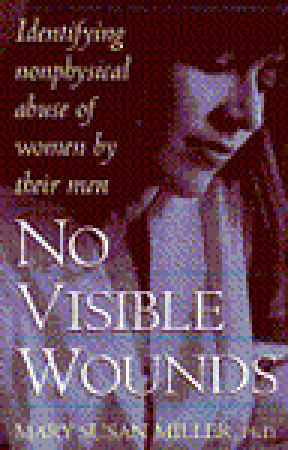
No Visible Wounds:Identifying nonphysical abuse of women by their men by Mary Susan Miller
Since leaving my last relationship a few months ago, I've struggled with what has happened and as such, have read (and keep reading) several books covering the topic of emotional/verbal abuse. This book attracted me because it is just that "no visible wounds" meaning that it does not incorporate physical abuse and therefore doesn't seem to make all other forms of abuse as trivial (not saying other books do this but as a victim it sometimes makes me feel invalidated when they go into the physical and focus on that).
Abuse always grows worse. The abuser that hits may one day kill. The abuser that starts with only criticizing may evolve into screaming obscenities and insults. Or maybe neither, maybe it will just be a steady erosion of bringing down the partner's self esteem. This book explores that notion and how non-physical abuse is just as serious and as damaging as physical abuse. It starts with clarifying just what non-physical abuse is and the different signs and symptoms of it. Then it goes into the signs of it or how it happens. Why it can happen. Part three covers how others react to non-physical abuse. Often it is invalidated and a common misconception is that if they aren't beating you, its not abuse. Or that the woman could just leave if she were being abused (which is one of the hardest things and near impossible to do as a result of non-physical abuse). The last part covers on whether or not abuse can be stopped. Almost every book I've read states that it is very unlikely that an abuser will ever change or even recognize what they are doing is abuse. But there is a small percentage that will, but it is very very minuscule. More often, making abuse stop lies in the victims end to remove themselves in all ways possible, and this book offers some helpful hints for doing so. It really focuses on acknowledging the abuse, because believing you've been abused is very hard for victims.
I appreciate the tone of this book and its hard stance on NOT blaming the victim. Sure it can be easy to say that someone was asking for it, or they should just get out of a hurtful situation, but until you've been there, you can't know how hard it actually is. And non-physical abuse is very clever. It erodes your self esteem and makes you feel as if what is happening is normal and that you deserve the abuse. You may not even realize you're abused until someone tells you (this is what happened to me). You may know something is wrong, but you don't realize its as serious as you think as "all couples fight". The difference is in the way people fight. Some of it is not natural. This book helps identify if you are possibly with an abuser. It gives 9 guidelines and even answering yes to one of these means you could be in an abusive relationship.
Some of the other books I've read focus more on trying to "fix" an abusive relationship. Which is not helpful at all. This book doesn't do that. This is more an educational and informational book with no other purpose than to educate. I'd say that of everything I've read, this book, and Lundy Bancroft's Why Does He Do That have been the best on the subject. They offer ways of coping and validation for what a victim has experienced. It doesn't expect the victim to "fix" the abuser and give false hope or expectations. And while this book doesn't sugar coat things, its not rough to read either. It won't make you feel bad if you haven't removed yourself from an abusive situation. My only complaint is that it really only focuses on "full blown" abusive situations. It doesn't really offer as much help for those people who left while the abuse was still "light" (if abuse can ever be called such a thing) or who left just as the abuse was beginning. It can make it hard to relate to at times.
This book will be staying in my library. Its a valuable resource and a good book to turn to for validation.
No Visible Wounds
Copyright 1995
298 pages
Abuse always grows worse. The abuser that hits may one day kill. The abuser that starts with only criticizing may evolve into screaming obscenities and insults. Or maybe neither, maybe it will just be a steady erosion of bringing down the partner's self esteem. This book explores that notion and how non-physical abuse is just as serious and as damaging as physical abuse. It starts with clarifying just what non-physical abuse is and the different signs and symptoms of it. Then it goes into the signs of it or how it happens. Why it can happen. Part three covers how others react to non-physical abuse. Often it is invalidated and a common misconception is that if they aren't beating you, its not abuse. Or that the woman could just leave if she were being abused (which is one of the hardest things and near impossible to do as a result of non-physical abuse). The last part covers on whether or not abuse can be stopped. Almost every book I've read states that it is very unlikely that an abuser will ever change or even recognize what they are doing is abuse. But there is a small percentage that will, but it is very very minuscule. More often, making abuse stop lies in the victims end to remove themselves in all ways possible, and this book offers some helpful hints for doing so. It really focuses on acknowledging the abuse, because believing you've been abused is very hard for victims.
I appreciate the tone of this book and its hard stance on NOT blaming the victim. Sure it can be easy to say that someone was asking for it, or they should just get out of a hurtful situation, but until you've been there, you can't know how hard it actually is. And non-physical abuse is very clever. It erodes your self esteem and makes you feel as if what is happening is normal and that you deserve the abuse. You may not even realize you're abused until someone tells you (this is what happened to me). You may know something is wrong, but you don't realize its as serious as you think as "all couples fight". The difference is in the way people fight. Some of it is not natural. This book helps identify if you are possibly with an abuser. It gives 9 guidelines and even answering yes to one of these means you could be in an abusive relationship.
Some of the other books I've read focus more on trying to "fix" an abusive relationship. Which is not helpful at all. This book doesn't do that. This is more an educational and informational book with no other purpose than to educate. I'd say that of everything I've read, this book, and Lundy Bancroft's Why Does He Do That have been the best on the subject. They offer ways of coping and validation for what a victim has experienced. It doesn't expect the victim to "fix" the abuser and give false hope or expectations. And while this book doesn't sugar coat things, its not rough to read either. It won't make you feel bad if you haven't removed yourself from an abusive situation. My only complaint is that it really only focuses on "full blown" abusive situations. It doesn't really offer as much help for those people who left while the abuse was still "light" (if abuse can ever be called such a thing) or who left just as the abuse was beginning. It can make it hard to relate to at times.
This book will be staying in my library. Its a valuable resource and a good book to turn to for validation.
No Visible Wounds
Copyright 1995
298 pages
December 10, 2011
Why Does He Do That? by Lundy Bancroft
Out of all the books I've been reading on the subject, Lundy Bancroft's Why Does He Do That has probably been the best of them. Its not perfect, but it helps explain and accurately portrays so much of the physical/emotional/verbal abusers actions. Even if your abuser is not a physical abuser, this book still helps greatly. It should be noted that this book can be helpful for all situations where abuse is involved, even if it isn't an intimate relationship.
As a precursor, this is about abusive men mainly. That's not to say women aren't abusive too, this just doesn't happen to be a book written on that topic. It could also to a smaller extent be applied to lesbian relationships as well.
Bancroft splits it into several parts. The first part covers the nature of abusive thinking and the most helpful part of this section is identifying the types of abusive men. Bancroft takes care to explain that a man may not be one certain type, but rather can be a mix of several. I especially like how he explained the actions of each type. The next section is the Abusive Man in Relationships and it helps explain how the abuse begins, how it effects everyday life, and what happens when you break up. The third part is the Abusive Man in the World and it shows how they interact with the legal system, gain allies to their side, and how they are as parents. The last part of the book is Changing the Abusive Man and don't be fooled by the title. While there are a few rare cases that the abusive man changes, it is not highly likely and this chapter will only be helpful to a few. Bancroft finishes off the book with a listing of resources for people in abusive relationships.
This book was much better than the others because it doesn't focus on blaming the victim. It acknowledges that these abusive actions are never acceptable and tries to explain how it happens and gives validation to those experiencing it. And there are parts that some people can skip over. If you don't have children, the abusers as parents won't be relevant to you. If your abuser fails to see that anything is wrong or blames everything on you, you probably won't find the part on changing the abusive man helpful. And it is ok to skip those sections. This book should be used to focus on the relevant areas to your situation and to help with those.
A compassionate book with a lot of information, this one should be a go to book before all the others on this topic.
Why Does He Do That
Copyright 2002
400 pages
As a precursor, this is about abusive men mainly. That's not to say women aren't abusive too, this just doesn't happen to be a book written on that topic. It could also to a smaller extent be applied to lesbian relationships as well.
Bancroft splits it into several parts. The first part covers the nature of abusive thinking and the most helpful part of this section is identifying the types of abusive men. Bancroft takes care to explain that a man may not be one certain type, but rather can be a mix of several. I especially like how he explained the actions of each type. The next section is the Abusive Man in Relationships and it helps explain how the abuse begins, how it effects everyday life, and what happens when you break up. The third part is the Abusive Man in the World and it shows how they interact with the legal system, gain allies to their side, and how they are as parents. The last part of the book is Changing the Abusive Man and don't be fooled by the title. While there are a few rare cases that the abusive man changes, it is not highly likely and this chapter will only be helpful to a few. Bancroft finishes off the book with a listing of resources for people in abusive relationships.
This book was much better than the others because it doesn't focus on blaming the victim. It acknowledges that these abusive actions are never acceptable and tries to explain how it happens and gives validation to those experiencing it. And there are parts that some people can skip over. If you don't have children, the abusers as parents won't be relevant to you. If your abuser fails to see that anything is wrong or blames everything on you, you probably won't find the part on changing the abusive man helpful. And it is ok to skip those sections. This book should be used to focus on the relevant areas to your situation and to help with those.
A compassionate book with a lot of information, this one should be a go to book before all the others on this topic.
Why Does He Do That
Copyright 2002
400 pages
The Secret of Overcoming Verbal Abuse by Albert Ellis
I recently exited a relationship that had turned emotionally/verbally abusive over a period of time. I still struggle with the fact that I actually allowed myself to be in such a relationship and as such have sought out books such as this to validate the fact that what I experienced did really happen. Despite the slight humiliation I have at posting such a review, I feel that if my leaving a review on this book helps anyone with a similar problem find resources to help them, then it is worth it to post this and the other reviews for similar books I've read.
This book is not a good resource for those in or leaving or who have already left a verbally/emotionally abusive relationship. There are several parts to this book and each covers a significant area. Of those, only the 1st and 4th parts have any redeeming qualities. The rest do too much blaming of the victim and seeking something that should not be sought.
Part 1 of this book overviews why the abuser is the way he/she is. It explains their motivations, need for approval, and joy in becoming stronger at another person's expense. It also shows the signs of an abuser and the difference between subtle and outright abusers. This part is actually very helpful because often victims of subtle abuse don't feel like they are really being abused as it isn't as outward or noticeable as being screamed at or hit. It helps validate what you're feeling and stops the doubt you may have in your mind that you're blowing it out of proportion.
Part 2 explores the “secret” of the book which to me was a load of rubbish. It is what they call REBT and the basic jist is that people only feel what they allow themselves to feel. That the abused is often an abuser of themselves because they are allowing their partner's abuse to control their feelings. It even goes so far as to claim that someone can use this technique and be happy in an abusive relationship. My largest problem with this method is that it labels different sets of thinking as “rational” and “irrational”. Since I was often told I was irrational it just opened up the wounds all over for me again.
Part 3 tells you how to use the secret. Once again I found this chapter largely useless because it went through examples of “irrational” and “rational” thought processes for different abusive situations. Again it seemed to hold the victim wholly responsible for how they were feeling. That their abuser couldn't hurt them if they didn't let them. I find this notion false because the reason abusers can hurt their victims is because they care and in caring open themselves up as vulnerable as relationships are two people being complete with each other. If you stop caring and stop being vulnerable, then there really isn't a point to continuing a relationship.
Part 4 details getting past your fear and anxiety. I actually found this part to be half helpful. Sure it had some of the same nonsense of the first few parts, but then it also had rationalizations for feeling terrible about leaving the relationship. It offered significant points on getting over the fact that the partner has found someone new and everything appears to be sunshine and roses. It tells you how you don't need someone to feel complete. And I do think those are worthy messages.
Part 5 talks about taking back your life and beginning to be happy again. But I didn't find anything very useful in those parts as it doesn't really outline a plan that someone who is currently suffering can really use. It just develops a plan for later, after you're feeling better about your situation.
I realize I sound very harsh in this review and I believe it needs to be harsh as the people who are probably looking to buy this book need the best and most thoughtful help they can get. This book is too much hard love for those who are already experiencing blame and harshness in their lives. Instead of empathizing it blames which is something no victim of abuse needs. While it does have some good points, it doesn't make this book worth reading unless you are not a victim of abuse and are reading solely for research purposes. Otherwise, it does have the potential to set someone back in their healing. If you are looking for a book to help heal, try Why Does He Do That by Lundy Bancroft and remember that you need to take care of you before anyone else.
The Secret of Overcoming Verbal Abuse
Copyright 2000
219 pages
This book is not a good resource for those in or leaving or who have already left a verbally/emotionally abusive relationship. There are several parts to this book and each covers a significant area. Of those, only the 1st and 4th parts have any redeeming qualities. The rest do too much blaming of the victim and seeking something that should not be sought.
Part 1 of this book overviews why the abuser is the way he/she is. It explains their motivations, need for approval, and joy in becoming stronger at another person's expense. It also shows the signs of an abuser and the difference between subtle and outright abusers. This part is actually very helpful because often victims of subtle abuse don't feel like they are really being abused as it isn't as outward or noticeable as being screamed at or hit. It helps validate what you're feeling and stops the doubt you may have in your mind that you're blowing it out of proportion.
Part 2 explores the “secret” of the book which to me was a load of rubbish. It is what they call REBT and the basic jist is that people only feel what they allow themselves to feel. That the abused is often an abuser of themselves because they are allowing their partner's abuse to control their feelings. It even goes so far as to claim that someone can use this technique and be happy in an abusive relationship. My largest problem with this method is that it labels different sets of thinking as “rational” and “irrational”. Since I was often told I was irrational it just opened up the wounds all over for me again.
Part 3 tells you how to use the secret. Once again I found this chapter largely useless because it went through examples of “irrational” and “rational” thought processes for different abusive situations. Again it seemed to hold the victim wholly responsible for how they were feeling. That their abuser couldn't hurt them if they didn't let them. I find this notion false because the reason abusers can hurt their victims is because they care and in caring open themselves up as vulnerable as relationships are two people being complete with each other. If you stop caring and stop being vulnerable, then there really isn't a point to continuing a relationship.
Part 4 details getting past your fear and anxiety. I actually found this part to be half helpful. Sure it had some of the same nonsense of the first few parts, but then it also had rationalizations for feeling terrible about leaving the relationship. It offered significant points on getting over the fact that the partner has found someone new and everything appears to be sunshine and roses. It tells you how you don't need someone to feel complete. And I do think those are worthy messages.
Part 5 talks about taking back your life and beginning to be happy again. But I didn't find anything very useful in those parts as it doesn't really outline a plan that someone who is currently suffering can really use. It just develops a plan for later, after you're feeling better about your situation.
I realize I sound very harsh in this review and I believe it needs to be harsh as the people who are probably looking to buy this book need the best and most thoughtful help they can get. This book is too much hard love for those who are already experiencing blame and harshness in their lives. Instead of empathizing it blames which is something no victim of abuse needs. While it does have some good points, it doesn't make this book worth reading unless you are not a victim of abuse and are reading solely for research purposes. Otherwise, it does have the potential to set someone back in their healing. If you are looking for a book to help heal, try Why Does He Do That by Lundy Bancroft and remember that you need to take care of you before anyone else.
The Secret of Overcoming Verbal Abuse
Copyright 2000
219 pages
The Verbally Abusive Relationship by Patricia Evans
This was one of the better books I've read on the subject. It offers clear insight into the problems of mentally/verbally abusive relationships without adopting the “blame the victim” mentality so many of the other books had. For someone struggling with their decisions already, those types of books only make things worse. Although, this book, like the others, has suggestions for how to make things work with your abuser which doesn't help either if they don't want to pursue it. It just makes you feel like you didn't do enough if other people had agreed to recognize what was going on but your partner wouldn't. This book could also be potentially useful for those in abusive situations that aren't intimate relationships as well.
The first part of the book helps you to evaluate your own experience and whether or not your relationship contained verbal abuse. It also focused on what the author calls the two types of power and why one of them isn't healthy. It explores these powers and how people use them within the relationship. Most importantly, this chapter focuses on the consequences of the abuse. Part two goes more into depth on the different types of verbal abuse and trying to change it. There are also sections discussing therapists and children in the relationship.
I found this book helpful when it talked about recognizing the signs of abuse. Often victims of abuse don't trust their own judgment after being talked down to so long that they can't personally see whats happening to them. This book helps provide a checklist for validating the experiences. Also, if you are still in the relationship, it does give a couple tips for trying to make the abuser see the light so to speak and get help. The problem with this is that for people who have already left the relationship or who's partners won't recognize that they need help, this part is rather useless and instead makes the abused feel worse as they think there was more they could have done, when really they couldn't.
There are good and bad books out there and I would rate this as one of the better ones. It still won't meet everyones needs but hopefully can help some people.
The Verbally Abusive Relationship
Copyright 1992
217 pages
The first part of the book helps you to evaluate your own experience and whether or not your relationship contained verbal abuse. It also focused on what the author calls the two types of power and why one of them isn't healthy. It explores these powers and how people use them within the relationship. Most importantly, this chapter focuses on the consequences of the abuse. Part two goes more into depth on the different types of verbal abuse and trying to change it. There are also sections discussing therapists and children in the relationship.
I found this book helpful when it talked about recognizing the signs of abuse. Often victims of abuse don't trust their own judgment after being talked down to so long that they can't personally see whats happening to them. This book helps provide a checklist for validating the experiences. Also, if you are still in the relationship, it does give a couple tips for trying to make the abuser see the light so to speak and get help. The problem with this is that for people who have already left the relationship or who's partners won't recognize that they need help, this part is rather useless and instead makes the abused feel worse as they think there was more they could have done, when really they couldn't.
There are good and bad books out there and I would rate this as one of the better ones. It still won't meet everyones needs but hopefully can help some people.
The Verbally Abusive Relationship
Copyright 1992
217 pages
The Emotionally Abusive Relationship by Beverly Engel
I had hoped that by reading this book to gain a little more clarity on everything that has happened. While it helped reinforce what an abusive relationship looked like, it wasn't as proficient at helping figure out what they next steps were except for a few cases with specific qualifications. This book would probably be most useful for intimate relationships rather than any other kind of abusive dynamic.
The Emotionally Abusive Relationship takes a look at both the abuser and the victim. It offers techniques and help for both on improving the relationship. Each chapter is set into two parts, one for the victim figuring out if they are being abused, and the other for the abuser figuring out if they are abusing someone. The first part deals with actually putting a label on the abuse. The next tries to show why someone might abuse/allow themselves to be abused. Next is how to prevent the abuse from happening on both sides. The last part is where to go from here after reading this book.
I found the book very helpful in the first part when it outlines whether or not you are in an abusive relationship or not or if you are abusing something. The checklists are easy to follow and spell out why something is or isn't abuse. It was the next part that I had some trouble with. The author insists that abusers/victims all have some original abuser in the past and you have to come to terms with that abuse before healing this abuse. The problem with that is, what about those people who didn't have abusive childhoods but still find themselves victims of abuse? There are no other alternatives in this book so those in this situation find themselves floundering trying to figure out why they “let” themselves be abused. And that is another problem, no one purposely seeks out an abusive relationship but this author seems to think they do. Often abusers are on their best behavior for the first few weeks, months, years and then escalate when major life changes like buying a house or marriage come into the picture.
Stopping the Abuse is also a very dangerous part as it suggests confronting your abuser head on with this knowledge. This can be both physically and mentally endangering as often times abusers don't care or want to admit their behavior and will take out their anger at the accusal on the victim. This chapter may be more helpful for abusers looking to improve themselves rather than victims looking to stop the abuse. This part does have a nice section on personality disorders though and identifying if the abuser or victim may have Narcissistic Personality Disorder or Borderline Personality Disorder.
Not the best book since it seems to blame the victim for entering the relationship and then advises several unsafe things for them to do. May be good as an identifier for an abusive relationship but not as a cure all. It also has some handy resources for books, websites, etc. in the back although some of the websites are no longer in service.
The Emotionally Abusive Relationship
Copyright 2002
255 pages
The Emotionally Abusive Relationship takes a look at both the abuser and the victim. It offers techniques and help for both on improving the relationship. Each chapter is set into two parts, one for the victim figuring out if they are being abused, and the other for the abuser figuring out if they are abusing someone. The first part deals with actually putting a label on the abuse. The next tries to show why someone might abuse/allow themselves to be abused. Next is how to prevent the abuse from happening on both sides. The last part is where to go from here after reading this book.
I found the book very helpful in the first part when it outlines whether or not you are in an abusive relationship or not or if you are abusing something. The checklists are easy to follow and spell out why something is or isn't abuse. It was the next part that I had some trouble with. The author insists that abusers/victims all have some original abuser in the past and you have to come to terms with that abuse before healing this abuse. The problem with that is, what about those people who didn't have abusive childhoods but still find themselves victims of abuse? There are no other alternatives in this book so those in this situation find themselves floundering trying to figure out why they “let” themselves be abused. And that is another problem, no one purposely seeks out an abusive relationship but this author seems to think they do. Often abusers are on their best behavior for the first few weeks, months, years and then escalate when major life changes like buying a house or marriage come into the picture.
Stopping the Abuse is also a very dangerous part as it suggests confronting your abuser head on with this knowledge. This can be both physically and mentally endangering as often times abusers don't care or want to admit their behavior and will take out their anger at the accusal on the victim. This chapter may be more helpful for abusers looking to improve themselves rather than victims looking to stop the abuse. This part does have a nice section on personality disorders though and identifying if the abuser or victim may have Narcissistic Personality Disorder or Borderline Personality Disorder.
Not the best book since it seems to blame the victim for entering the relationship and then advises several unsafe things for them to do. May be good as an identifier for an abusive relationship but not as a cure all. It also has some handy resources for books, websites, etc. in the back although some of the websites are no longer in service.
The Emotionally Abusive Relationship
Copyright 2002
255 pages
The Verbally Abusive Man by Patricia Evans
The Verbally Abusive Man is kind of a follow up to the author, Patricia Evans, previous book The Verbally Abusive Relationship. In fact, I would recommend reading that one first as she touches on some points from it in this book. This book, instead of focusing on the relationship, instead focuses on the abuser and whether or not he can change, and to a smaller extent, whether or not a woman should stay or go. This is probably something only useful for those in an intimate relationship.
The main first part of this book deals with the portrayal of the verbally abusive man and his dream woman. In this case, the dream woman is someone he's concocted as an extension of himself and “placed” in his partner's self as a way of seeing her as perfect. Once he does this, it is harder for him to see the real person past his dream women, and when something is out of line with what he thinks it should be, he gets angry because she is not mirroring his dream woman. This area also goes into the different types of verbal abuse, whether or not counseling is helpful, and if a change is even possible for the abuser. Next the author moves on to the partner's wanting a change and what would motivate an abuser to change. Finally, the main focus of the book “The Agreement” is brought forth and the author shares how to prepare it and present it, and finally how to write the agreement. After this is done it explains what men seeking change can do (this book focuses on the male being the abuser), whether or not the abuser is following the change, and what to do if he won't agree to cooperate with the Agreement. It follows with choosing to stay or go in the relationship.
I find this book helpful for identifying if someone is willing to change. However, this book is more geared towards people who want to make it work and if you are already out of the relationship it is a lot harder to see how it would apply or help you aside from what the author calls “letting him know why you left.” I believe that if you have already left, the abuser probably doesn't care why as they are too angry at you for leaving. I also fear for the way she says to present as even if there was never any physical harm, verbal anger is hard enough and it may unleash quite a bit when the abuser is presented with the Agreement rather than making him see what he has done by any means. If he is a discounter he will probably write the whole thing off out of hand. Just by reading the whether or not he will change log I felt that if I presented the Agreement, especially since I had already left, that it would make things worse. And while she does cover this a little bit, the majority of the information is directed towards making things work and what to do if it does work. There isn't as much information or validation for those who can't even attempt to present the agreement or for those who it didn't work for. I recognize that the main premise of this book is the Agreement, but usually those people looking at these types of books are usually doing everything in their power, or are trying to heal themselves and will consume every resource cover to cover. It could make them feel like they aren't doing enough or didn't try hard enough while they were in the relationship.
It has some good and bad points like most books do. Unfortunately every relationship has different aspects and while there are commonalities, there isn't a guideline for any specific person when you're writing for many people. I do think this is a good resource to see if someone can change, but if you recognize that they can't or if it hurts too much to keep reading about those people it did work for don't feel like you need to keep reading.
It should be noted that there are some helpful appendices at the end that help identify abusive phrases and words, resources, and other information.
The Verbally Abusive Man
Copyright 2006
256 pages
The main first part of this book deals with the portrayal of the verbally abusive man and his dream woman. In this case, the dream woman is someone he's concocted as an extension of himself and “placed” in his partner's self as a way of seeing her as perfect. Once he does this, it is harder for him to see the real person past his dream women, and when something is out of line with what he thinks it should be, he gets angry because she is not mirroring his dream woman. This area also goes into the different types of verbal abuse, whether or not counseling is helpful, and if a change is even possible for the abuser. Next the author moves on to the partner's wanting a change and what would motivate an abuser to change. Finally, the main focus of the book “The Agreement” is brought forth and the author shares how to prepare it and present it, and finally how to write the agreement. After this is done it explains what men seeking change can do (this book focuses on the male being the abuser), whether or not the abuser is following the change, and what to do if he won't agree to cooperate with the Agreement. It follows with choosing to stay or go in the relationship.
I find this book helpful for identifying if someone is willing to change. However, this book is more geared towards people who want to make it work and if you are already out of the relationship it is a lot harder to see how it would apply or help you aside from what the author calls “letting him know why you left.” I believe that if you have already left, the abuser probably doesn't care why as they are too angry at you for leaving. I also fear for the way she says to present as even if there was never any physical harm, verbal anger is hard enough and it may unleash quite a bit when the abuser is presented with the Agreement rather than making him see what he has done by any means. If he is a discounter he will probably write the whole thing off out of hand. Just by reading the whether or not he will change log I felt that if I presented the Agreement, especially since I had already left, that it would make things worse. And while she does cover this a little bit, the majority of the information is directed towards making things work and what to do if it does work. There isn't as much information or validation for those who can't even attempt to present the agreement or for those who it didn't work for. I recognize that the main premise of this book is the Agreement, but usually those people looking at these types of books are usually doing everything in their power, or are trying to heal themselves and will consume every resource cover to cover. It could make them feel like they aren't doing enough or didn't try hard enough while they were in the relationship.
It has some good and bad points like most books do. Unfortunately every relationship has different aspects and while there are commonalities, there isn't a guideline for any specific person when you're writing for many people. I do think this is a good resource to see if someone can change, but if you recognize that they can't or if it hurts too much to keep reading about those people it did work for don't feel like you need to keep reading.
It should be noted that there are some helpful appendices at the end that help identify abusive phrases and words, resources, and other information.
The Verbally Abusive Man
Copyright 2006
256 pages
October 16, 2011
Shadow Tag by Louise Eldrich
Wow, this book really struck home for me. I could relate to it and its amazing how a couple can seem so perfect on the outside, and have such an insidious underbelly when in private. Deeply disturbing and very sad, this book was a hard one to read.
Irene America and her husband Gil have been an iconic couple for quite so time. Gil is a painter and has become famous off of painting Irene in various posings, some quite ugly and shocking, and some beautiful and demure. They have three kids who are all pretty unique themselves but each with their own problems as a result of their parents crumbling marriage. To put it bluntly, Gil is an abuser, and Irene an alcoholic. Irene wants out of the marriage but can never seem to quite get away from Gil. She even tries through her diaries. After finding out Gil was reading her red diary, she starts putting in untruths to drive him crazy and writing the real information in the blue diary, which she keeps in a safe deposit box. But even this isn't enough to completely destroy the relationship, Gil just won't let her go.
These characters were haunting. Gil especially. He is the perfect portrayal of a mostly emotional, sometimes verbally and physically abusive person. He also has a tendency to be narcissistic as well, which really escalates. Having had experience with an abuser I was shocked at how well the author got all the little signs right, the things said, things done, the emotional yoyo he kept his family on, that I had to look her up and discovered the Erdrich had personal experience to draw from when writing his character. Irene, despite being abused, wasn't a very easy character to like though because of the diaries and her alcoholism. But even when she didn't have alcohol she still couldn't get herself away from Gil, which is sadly realistic of these types of relationships. The children were also very interesting and sad at the same time.
This is not a cheery novel. It probably won't make you cry but it has a very depressive theme. Its beautifully written although I honestly think the part about the diaries, while quite a large bit of writing, didn't really do as much for me as the 3rd person narrative did. I also wasn't a big fan of the ending. There are some descriptive scenes about sex, rape, and other disturbing things in this book so those reading it should be advised. Its a very realistic book, and could be written from life probably.
It never ceases to astound me what human beings can do to each other, even if they claimed to be in love before. This book is definitely one to read, but one to be careful while reading as well because of its heavy themes.
Shadow Tag
Copyright 2010
255 pages
Irene America and her husband Gil have been an iconic couple for quite so time. Gil is a painter and has become famous off of painting Irene in various posings, some quite ugly and shocking, and some beautiful and demure. They have three kids who are all pretty unique themselves but each with their own problems as a result of their parents crumbling marriage. To put it bluntly, Gil is an abuser, and Irene an alcoholic. Irene wants out of the marriage but can never seem to quite get away from Gil. She even tries through her diaries. After finding out Gil was reading her red diary, she starts putting in untruths to drive him crazy and writing the real information in the blue diary, which she keeps in a safe deposit box. But even this isn't enough to completely destroy the relationship, Gil just won't let her go.
These characters were haunting. Gil especially. He is the perfect portrayal of a mostly emotional, sometimes verbally and physically abusive person. He also has a tendency to be narcissistic as well, which really escalates. Having had experience with an abuser I was shocked at how well the author got all the little signs right, the things said, things done, the emotional yoyo he kept his family on, that I had to look her up and discovered the Erdrich had personal experience to draw from when writing his character. Irene, despite being abused, wasn't a very easy character to like though because of the diaries and her alcoholism. But even when she didn't have alcohol she still couldn't get herself away from Gil, which is sadly realistic of these types of relationships. The children were also very interesting and sad at the same time.
This is not a cheery novel. It probably won't make you cry but it has a very depressive theme. Its beautifully written although I honestly think the part about the diaries, while quite a large bit of writing, didn't really do as much for me as the 3rd person narrative did. I also wasn't a big fan of the ending. There are some descriptive scenes about sex, rape, and other disturbing things in this book so those reading it should be advised. Its a very realistic book, and could be written from life probably.
It never ceases to astound me what human beings can do to each other, even if they claimed to be in love before. This book is definitely one to read, but one to be careful while reading as well because of its heavy themes.
Shadow Tag
Copyright 2010
255 pages
Subscribe to:
Posts (Atom)