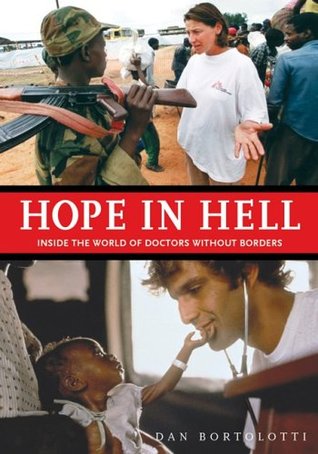
Anything about Humanitarian Aid interests me. It's a job not many would want to have. But there are people that do it and do it well. The MSF (Doctors Without Borders) group is one such group in the industry that stands out as a little bit different. Because they're everywhere and they don't tend to take sides.
Hope In Hell contains interviews and information about the MSF and its programs all over the world. The chapters contain either stories about places or about the different things that the MSF does, some of their politics, some of their history, and the last chapter contains the Nobel Acceptance speech they gave when they won one year. It describes some of the harsh realities they face and the different strategies they have for dealing with emergencies.
Although there were interviews in this book, I don't feel like it really centered on anyone in depth. The book felt more like an overview and I actually think the politics and history of the organization was described more than the individual experiences that people had. As such, it was hard to develop a connection to the book or anyone in it and it seemed more a series of sad tales about the injuries and illness that encompassed everything. Granted, there are so many horrible things happening in the area that MSF worked, but I would have liked to see more than just descriptions of suffering and actually get the MSF volunteer's thoughts about them.
This book was very much "political" in the sense that it was describing MSF's ideals and the way it was founded and the different factions that warred about internally in the structure of the organization. I actually tired about hearing about the history (as it was repeated quite often) and again, would rather have seen more time spent on the volunteer's experiences in the MSF. The good parts of the books were those describing the work conditions and the hazards. I found it interesting how they decide where to go and when to pull out of an area based on the happenings around them. More often than not, everyone is there for the long haul.
Not a bad book, but not the best one I've read on the subject. From the title, I was just expecting something a little more personal.
Hope In Hell
Copyright 2004
283 pages
Showing posts with label MSF. Show all posts
March 31, 2014
March 17, 2014
Six Months In Sudan by James Maskalyk
Have you ever heard of Abyei? Probably not. I sure didn't before I read this book. It's in Sudan, and it's where the author spent six months as part of the Doctors Without Borders program (MSF).
After completing residency, Maskalyk signs up for a stint in the MSF. He is taken to Sudan, to the village of Abyei which houses many soldiers and civilians and plenty of people needing medical attention. The hospital is small, but large enough to take traumas and between the diseases that run rampant in the area and the skirmishes with grenades, there is always someone to be healed.
Maskalyk is pretty rough on himself. And others at times, although it seems he has nothing but respect for his colleagues. In fact, he speaks better of them than he does himself. He seems to acknowledge that he has a detachment from his work and the pain and suffering around him. That he can't help but think of logical things even if a person has died. And it does seem cold. But it can also be a coping mechanism for everything that he has to see. I did find his honesty refreshing though and I wouldn't paint him a hero because of his thoughts, but do think that he did some good work while in Sudan.
This is a hard book to read because of the descriptions of suffering and illness and poverty. Because it's real life it shakes you to find out how people are living when sometimes the worse thing in your day is spilling your drink on yourself. It does offer perspective. And I like how he focused on being a new aid worker as most of the books I've read are from people who have been in a long time. The writing itself was good, although I found the epilogue disorienting. I understand he was showing his confusion at being home through that writing style, but I just found it hard to read. Otherwise the format was good and the rest of the book flowed easy enough.
Do I want to go to Sudan? Probably not. But I'm still thinking that this line of work is appealing and I'll continue to read about it. I'm glad I found this book to offer another perspective.
Six Months in Sudan
Copyright 2009
320 pages
After completing residency, Maskalyk signs up for a stint in the MSF. He is taken to Sudan, to the village of Abyei which houses many soldiers and civilians and plenty of people needing medical attention. The hospital is small, but large enough to take traumas and between the diseases that run rampant in the area and the skirmishes with grenades, there is always someone to be healed.
Maskalyk is pretty rough on himself. And others at times, although it seems he has nothing but respect for his colleagues. In fact, he speaks better of them than he does himself. He seems to acknowledge that he has a detachment from his work and the pain and suffering around him. That he can't help but think of logical things even if a person has died. And it does seem cold. But it can also be a coping mechanism for everything that he has to see. I did find his honesty refreshing though and I wouldn't paint him a hero because of his thoughts, but do think that he did some good work while in Sudan.
This is a hard book to read because of the descriptions of suffering and illness and poverty. Because it's real life it shakes you to find out how people are living when sometimes the worse thing in your day is spilling your drink on yourself. It does offer perspective. And I like how he focused on being a new aid worker as most of the books I've read are from people who have been in a long time. The writing itself was good, although I found the epilogue disorienting. I understand he was showing his confusion at being home through that writing style, but I just found it hard to read. Otherwise the format was good and the rest of the book flowed easy enough.
Do I want to go to Sudan? Probably not. But I'm still thinking that this line of work is appealing and I'll continue to read about it. I'm glad I found this book to offer another perspective.
Six Months in Sudan
Copyright 2009
320 pages
Subscribe to:
Posts (Atom)

