Be warned! This book is very, very different from all the other books in the Little House on the Prairie series. In fact, this book makes it easy to see how embellished the other books are and the positive spin that was put on them. Because it was published after the death of Laura and her daughter, it is not quite complete as well. It was taken directly from Laura's notebooks that were found in her belongings after her death and barely any editing was done on them. That being said, this book isn't necessarily worse than the others, just entirely different. The rest of the books, for those who have no read them, detailed Laura Ingalls Wilder's childhood growing up and being a pioneer girl with her Ma, Pa, and three sisters.
The First Four Years details the first four years of Laura and Almanzo's (who she calls Manlly in this book) marriage. They set up house on his tree claim after agreeing to try farming for three years. The first year passes quickly they seem happy enough and even more so when Laura is expecting. They have a daughter, Rose, and Laura completely loves her and is quite devoted to her. They remain somewhat happy but do manage to have quite the disastourous next few years. It seems that everything bad that can happen, will happen. They have to suffer through crops being destroyed, illness and other hardships in those four years.
The characters in this are much changed from the other books. They are less like characters in this book and more like the real thing and its a little easier to see that Laura wrote from the heart and didn't try to make this an easy children's story. Its more of an outline with all the emotions she felt still showing. Manly is kind of distanced and doesn't seem to be as good with finances as he in in the other books. Laura is more mature but sadly leaves most of the decision to Manly.
The book is short and is more a series of little stories from those four years. It is still mostly appropriate for children although there are a few sections that made even me pause. This could be considered a spoiler for the book so do beware. The first thing that made me pause was the Boasts (friends of Laura's) that offered to give Laura and Manly their best horse for Rose when she was a baby. Being childless they were probably desperate but it was still a shock to read about the situation in the children's book. The next was the death of their son. Maybe it was just me, but I couldn't help but feel that Laura seemed almost relieved when it was back to being just her, Rose, and Almanzo. I'm sure she cared for the boy (who wasn't alive long enough to be named) but I just didn't get that emotion in the book. I also noticed that in the writing of this book, some facts contradicted what the other books had say, like Manly having a milk cow before Laura married him.
This book is still very important to read when it comes to the series. It is depressing and I can see why Laura never published it on her own, but it does explain a lot and continue her story. The entire series is a wonderful read and despite the tone of this book, it is vital to the collection.
The First Four Years
Copyright 1971
134 pages
Showing posts with label laura ingalls wilder. Show all posts
October 07, 2011
These Happy Golden Years by Laura Ingalls Wilder
I think this might be my favorite book of the Little House on the Prairie series. For those of you that haven't read the series, it is author Laura Ingalls Wilder's telling of her childhood and growing up as a pioneer. With her Ma, Pa, and sisters they travel and live from the big woods of Wisconsin, to Indian Territory, on to Minnesota, and then finally settle in the west in the town of DeSmet. They have many hardships, but ultimately pull together as a family and enjoy life.
This book starts with Laura having just gotten her teaching certificate and teaching her first term of school. The people she stays with are miserable and at some points Laura fears for her safety, however, she finds relaxation in her weekends with the handsome Almanzo Wilder comes to get her to take her back to her family over the weekend. Each week she looks forward to his arrival despite not being sure how she feels about him. When that school term ends she looks forward to being back with her family and to her surprise, finds that she still enjoys going riding with Almanzo and they grow closer. She teaches two more full terms of school and all the while wonders where her relationship with Almanzo is headed. She loves his horses, but she must ask herself if she loves him as well.
I always call the people in these books characters as they seem to be somewhat embellished. Noone can be that perfect and cheerful all the time. Laura does describe her family well and even her sisters get a larger part in this book and more description. Of course Almanzo also takes center stage as he starts courting her and while not much is said, I always enjoy reading about their relationship. There probably could have been more description about their relationship as we never see the transition of Laura enjoying being with him to actually loving him, but I suppose its always fun to picture the back story in your head.
Wilder does a great job of providing expansive descriptions of pioneer life yet still making the book easy for children to read. It would have been nice to make this book longer, as there were a lot of events fit into the pages that could have been marvelous with expansion, however, the book was still greatly interesting. She especially explained the intricacies of women's dress in this book and I could only read with part horror and gladness that its not required to have petticoats, corsets, and other constricting clothing anymore. I do often wonder how a bikini would have been met in those times (well I know but I'd still like to see the reaction).
While this book marks the end of Laura's childhood I do enjoy reading about her as an adult. The book is wonderful and softly romantic and I feel that it appeals more to the adult side of readers than kids, but still remains appropriate for any age. Its such a wonderful series that everyone should have the chance to read.
These Happy Golden Years
Copyright 1943
289 pages
This book starts with Laura having just gotten her teaching certificate and teaching her first term of school. The people she stays with are miserable and at some points Laura fears for her safety, however, she finds relaxation in her weekends with the handsome Almanzo Wilder comes to get her to take her back to her family over the weekend. Each week she looks forward to his arrival despite not being sure how she feels about him. When that school term ends she looks forward to being back with her family and to her surprise, finds that she still enjoys going riding with Almanzo and they grow closer. She teaches two more full terms of school and all the while wonders where her relationship with Almanzo is headed. She loves his horses, but she must ask herself if she loves him as well.
I always call the people in these books characters as they seem to be somewhat embellished. Noone can be that perfect and cheerful all the time. Laura does describe her family well and even her sisters get a larger part in this book and more description. Of course Almanzo also takes center stage as he starts courting her and while not much is said, I always enjoy reading about their relationship. There probably could have been more description about their relationship as we never see the transition of Laura enjoying being with him to actually loving him, but I suppose its always fun to picture the back story in your head.
Wilder does a great job of providing expansive descriptions of pioneer life yet still making the book easy for children to read. It would have been nice to make this book longer, as there were a lot of events fit into the pages that could have been marvelous with expansion, however, the book was still greatly interesting. She especially explained the intricacies of women's dress in this book and I could only read with part horror and gladness that its not required to have petticoats, corsets, and other constricting clothing anymore. I do often wonder how a bikini would have been met in those times (well I know but I'd still like to see the reaction).
While this book marks the end of Laura's childhood I do enjoy reading about her as an adult. The book is wonderful and softly romantic and I feel that it appeals more to the adult side of readers than kids, but still remains appropriate for any age. Its such a wonderful series that everyone should have the chance to read.
These Happy Golden Years
Copyright 1943
289 pages
Little Town on the Prairie by Laura Ingalls Wilder
I'm now starting to get into my favorite books of the Little House on the Prairie series. For those of you not familiar with the series, they were written by Laura Ingalls Wilder about her life growing up with her Ma, Pa, and sisters while traveling to different home sites. They traveled from the Big Woods of Wisconsin, to Indian Territory, to Minnesota and then finally to the town of De Smet further west. They encountered many hardships but stuck together as a family.
This book they are still in DeSmet and it is the summer after the hard winter in which there were blizzards for seven months. They have returned to their land and the claim shanty to begin farming their piece of land when Pa decides that they will go back to town for the winter. While the winter is much milder there is a new sadness for them. Mary will be moving away to go to a College for the blind and Laura must begin studying hard in order to go be a schoolteacher so she can help provide money to keep Mary in school. There are so many things to distract her though, parties, socials, literaries, and the handsome Almanzo Wilder has started taking an interest in her. On the flip side though, her old nemesis from Plum Creek, Nellie Oleson, has moved to the same town and continued to be her rotten self. With all this going on, its hard to say if Laura will be prepared to teach school when she turns sixteen.
The characters (I call them such since they are somewhat embellished) are well described. Laura really grows in this book and its nice to see her make the transition from child to young woman. Although I do have to say the descriptions of corsets and hoop skirts make me cringe. Mary is largely absent from the book since she's in college but they do give her mention and Carrie plays a small part. Poor Grace though is hardly mentioned. What I especially liked was that this was the book Almanzo started taking an interested in Laura and it was fun to see the courtship as it was in those times.
The writing is perfect for children but not too juvenile for adults to read. Wilder really makes you feel as if you are living in those times. However, I do have to note that there is potentially some offensive things in this book. Ma still doesn't like Indians, but what really stood out is a scene in which Laura describes a play put on at a literary function when they played "darkies" and danced around. I could be construing it the wrong way, but it definitely could offend. If this scene were removed though, the book would be near perfect.
I've always enjoyed reading these books as a child and adult and as I said before this book starts the favorite of my series because of the addition of Almanzo. I'm always a sucker for a romance, even in a kid's novel I guess.
Little Town on the Prairie
Copyright 1941
307 pages
This book they are still in DeSmet and it is the summer after the hard winter in which there were blizzards for seven months. They have returned to their land and the claim shanty to begin farming their piece of land when Pa decides that they will go back to town for the winter. While the winter is much milder there is a new sadness for them. Mary will be moving away to go to a College for the blind and Laura must begin studying hard in order to go be a schoolteacher so she can help provide money to keep Mary in school. There are so many things to distract her though, parties, socials, literaries, and the handsome Almanzo Wilder has started taking an interest in her. On the flip side though, her old nemesis from Plum Creek, Nellie Oleson, has moved to the same town and continued to be her rotten self. With all this going on, its hard to say if Laura will be prepared to teach school when she turns sixteen.
The characters (I call them such since they are somewhat embellished) are well described. Laura really grows in this book and its nice to see her make the transition from child to young woman. Although I do have to say the descriptions of corsets and hoop skirts make me cringe. Mary is largely absent from the book since she's in college but they do give her mention and Carrie plays a small part. Poor Grace though is hardly mentioned. What I especially liked was that this was the book Almanzo started taking an interested in Laura and it was fun to see the courtship as it was in those times.
The writing is perfect for children but not too juvenile for adults to read. Wilder really makes you feel as if you are living in those times. However, I do have to note that there is potentially some offensive things in this book. Ma still doesn't like Indians, but what really stood out is a scene in which Laura describes a play put on at a literary function when they played "darkies" and danced around. I could be construing it the wrong way, but it definitely could offend. If this scene were removed though, the book would be near perfect.
I've always enjoyed reading these books as a child and adult and as I said before this book starts the favorite of my series because of the addition of Almanzo. I'm always a sucker for a romance, even in a kid's novel I guess.
Little Town on the Prairie
Copyright 1941
307 pages
The Long Winter by Laura Ingalls Wilder
Wow, yet another wonderful addition to the Little House on the Prairie series. For those of you who have never read the series, it is the author, Laura Ingalls Wilder's, tales about her life growing up with her Ma, Pa, and sisters while they traveled by wagon and lived in some pretty remote areas. From Indian territory, to Minnesota, to DeSmet, they did a lot of traveling and a lot of hard surviving in these pioneer days.
This particular book involves a very long winter in the town of DeSmet where they had settled. Laura is about fourteen and a big help to her family. When the family can tell that it will be a rough winter, and an Indian fortells seven months of snow and blizzards, Pa decides to move the family to town in his empty store building to wait out the winter. It turns out to be just as well because even in town, where all the supplies are, the winter proves to be too much for the townspeople to handle. Resorting to twisting hay for firewood the Ingalls do all they can to survive. However, since the trains can't get through food starts to become scare and the townspeople begin to starve. Their only hope now is that Almanzo Wilder (Laura's future husband) and a schoolmate of hers can make it in search of some elusive wheat that a homesteader has before there's no food left at all in the town.
The characters in this, and I say characters because they are somewhat embellished by Wilder, are pretty wonderful. They all have their unique attributes although some don't get a lot of time dedicated to them in the book (like Grace, Laura's youngest sister). I do have to say that I'm disappointed that in all her books she never mentions her brother who died as a baby. Its like he vanished. It was also nice to see Almanzo Wilder in this. He did appear briefly in the last book and of course Farmer Boy was all about him, but this book really marks the start of where he starts interacting with Laura's family.
Wilder writes very well for children. The language is easy to understand, as are the descriptions. She really makes her life vivid through her words and although things are much much different now, it is easy to picture how she lived. There are a couple of things that could be found offensive in this book. Ma does not like Indians, and doesn't have a problem voicing her opinions. Almanzo also makes a comment that could be potentially offensive as well. Regardless though, it is still worth the read.
Its such a charming series and I always enjoy reading it at least once a year. This book in particular interested me just because of all the hardship they go through. Its amazing how they kept it together and survived (even cheerfully if the book is to be believed) despite all the odds against them. I highly recommend this book and the series for all ages.
The Long Winter
Copyright 1940
335 pages
This particular book involves a very long winter in the town of DeSmet where they had settled. Laura is about fourteen and a big help to her family. When the family can tell that it will be a rough winter, and an Indian fortells seven months of snow and blizzards, Pa decides to move the family to town in his empty store building to wait out the winter. It turns out to be just as well because even in town, where all the supplies are, the winter proves to be too much for the townspeople to handle. Resorting to twisting hay for firewood the Ingalls do all they can to survive. However, since the trains can't get through food starts to become scare and the townspeople begin to starve. Their only hope now is that Almanzo Wilder (Laura's future husband) and a schoolmate of hers can make it in search of some elusive wheat that a homesteader has before there's no food left at all in the town.
The characters in this, and I say characters because they are somewhat embellished by Wilder, are pretty wonderful. They all have their unique attributes although some don't get a lot of time dedicated to them in the book (like Grace, Laura's youngest sister). I do have to say that I'm disappointed that in all her books she never mentions her brother who died as a baby. Its like he vanished. It was also nice to see Almanzo Wilder in this. He did appear briefly in the last book and of course Farmer Boy was all about him, but this book really marks the start of where he starts interacting with Laura's family.
Wilder writes very well for children. The language is easy to understand, as are the descriptions. She really makes her life vivid through her words and although things are much much different now, it is easy to picture how she lived. There are a couple of things that could be found offensive in this book. Ma does not like Indians, and doesn't have a problem voicing her opinions. Almanzo also makes a comment that could be potentially offensive as well. Regardless though, it is still worth the read.
Its such a charming series and I always enjoy reading it at least once a year. This book in particular interested me just because of all the hardship they go through. Its amazing how they kept it together and survived (even cheerfully if the book is to be believed) despite all the odds against them. I highly recommend this book and the series for all ages.
The Long Winter
Copyright 1940
335 pages
By the Shores of Silver Lake by Laura Ingalls Wilder
The Ingalls have moved west in this next edition of the Little House on the Prairie series. Its just as charming as the other books and its always a pleasure to read Wilder's telling of her life growing up.
When they haven't had a good crop in a few years, Mary going blind, and other bad luck, they decide to travel West to seek better land. First though, they stop off near where a railroad grade is being done and Pa becomes the storekeeper and payroll administrator. They live in a shanty where Laura gets to spend some time with cousins also in the area. When winter sets in, they become the only ones in the area and are fortunate enough to live in the Surveyor's house with tons of provisions set in for winter. They are joined later by friends and eventually Paul goes to make a claim on some land in the area so they can build a house and settle, hopefully for good this time.
The characters in this book, although based on real life, are sometimes too good to be real people. Lots of virtue and hardly any flaws. But I can imagine that Laura chose to remember her family in the best light that she could. Ma was a little more warm in this book which was nice to see. I think that as Laura got older she developed a better relationship with her mother. She still describes Pa as being a wonderful guy in this book as well.
Wilder has a nice writing style. Its easy for kids to read but appeals to all ages. She describes the time well and its easy to see the type of life they led. There are some offensive parts in this book though. Ma is not a big fan of Native Americans and doesn't mind saying so in this book. Despite it being the times where this was widely accepted, it could definitely be offensive for some people.
This is a wonderful series that I enjoy reading many times over. This book especially is a great one because it shows Laura a little older and growing up as opposed to being younger and more child-like. It could really resonate with kids who are also at this age. Overall this is just a great book for family reading time and a classic in its own right.
By the Shores of Silver Lake
Copyright 1939
291 pages + pictures
When they haven't had a good crop in a few years, Mary going blind, and other bad luck, they decide to travel West to seek better land. First though, they stop off near where a railroad grade is being done and Pa becomes the storekeeper and payroll administrator. They live in a shanty where Laura gets to spend some time with cousins also in the area. When winter sets in, they become the only ones in the area and are fortunate enough to live in the Surveyor's house with tons of provisions set in for winter. They are joined later by friends and eventually Paul goes to make a claim on some land in the area so they can build a house and settle, hopefully for good this time.
The characters in this book, although based on real life, are sometimes too good to be real people. Lots of virtue and hardly any flaws. But I can imagine that Laura chose to remember her family in the best light that she could. Ma was a little more warm in this book which was nice to see. I think that as Laura got older she developed a better relationship with her mother. She still describes Pa as being a wonderful guy in this book as well.
Wilder has a nice writing style. Its easy for kids to read but appeals to all ages. She describes the time well and its easy to see the type of life they led. There are some offensive parts in this book though. Ma is not a big fan of Native Americans and doesn't mind saying so in this book. Despite it being the times where this was widely accepted, it could definitely be offensive for some people.
This is a wonderful series that I enjoy reading many times over. This book especially is a great one because it shows Laura a little older and growing up as opposed to being younger and more child-like. It could really resonate with kids who are also at this age. Overall this is just a great book for family reading time and a classic in its own right.
By the Shores of Silver Lake
Copyright 1939
291 pages + pictures
On the Banks of Plum Creek by Laura Ingalls Wilder
Another great classic from Wilder. These books are great reads and essentially timeless. There's a reason that Laura's life has captured the hearts of so many people and this book is a real good example of it.
Having left Indian territory, the Ingalls make their way to Minnesota where they trade their wagon and horses for a piece of land and a dugout house. Pa is determined to build them a proper home, but has to wait for a good wheat crop first. Laura and her sister Mary spend their days playing in the creek and helping their Pa with the cow and planting. He builds them a new home and they're well on their way to happiness when disaster strikes in the form of grasshoppers who eat all the crops. In order to keep afloat, Pa must leave and take work elsewhere. In total, the book covers a little over two years of their lives living by Plum Creek.
It was reading this book again that I started getting an inkling suspicious that as wonderful as Pa is described in these books, he perhaps wasn't so great with money. While they never go without, he makes some not so sound business transactions in the book on borrowed credit. It kind of helped me to see deeper in the characters. Laura is good at describing herself as not being perfect, but rather just being a normal little girl while Mary is often the perfect child. Ma is there as a steady presence but is not nearly as severe as she is in some of the other books.
Wilder is a good writer. She really expresses herself in a way that is understood by all ages and especially be children, whom these books seem to be written for. There is plenty of description and even though life is very different now, it is still easy to see how they lived back then through her words. There really isn't anything offensive in this novel and it is entirely appropriate for children to read. The language is simple enough it should be easy for most ages to read themselves.
I love this series and this book is no different. Its a great glimpse into the life of Wilder and her family and also of the people who lived in those times.
On the Banks of Plum Creek
Copyright 1937
339 pages + pictures
Having left Indian territory, the Ingalls make their way to Minnesota where they trade their wagon and horses for a piece of land and a dugout house. Pa is determined to build them a proper home, but has to wait for a good wheat crop first. Laura and her sister Mary spend their days playing in the creek and helping their Pa with the cow and planting. He builds them a new home and they're well on their way to happiness when disaster strikes in the form of grasshoppers who eat all the crops. In order to keep afloat, Pa must leave and take work elsewhere. In total, the book covers a little over two years of their lives living by Plum Creek.
It was reading this book again that I started getting an inkling suspicious that as wonderful as Pa is described in these books, he perhaps wasn't so great with money. While they never go without, he makes some not so sound business transactions in the book on borrowed credit. It kind of helped me to see deeper in the characters. Laura is good at describing herself as not being perfect, but rather just being a normal little girl while Mary is often the perfect child. Ma is there as a steady presence but is not nearly as severe as she is in some of the other books.
Wilder is a good writer. She really expresses herself in a way that is understood by all ages and especially be children, whom these books seem to be written for. There is plenty of description and even though life is very different now, it is still easy to see how they lived back then through her words. There really isn't anything offensive in this novel and it is entirely appropriate for children to read. The language is simple enough it should be easy for most ages to read themselves.
I love this series and this book is no different. Its a great glimpse into the life of Wilder and her family and also of the people who lived in those times.
On the Banks of Plum Creek
Copyright 1937
339 pages + pictures
Farmer Boy by Laura Ingalls Wilder
Farmer Boy is probably my least favorite of the Little House on the Prairie series. That's not to say it isn't any good, it is, it just is the weakest book out of the series in my opinion.
Wilder diverges from her normal telling of her family, to tell about her husband Almanzo's childhood. His was very different from hers in that he lived on a large successful farm with many brothers and sisters and had quite a few chores. The book starts when he is eight and moves to encompass around a year of his life. It shows him gaining more maturity and being allowed to do harder tasks as he gets older. It also goes into other aspects of his life like interactions with his siblings, school time, and meals that he ate.
The characters, in this case Almanzo and his family, weren't really elaborated on as much. They all were pretty focused on one aspect of their personality (Royal-Dependable, Alice-Kind, Eliza Jane-Bossy, etc.) without diverging too much from the norm. Almanzo acted appropriately for a little boy, but in the book he tended to be quite focused on a few things and these were mentioned over and over.
That wasn't the only repetition though. As much as I enjoyed the food being described, it seemed that every time Almanzo ate he "sighed and tucked in" for more food. I recall reading something similar to that line for each meal described. The rest of the writing was ok, not as good as the rest of the series, but passable. Wilder does include quite a bit of informative detail, like how boots are made and how to saw ice from a lake which I found interesting. One other complaint I would have is that this book jumped from time to time quickly without a real smooth transition. It made it hard to focus sometimes. To note, the writing in this is very mellow and entirely appropriate for children.
Its a wonderful series, and I can see this book appealing more to boys instead of the other girl-based books. It does capture the time well and elaborates on a person that was very much a center of Wilder's life.
Farmer Boy
Copyright 1933
372 pages
Wilder diverges from her normal telling of her family, to tell about her husband Almanzo's childhood. His was very different from hers in that he lived on a large successful farm with many brothers and sisters and had quite a few chores. The book starts when he is eight and moves to encompass around a year of his life. It shows him gaining more maturity and being allowed to do harder tasks as he gets older. It also goes into other aspects of his life like interactions with his siblings, school time, and meals that he ate.
The characters, in this case Almanzo and his family, weren't really elaborated on as much. They all were pretty focused on one aspect of their personality (Royal-Dependable, Alice-Kind, Eliza Jane-Bossy, etc.) without diverging too much from the norm. Almanzo acted appropriately for a little boy, but in the book he tended to be quite focused on a few things and these were mentioned over and over.
That wasn't the only repetition though. As much as I enjoyed the food being described, it seemed that every time Almanzo ate he "sighed and tucked in" for more food. I recall reading something similar to that line for each meal described. The rest of the writing was ok, not as good as the rest of the series, but passable. Wilder does include quite a bit of informative detail, like how boots are made and how to saw ice from a lake which I found interesting. One other complaint I would have is that this book jumped from time to time quickly without a real smooth transition. It made it hard to focus sometimes. To note, the writing in this is very mellow and entirely appropriate for children.
Its a wonderful series, and I can see this book appealing more to boys instead of the other girl-based books. It does capture the time well and elaborates on a person that was very much a center of Wilder's life.
Farmer Boy
Copyright 1933
372 pages
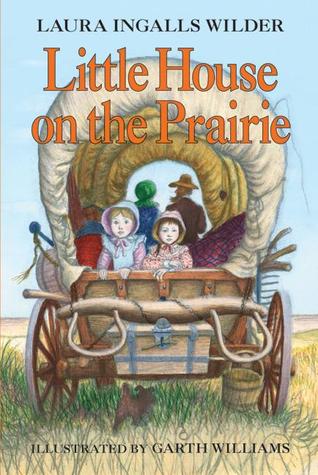
Little House on the Prairie by Laura Ingalls Wilder
I love this series. It doesn't matter how old I get, they just keep getting better and better. When we last left the Ingalls family, they were enjoying life in the Big Woods of Wisconsin where Ma and Pa had built their home and lived among family with their three little girls, Laura, Mary, and Carrie. Now, spurred on by his love of travel, Pa has decided to take the girls and Ma and head West for new adventure.
They load up the wagon and with goodbyes from their family, head west to the great prairies to Indian territory, where they hope to make a new home. Pa finds a great spot not too far from a river and starts building the house by himself, with a little bit of help from Ma. They meet some of their neighbors and as they get settled in life happens. Whether it be sickness, celebrations, Indians, or fires, life isn't that dull for the Ingalls. They do their best at surviving well using only the resources they are able to obtain easily for themselves and yet remain happy. They live in this house for a year and get along just fine until forced to move on.
I hesitate to call them characters, as they are based off of real people and are more of Laura's telling or diary of her own life, but they are great characters. She does a good job of expressing the family dynamic and even going so far as to show herself truthfully with all of her faults. To me, that is wonderful, as she isn't trumping herself up to be the best of all. At times, her depiction of Ma doesn't seem quite fair, but as a child I can see how she'd view her mother as a sterner authority figure while her dad was more jovial of a person.
Not only does Wilder do a great job of writing this book, she makes it informative as well. When I was a kid and reading this I didn't pick up on nearly the amount of instructions on homesteading that I do now. In fact, with just a little extra help from a diagram, I'm pretty sure you could make a door without nails just by her description of when she helped her dad build one. She also offers a very simplistic outline of building a log cabin as well. These and other little tidbits are a treasure trove of knowledge if you read right. Another great thing Wilder does with her writing is express how much job the simple things can bring. When Pa builds Ma a new rocking chair, they celebrate! This is wonderful because it really makes you appreciate the little things and see how even that was really doing good for the times.
There is a small warning for these books however. Due to the time they were written in, there are several view points and words that could be considered racist. Most specifically in this book, this would apply to Native Americans. Ma herself isn't a big fan of them, but Pa likes them so they seem to balance each other out a bit. Still, it does have the potential to offend.
Such a beautiful series and I always voraciously read them as quick as I can as I hate to put them down. These especially seem to be great books for the holidays as well and are perfect for reading with a nice hot cup of cocoa. Little House on the Prairie is a wonderful book for both adults and children.
Little House on the Prairie
Copyright 1935
335 pages plus illustrations from Garth Williams
They load up the wagon and with goodbyes from their family, head west to the great prairies to Indian territory, where they hope to make a new home. Pa finds a great spot not too far from a river and starts building the house by himself, with a little bit of help from Ma. They meet some of their neighbors and as they get settled in life happens. Whether it be sickness, celebrations, Indians, or fires, life isn't that dull for the Ingalls. They do their best at surviving well using only the resources they are able to obtain easily for themselves and yet remain happy. They live in this house for a year and get along just fine until forced to move on.
I hesitate to call them characters, as they are based off of real people and are more of Laura's telling or diary of her own life, but they are great characters. She does a good job of expressing the family dynamic and even going so far as to show herself truthfully with all of her faults. To me, that is wonderful, as she isn't trumping herself up to be the best of all. At times, her depiction of Ma doesn't seem quite fair, but as a child I can see how she'd view her mother as a sterner authority figure while her dad was more jovial of a person.
Not only does Wilder do a great job of writing this book, she makes it informative as well. When I was a kid and reading this I didn't pick up on nearly the amount of instructions on homesteading that I do now. In fact, with just a little extra help from a diagram, I'm pretty sure you could make a door without nails just by her description of when she helped her dad build one. She also offers a very simplistic outline of building a log cabin as well. These and other little tidbits are a treasure trove of knowledge if you read right. Another great thing Wilder does with her writing is express how much job the simple things can bring. When Pa builds Ma a new rocking chair, they celebrate! This is wonderful because it really makes you appreciate the little things and see how even that was really doing good for the times.
There is a small warning for these books however. Due to the time they were written in, there are several view points and words that could be considered racist. Most specifically in this book, this would apply to Native Americans. Ma herself isn't a big fan of them, but Pa likes them so they seem to balance each other out a bit. Still, it does have the potential to offend.
Such a beautiful series and I always voraciously read them as quick as I can as I hate to put them down. These especially seem to be great books for the holidays as well and are perfect for reading with a nice hot cup of cocoa. Little House on the Prairie is a wonderful book for both adults and children.
Little House on the Prairie
Copyright 1935
335 pages plus illustrations from Garth Williams
October 05, 2011
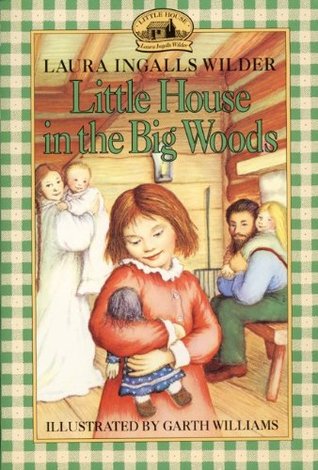
Little House in the Big Woods by Laura Ingalls Wilder
I've always loved the Little House on the Prairie books. And going back to read them as an adult is just as much of a pleasure. Actually more so because there is a lot of useful information in these books about different activities. While it might not have all the information about say, sugaring maple syrup, it does tell it from a regular point of view, so its like you're there watching how they do it instead of reading instructions from a book.
This particular installment, Little House in the Big Woods, is about a year in the life of Laura Ingalls and her family while they still lived near their relatives in the big woods of Wisconsin. It details what they did to prepare for the winter, be it butchering or putting up the harvest. Then, throughout the winter, it tells of their wonderful Christmas tradition, the things they did on cold winter nights to make the time pass by, and gradually leads us to spring.
The highlight of the spring section is the Sugaring-Off Dance and the collection of maple syrup. Wilder gives great detail in this particular event and it is clear that it is one she remembers fondly. They also go to town for the first time in this section of the book and see a town shop for the first time.
Through summer it talks of planting and harvest and goes back into the fall time where this time Wilder covers other fall harvesting techniques such as threshing grain and making cheese. It is interesting to note that for the making cheese they even list how the rennet is obtained.
This book is obviously very suited for children, however, I should note, that in one of the songs that Wilder has listed there is a derogatory term. However, being the time that this book was written it was appropriate to use this term, it could provide a valuable lesson for children on how things change in our world and why such words are not suitable to be used in today's society. Everything else in the book is perfectly acceptable and indeed all the other songs are very age appropriate for young children.
Also notable for the book, is the abundance of pictures to accompany each chapter. While they are in black and white, they are very charming and do a great portrayal of the Ingalls' life. There are at least two or three per chapter illustrated by Garth Williams.
As always, this series was an enjoyable read and I loved going back to spend those first years with Laura while reading.
Little House in the Big Woods
Copyright 1932
238 pages
This particular installment, Little House in the Big Woods, is about a year in the life of Laura Ingalls and her family while they still lived near their relatives in the big woods of Wisconsin. It details what they did to prepare for the winter, be it butchering or putting up the harvest. Then, throughout the winter, it tells of their wonderful Christmas tradition, the things they did on cold winter nights to make the time pass by, and gradually leads us to spring.
The highlight of the spring section is the Sugaring-Off Dance and the collection of maple syrup. Wilder gives great detail in this particular event and it is clear that it is one she remembers fondly. They also go to town for the first time in this section of the book and see a town shop for the first time.
Through summer it talks of planting and harvest and goes back into the fall time where this time Wilder covers other fall harvesting techniques such as threshing grain and making cheese. It is interesting to note that for the making cheese they even list how the rennet is obtained.
This book is obviously very suited for children, however, I should note, that in one of the songs that Wilder has listed there is a derogatory term. However, being the time that this book was written it was appropriate to use this term, it could provide a valuable lesson for children on how things change in our world and why such words are not suitable to be used in today's society. Everything else in the book is perfectly acceptable and indeed all the other songs are very age appropriate for young children.
Also notable for the book, is the abundance of pictures to accompany each chapter. While they are in black and white, they are very charming and do a great portrayal of the Ingalls' life. There are at least two or three per chapter illustrated by Garth Williams.
As always, this series was an enjoyable read and I loved going back to spend those first years with Laura while reading.
Little House in the Big Woods
Copyright 1932
238 pages
Subscribe to:
Posts (Atom)